

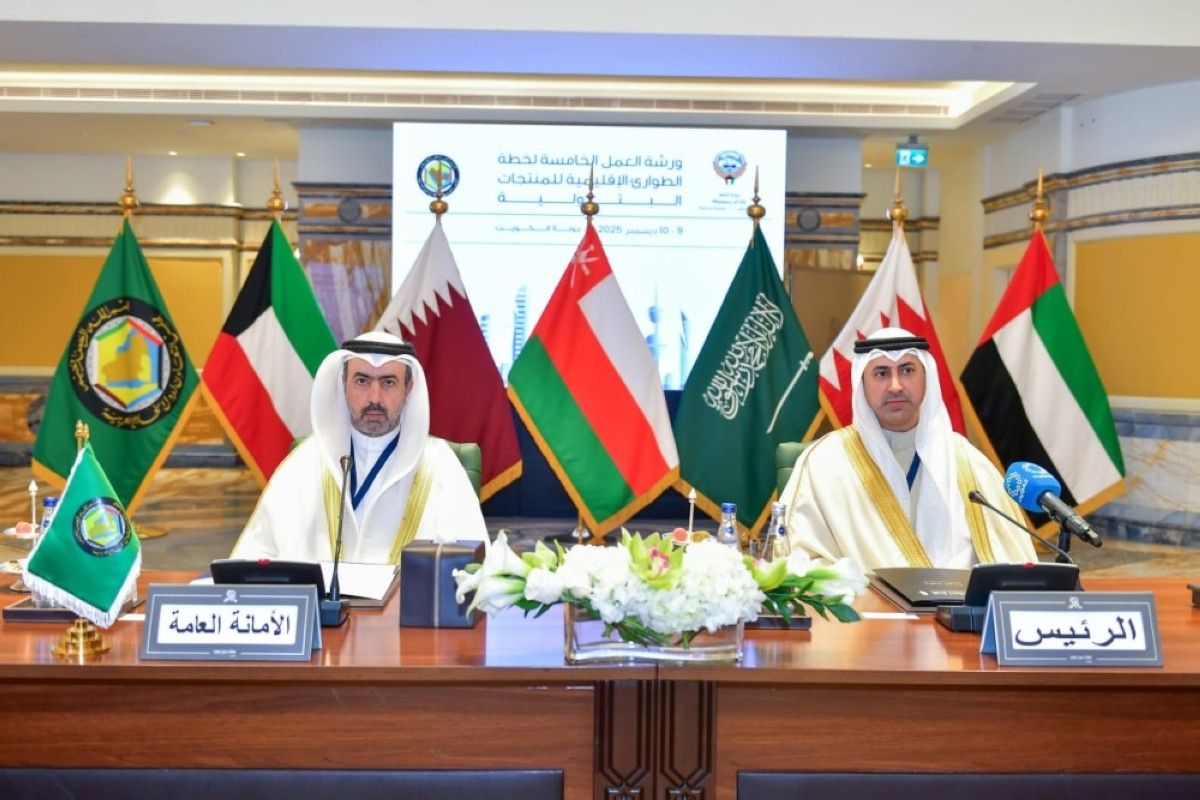
KUWAIT: Kuwait on Tuesday hosted the fifth workshop on modeling scenarios for the GCC Regional Emergency Plan for Petroleum Products 2025. The event was chaired by Undersecretary of the Ministry of Oil, Sheikh Dr Nimer Fahad Al-Malik Al-Sabah, and attended by representatives from the GCC Secretariat and committee members from all member states. The workshop, which concludes on Thursday, is part of the periodic meetings dedicated to updating and modeling the Regional Emergency Plan.
The Ministry of Oil, in a press statement, described the plan as an advanced platform for enhancing Gulf coordination and improving preparedness for rapid and effective responses to any emergencies affecting petroleum product operations, particularly amid evolving geopolitical developments. Sheikh Nimer Al-Sabah highlighted that the workshop comes at a critical time as the energy sector faces accelerating challenges at both regional and global levels, making Gulf preparedness and joint action mechanisms a strategic necessity for safeguarding supply security and market stability.
He stressed that Gulf coordination has evolved from being a cooperative option to a fundamental pillar in decision-making for the oil and gas sector. The workshop serves as a key platform for discussing the regional emergency plan and scenario modeling, which is essential for assessing actual response capacities, exploring operational alternatives, and ensuring the timely and continuous flow of petroleum products. Applying these models at a unified Gulf level, he noted, strengthens resilience and enables the system to adapt efficiently to varied circumstances.
Sheikh Nimer also highlighted the historical ties and shared interests among Gulf states, emphasizing that enhanced cooperation in the energy sector is of strategic importance. He reaffirmed Kuwait’s commitment to supporting the regional emergency plan and actively contributing through its specialized technical teams to bolster GCC preparedness and consolidate the joint Gulf action system in supply security. He noted that the success of the plan relies on continued cooperation, expertise exchange and integration of national capabilities.
According to the Ministry, GCC representatives underlined that scenario modeling enhances the efficiency of the joint Gulf action system, strengthens decision-making, ensures continuity of product flow and safeguards supply security. They emphasized the need to maintain cooperation, monitor implementation of approved plans and develop practical emergency response tools.
During the workshop, participants reviewed all agenda items, including updates to the regional emergency plan, results of operational scenario modeling and measures to improve national preparedness. Discussions also covered logistical data accuracy, mechanisms for assessing oil surpluses and joint response procedures. Updated data from member states were examined and the 2025 scenarios were revised.
The workshop further addressed logistical and technical challenges, coordination mechanisms among member states, and practical solutions for potential issues such as gasoline shortages or port disruptions, while defining responsibilities for future updates. Representatives expressed appreciation to Kuwait for its warm welcome and efficient organization, noting that the country’s hosting of the workshop underscores its active role in supporting joint Gulf efforts to develop a robust regional emergency response system and strengthen integration among GCC entities. — KUNA
