

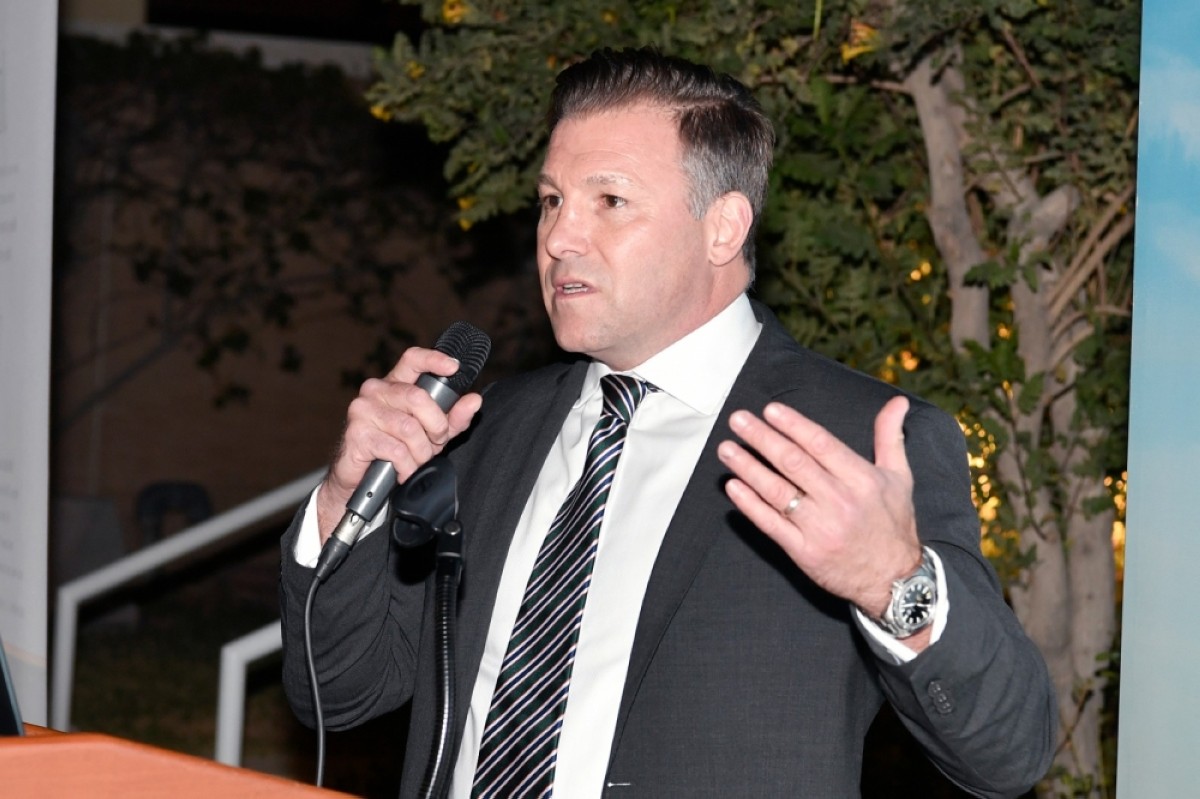
KUWAIT: The Chargé d’Affaires at the US Embassy in Kuwait, Steven Butler, emphasized the growing importance of artificial intelligence (AI) and cybersecurity as emerging areas of international cooperation.
On the sidelines of “2nd Cybersecurity and Innovation Meetup: Celebrating American Innovation” hosted by the embassy on Monday, Butler stated that cybersecurity remains a major priority for the US administration, adding that discussions in Washington have increasingly focused on developing frameworks to control and regulate AI while ensuring strong cybersecurity.
He stressed that cybersecurity will be essential to any AI and digitally driven future, adding: “We are already living in a digital future, where personal and institutional data is now widely distributed and difficult to contain fully.”
The US Chargé d’Affaires explained that his country is working not only with Kuwait, but with countries across the region and around the world to strengthen cybersecurity cooperation. Where the US can contribute expertise, technical knowledge and advanced technology, it is open to partnering to help improve cyber resilience.
Highlighting the depth of US-Kuwait relations, he noted that the two countries are approaching the 35th anniversary of Kuwait’s liberation, describing the relationship as a friendship and partnership forged in blood, shoulder to shoulder.
Looking ahead, he said that the digital transformation envisioned by the Kuwaiti government, particularly in public services, must be built on a strong cybersecurity foundation. As part of this effort, US experts are in Kuwait to deliver presentations and share best practices.
Butler expressed hope that the discussions would lead to new partnerships and collaborative relationships that would advance cybersecurity and digital development in ways that benefit both Kuwait and the United States.
At the event, experts highlighted recent developments and the growing policy pivot toward fostering innovation. They outlined how cybersecurity and AI have become central to US national strategy and economic competitiveness, noting that regulatory frameworks are increasingly designed to balance risk management with innovation.
Guillermo Christensen, a partner and former CIA intelligence officer and diplomat with the Department of State, addressed the implications of these shifts for Kuwait, emphasizing opportunities for cooperation, investment and capacity-building in digital infrastructure and advanced technologies as the global race to secure and leverage AI-driven innovation intensifies.
He argued that the speed at which cybersecurity and AI are evolving is redefining the future faster than most institutions are prepared for, noting that these technologies now sit at the core of state power and economic competitiveness, with AI becoming a foundational technology that cuts across all sectors.
According to Christensen, the growing strategic value of data and data centers signals a shift in how wealth and influence are built. At the same time, real resilience depends not only on technology, but also on people, governance and adaptable regulatory frameworks.
For his part, MEA Government Programs Lead at Mandiant, Google Cloud Security, Matthew Hurling said cybersecurity must be treated as a strategic investment rather than a technical expense, given its central role in modern government and business operations. He noted that translating cyber risk into financial terms helps leadership make clearer decisions, prioritize protections and redirect resources as threats evolve.
Hurling added that many cyber incidents persist simply because basic safeguards are neglected, stressing that consistent fundamentals and flexible protection programs are essential to securing critical systems.
