

Was this, finally, the end of Syria’s long civil war?
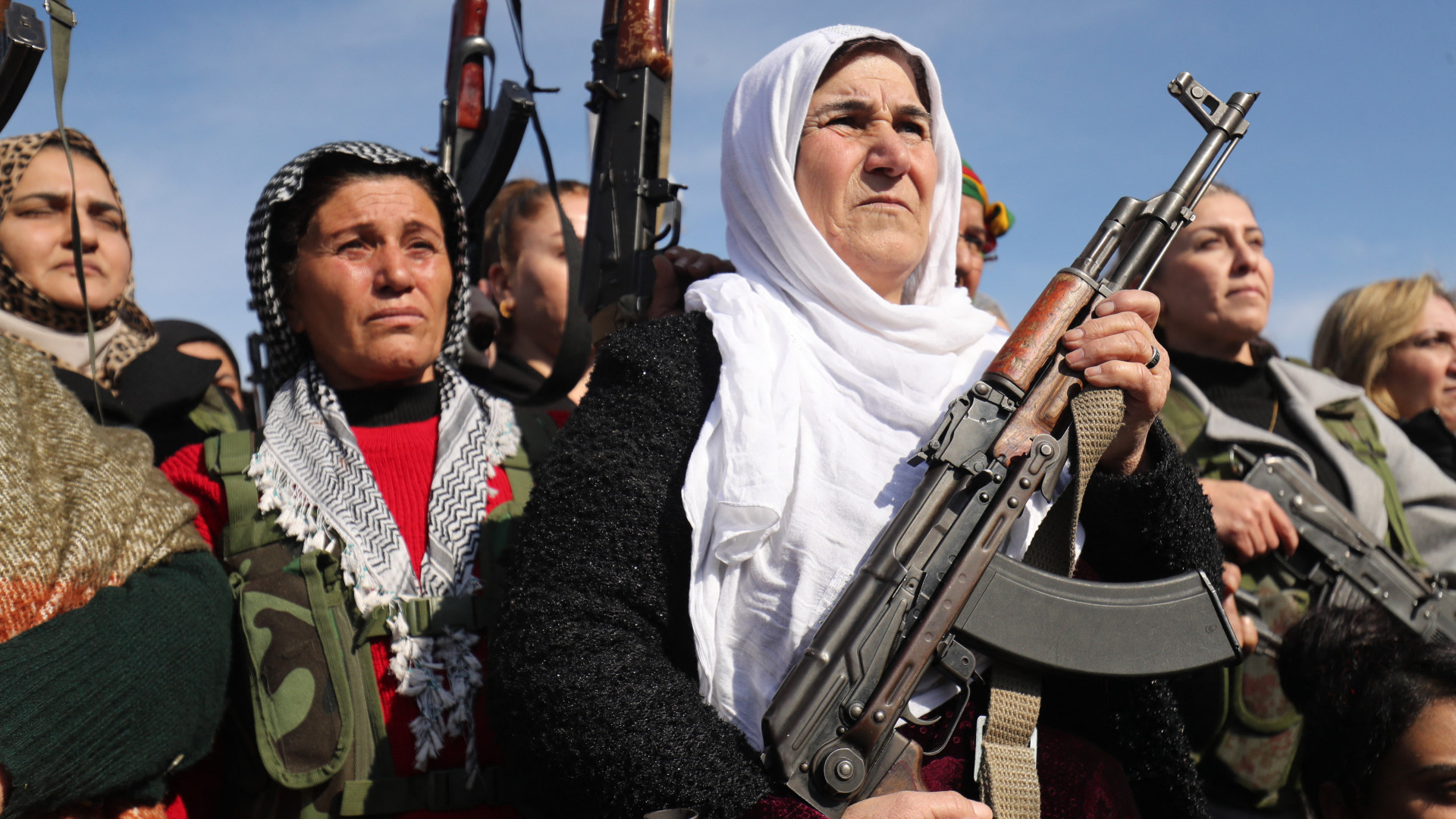
On 20 January, Damascus announced a renewed ceasefire with the Kurdish-led Syrian Democratic Forces (SDF), after government troops captured large swathes of territory. The deal appears set to see Damascus regain control over much of eastern Syria and integrate SDF fighters into the Syrian army.
While it remains unclear exactly how this agreement will be implemented, it points to the effective collapse of the SDF and the end of nearly 14 years of Kurdish autonomy in northeastern Syria. The Syrian state, now under the leadership of Ahmed al-Sharaa, controls more territory than at any point since 2012.
Yet this outcome was made in Washington.
Ever since its creation with help from the US in 2015, the SDF has viewed Washington as its protector, working as the White House’s main partner in the fight against Islamic State (IS).
New MEE newsletter: Jerusalem Dispatch
Sign up to get the latest insights and analysis on
Israel-Palestine, alongside Turkey Unpacked and other MEE newsletters
But the US has quietly switched sides.
Following Sharaa’s meeting with President Donald Trump in November, Syria joined the US-led coalition against IS, effectively rendering Washington’s relationship with the SDF redundant.
It was therefore unsurprising that, as relations deteriorated and Damascus moved against SDF positions, the US appeared to give its approval.
Washington steps back
On 20 January, Tom Barrack, Trump’s ambassador to Turkey and special envoy to Syria, stated: “The original purpose of the SDF as the primary anti-ISIS [IS] force on the ground has largely expired.”
The SDF and many Kurds were outraged by this apparent betrayal by Washington.

Rapid unravelling of SDF removes ‘main irritant’ in US-Turkey ties
Read More »
SDF commander Mazloum Abdi was particularly furious with Barrack for going back on earlier promises that any deal would allow Kurds to administer Kurdish areas and that some SDF fighting units would survive to protect them.
But the Trump administration’s shift in position should not come as a surprise.
During his first term, Trump twice signalled his willingness to ditch the SDF. In December 2018, after declaring IS’s defeat, he announced he would withdraw more than 2,000 US troops stationed in eastern Syria, effectively leaving the SDF to its fate, only to be dissuaded by then National Security Adviser John Bolton.
In October 2019, Trump tried again, ordering the withdrawal of around 1,000 troops. This came as Turkey attacked SDF positions near Tal Abyad, no longer protected by US forces.
Trump was once more persuaded to backtrack by the Pentagon, which feared that fully abandoning the SDF would empower Russia and its ally, then-Syrian President Bashar al-Assad. Mazloum even discussed aligning with Assad as an alternative protector against Turkey.
Fewer constraints
Trump’s instincts, however, never changed. He continued to push for the removal of the remaining US troops from Syria, with Barrack emphasising: “The US has no interest in a long-term military presence.”
The circumstances today are also different from those of 2018 and 2019. Having stamped his authority more firmly at home, neither the Pentagon nor his national security advisers appear willing to stand up to Trump as they did before.
Sharaa’s offer to serve as Washington’s principal partner against the Islamic State in Syria is more attractive than continued reliance on the SDF
Assad is gone, and Russia, though still retaining bases in Syria, has diminished influence, meaning there are fewer concerns that abandoning the SDF will benefit the US’s rivals.
Finally, Sharaa’s offer to serve as Washington’s principal partner against the Islamic State in Syria is more attractive than continued reliance on the SDF. The former is a recognised state actor, while the latter remains a non-state force that a key US ally, Turkey, designates as terrorist.
There is a chance Washington will face some backlash. It does not look good to abandon one’s allies. Trump, however, has little concern for such considerations.
A recurring betrayal
Selling out Syria’s Kurds is far from unique, and represents the latest episode in a long history of Kurdish betrayal by the US.
In 2017, Trump offered no assistance to Iraqi Kurdish allies when the Baghdad government seized Kirkuk, following Erbil’s unofficial independence referendum.
In 1991, when Iraqi Kurds (and Iraqi Shia) revolted against Saddam Hussein after encouragement from then US President George HW Bush, Washington failed to provide the military support they expected. This allowed Baghdad to crush many of the rebels, although a western-protected Kurdish autonomous zone was later established.
Even as far back as 1975, the US covertly backed Iraqi Kurdish rebels allied with Iran’s shah against Baghdad, only to abandon them after Iran and Iraq signed a treaty, paving the way for a brutal crackdown on Washington’s former Kurdish allies.
When the dust eventually settles from this latest defeat, Mazloum and other SDF leaders may reflect on whether trusting the Americans was a strategic error.
Given the US’s past betrayal of the Kurds, as well as more recent abandonments of allies, such as Joe Biden’s withdrawal from Afghanistan, some may argue that relying on Trump was naive.
Indeed, as far back as 2018, former Hezbollah leader Hassan Nasrallah, an Assad ally and no friend of the SDF, nevertheless correctly forecast: “You do not know when and to whom the US is going to sell you out.”
Few options
But the SDF, like all Kurdish movements seeking autonomy or independence, knows it is starting with a poor hand. The four states surrounding Kurdish-majority regions – Turkey, Syria, Iraq and Iran – all oppose Kurdish independence and have repeatedly sought to suppress efforts at autonomy.
This has pushed Kurdish nationalists to seek external patrons such as the US and, at times, Israel.
But, as has been seen in Syria, this leaves them dependent on outsiders whose priorities can change, increasing the chances of being sold out.
However, given their weak strategic position, they have few other options.
This chapter of Kurdish autonomy might be ending, but another could open in Syria or elsewhere in the future should the US or another outsider have a need for Kurdish militants in pursuit of wider interests.
The worry, though, is that the same cycle of support followed by abandonment may once again repeat itself.
The views expressed in this article belong to the author and do not necessarily reflect the editorial policy of Middle East Eye.
