

Youssef Tarazi, a Palestinian Christian in Gaza, says the giant Christmas tree that once stood as a symbol of communal celebration will not be lit this year.
For a third consecutive year, Gaza’s Christian community say they will be observing Christmas without public celebrations, as Israel’s repeated ceasefire violations and restrictions on humanitarian aid entering the enclave continue to cast a shadow over the holiday.
“Churches have suspended all celebrations outside their walls because of the conditions Gaza is going through,” Tarazi, 31, told Middle East Eye.
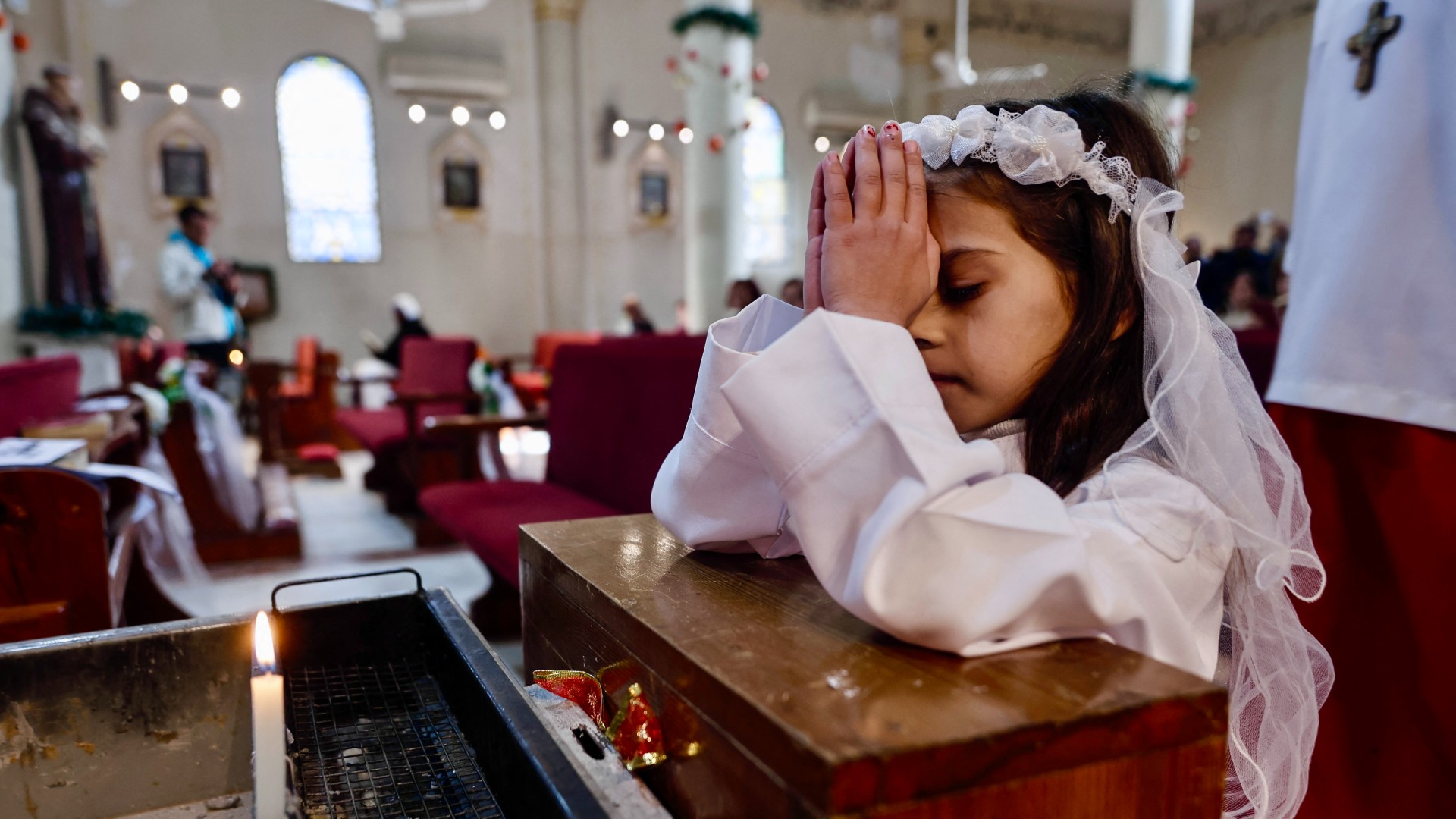
“We are marking the birth of Jesus Christ through prayer inside the church only. But our joy remains incomplete”.
Before the war, churches across Gaza transformed their courtyards into gathering spaces, decorated streets with festive lights and hosted carols that brought families together.
New MEE newsletter: Jerusalem Dispatch
Sign up to get the latest insights and analysis on
Israel-Palestine, alongside Turkey Unpacked and other MEE newsletters
Muslims often joined Christian neighbours to mark the occasion, including the annual lighting of a large Christmas tree in Gaza City.
“This year, we cannot celebrate while we are still grieving for those killed, including during attacks on churches,” Tarazi said.
“Nothing feels the same any more. Many members of our community will not be with us this Christmas”.
‘We cannot celebrate while Christians and Muslims alike are mourning devastating losses. For us, the war has not ended’
– George Anton, Latin Patriarchate in Gaza
George Anton, the director of operations at the Latin Patriarchate in Gaza and head of its emergency committee, echoed those sentiments.
“We cannot celebrate while Christians and Muslims alike are mourning devastating losses caused by the war,” Anton told MEE. “For us, the war has not ended”.
Anton said churches are limiting observances to prayers and a nativity scene inside church buildings. “In the past, we decorated our homes. Now many homes are gone. We decorated the streets. Even the streets are gone,” he said. “There is nothing to celebrate”.
Since October 2023, Gaza’s Christian homes, schools and churches have been damaged or destroyed during Israeli military operations. Three historic churches – Saint Porphyrius Greek Orthodox Church, the Holy Family Catholic Church and the Baptist Church – have suffered severe damage.
Anton said at least 53 Christians have been killed directly or indirectly during the war, with many others injured.
“Some were killed in air strikes, while others died because we could not reach hospitals or provide medicine, especially elderly people with chronic illnesses,” he said.
‘Determined to stay’
This Christmas comes amid what church leaders describe as the smallest Christian population Gaza has seen in decades.
More than 400 Christians have left Gaza during the war, fearing for their lives after relatives and friends were killed. Today, an estimated 220 Christian families – around 580 people – remain in the Strip.
“Those of us who remain are determined to stay,” Anton said, while acknowledging that worsening humanitarian conditions may force more families to leave in search of medical care and stability.

Christians in Bethlehem face existential threat under Israel’s occupation
Read More »
Around 70 percent of Gaza’s Christians belong to the Greek Orthodox Church, with most of the remainder being Latin Catholics.
“The situation affects everyone – Christians and Muslims alike,” Anton said. “We are part of this society, and what happens to Gaza happens to us”.
On October 20, 2023, less than two weeks into the war, Israeli strikes hit the Saint Porphyrius Church compound, killing at least 16 people who had sought refuge there. The church is one of the oldest in the world, built on a site used for Christian worship since the fifth century.
In another attack on July 17, Israeli fire struck Gaza’s only Catholic church, killing two women and injuring several others, including the parish priest.
“All Palestinians, including the Christian community, are still living with the consequences of the war,” Anton said.
“We are grieving, frustrated and unstable. We cannot celebrate as if nothing has happened”.
