

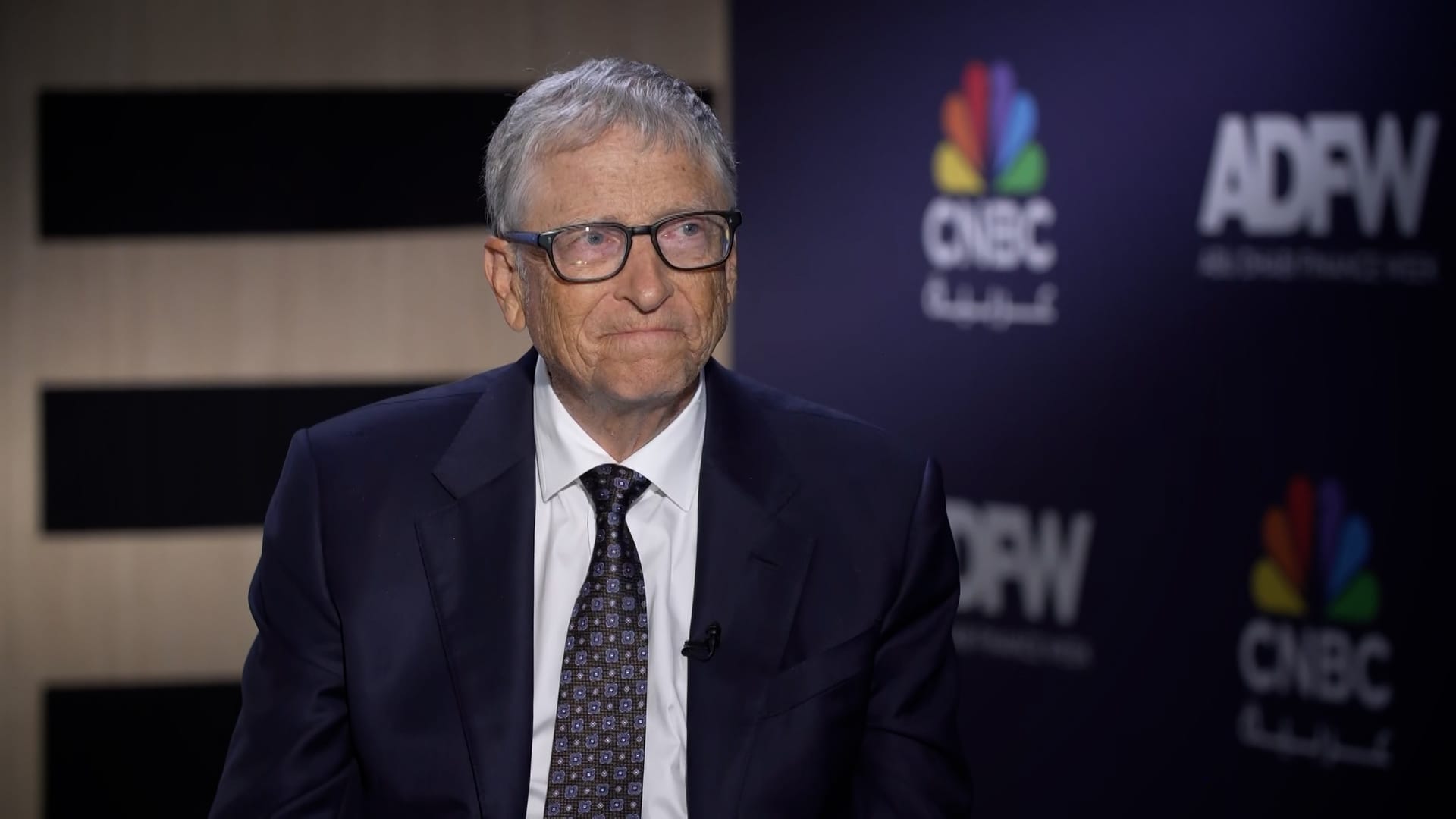
Bill Gates is as optimistic about the world’s future as ever, despite the fact that we’re living through “an era with so many challenges and so much polarization,” the billionaire philanthropist and Microsoft co-founder wrote in a blog post on Friday.
The world faces plenty of causes for concern over issues like climate change, global health and poverty, and disruptions caused by artificial intelligence, Gates wrote. However, “we are far better off than when I was born 70 years ago,” wrote Gates, due particularly to innovations in technology and global health.
Gates also believes that conditions will keep improving over the next two decades, especially as AI spurs new advances, he wrote: “I am still an optimist because I see what innovation accelerated by artificial intelligence will bring.”
But there are a few caveats. “These days, my optimism comes with footnotes,” wrote Gates.
Specifically, Gates is concerned about three questions that could determine “the trajectory of [the world’s] progress,” he wrote:
1. Will a world that is getting richer increase its generosity toward those in need?
The number of worldwide deaths of children under 5 years old was projected to increase by roughly 200,000 in 2025, rising for the first time in 25 years, according to a report released by the Gates Foundation in December.
The projected stat is “the thing I am most upset about” regarding the world’s progress, Gates wrote on Friday. He linked it to significant cuts to global aid spending by leading world governments, including the U.S.
“Over the last 25 years, those deaths went down faster than at any other point in history. But in 2025, they went up for the first time this century…” wrote Gates. “This trend will continue unless we make progress in restoring aid budgets.”
The global standard of living’s continued improvement depends, in part, on wealthy countries and individuals — like himself — re-committing to contribute some of their abundant resources to help those in need and reduce inequality around the world, Gates wrote. The billionaire announced plans in May 2025 to step up his own charitable giving as part of a pledge to give away “virtually all” of his wealth — which is currently estimated at $118 billion by Bloomberg — by 2045.
“This idea of treating others as you wish to be treated does not just apply to rich countries giving aid. It must also include philanthropy from the wealthy to help those in need — both domestically and globally — which should grow rapidly in a world with a record number of billionaires and even centibillionaires,” he wrote on Friday.
2. Will the world prioritize scaling innovations that improve equality?
Gates’ optimism is bolstered by his belief in the power of technology, particularly AI, to create new breakthroughs in medical treatments, he wrote. Gates pointed to AI-powered advances in Alzheimer’s research, as well as cancer and health crises still faced by developing countries, from malaria to malnutrition.
The Microsoft co-founder has also long been a proponent of using AI to improve education in the U.S. and abroad. AI tutors could eventually “be like a great high school teacher,” providing personalized instruction to students across all income levels and geographies, Gates said on his “Unconfuse Me” podcast in August 2023.
DON’T MISS: How to build custom GPTs and use AI agents
In his blog post, Gates also linked environmental issues to global equality, writing that climate change could “join poverty and infectious disease in causing enormous suffering, especially for the world’s poorest people.”
After previously arguing for some climate research funding to be redirected to issues like poverty and health care, Gates wrote on Friday that he still plans on “investing and giving more than ever to climate work in the years ahead.”
AI’s agricultural applications could help provide farmers in developing countries with better advice, and more adaptive crops, to help them survive the challenges of growing food in warming environments, he wrote.
3. Will we minimize negative disruptions caused by AI as it accelerates?
Clearly, Gates is an AI optimist. He also wrote about the technology’s risks, and the need to work proactively to avoid worst-case scenarios, citing two specific challenges for the next two decades: the potential use of AI by bad actors and disruptions to the job market.
“Both are real risks that we need to do a better job managing,” wrote Gates. World governments and the tech industry will have to be “deliberate about how this technology is developed, governed, and deployed,” he added.
Gates didn’t offer any specific suggestions, but did push back against the idea that AI might significantly damage the prospects of human workers, writing that “we should be able to allocate these new capabilities in ways that benefit everyone,” including the potential for shorter work weeks for some people. Such optimism stems from his belief in “two core human capabilities,” he noted.
“The first is our ability to anticipate problems and prepare for them, and therefore ensure that our new discoveries make all of us better off. The second is our capacity to care about each other,” Gates wrote, adding that history is filled with examples of people who put “the greater good” ahead of their own personal interests.
“Those two qualities — foresight and care — are what give me hope as the year begins,” Gates wrote. “As long as we keep exercising those abilities, I believe the years ahead can be ones of real progress.”
Want to get ahead at work with AI? Sign up for CNBC’s new online course, Beyond the Basics: How to Use AI to Supercharge Your Work. Learn advanced AI skills like building custom GPTs and using AI agents to boost your productivity today. Use coupon code EARLYBIRD for 25% off. Offer valid from Jan. 5 to Jan. 19, 2026. Terms apply.
