

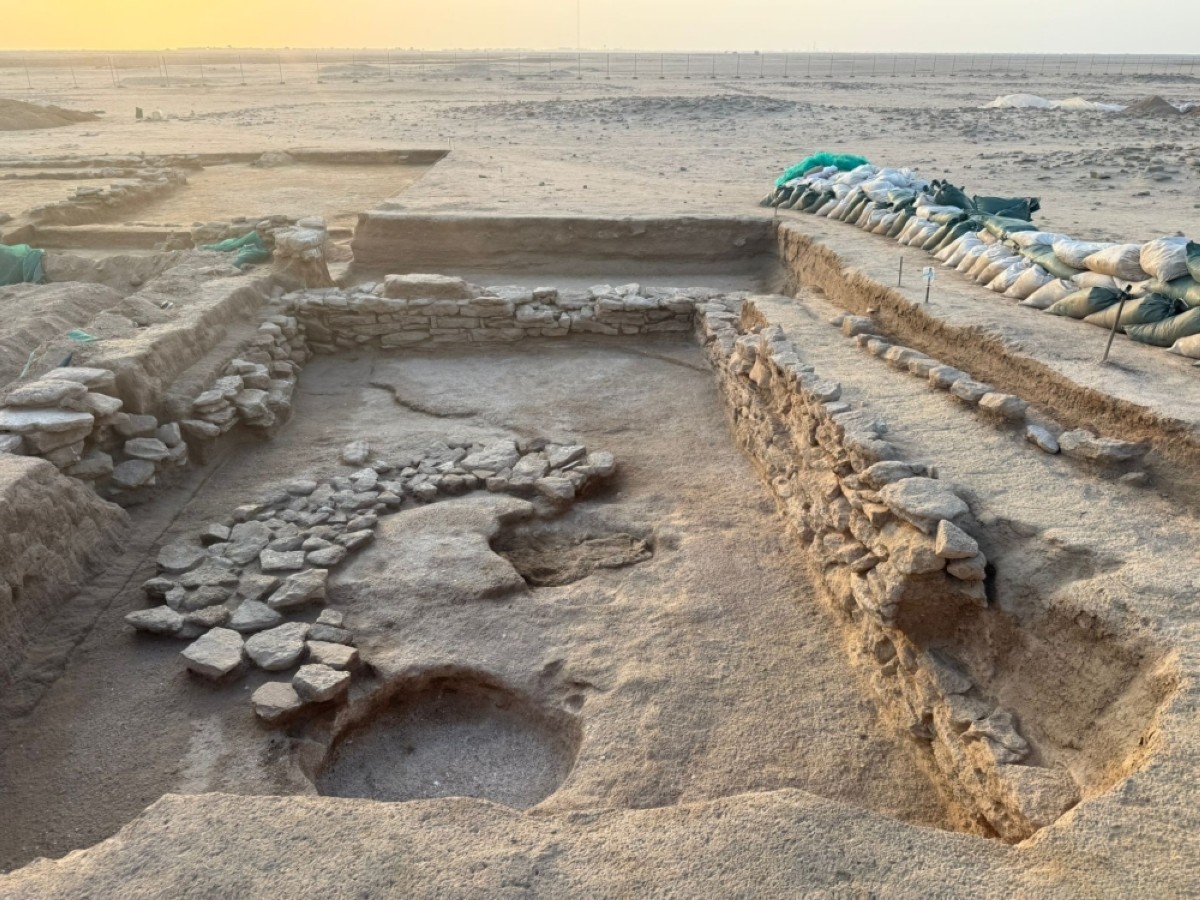
KUWAIT: The National Council for Culture, Arts and Letters announced on Wednesday the discovery of significant archaeological remains at Deir Al-Qusur on Failaka Island, including pottery fragments bearing Syriac inscriptions and material evidence dating to the Umayyad and early Abbasid periods. The finds were made by a joint French-Kuwaiti archaeological mission that has been excavating the site since 2011.
Officials said the discoveries confirm the existence of a Christian monastic settlement following the Eastern Syriac tradition, alongside early Islamic-era architectural remains from between the mid-7th and mid-9th centuries AD. Artifacts uncovered include Syriac ostraca, coins, perfume bottles and advanced construction materials such as artificial basalt.

Experts described the findings as an important contribution to understanding daily life, economic activity and religious practices on Failaka Island some 1,200 years ago. The monastery complex includes a large decorated church, a refectory and a food preparation area, pointing to a well-organized communal life. The discoveries also highlight religious coexistence between Christian and Muslim communities during Kuwait’s early Islamic period. — KUNA (See Page 2)
