

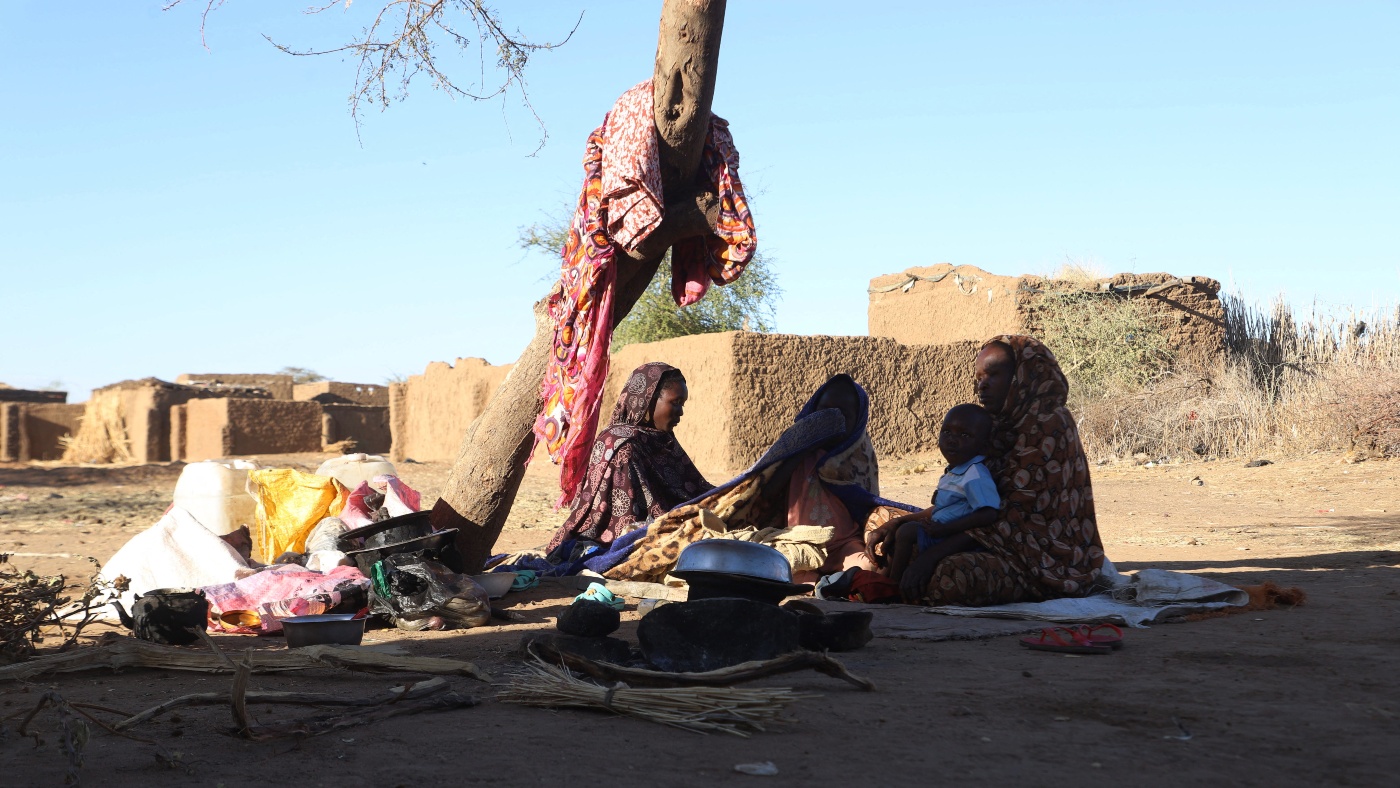
The United Nations on Monday said that nearly 65,000 civilians have fled the Kordofan region in southern Sudan over the past three months due to escalating insecurity.
In a statement, the UN’s International Organisation for Migration (IOM) said that 56 displacement incidents occurred between 25 October and 30 December 2025, including 17 in North Kordofan, 38 in South Kordofan, and one in West Kordofan, affecting around 64,890 people.
More than 42,000 people fled North Kordofan, about 21,860 were displaced from South Kordofan, and 250 from the Geibaish area in West Kordofan, the statement said.
The IOM said the figures are preliminary and subject to change due to ongoing insecurity.
Nearly 13 million people have been displaced since Sudan’s civil war broke out in April 2023 when tensions between the paramilitary Rapid Support Forces (RSF) and the Sudanese Armed Forces (SAF) broke into conflict.
New MEE newsletter: Jerusalem Dispatch
Sign up to get the latest insights and analysis on
Israel-Palestine, alongside Turkey Unpacked and other MEE newsletters
The RSF now holds five states in the Darfur region, while the Sudanese army continues to dominate the remaining 13 states across the south, north, east, and central regions, including the capital, Khartoum.
The groups split in 2023, after working in 2019 to overthrow Omar al-Bashir, Sudan’s ruler for 30 years.
The RSF, which has been accused of genocide and war crimes, including mass killings in el-Fasher in November, is supported by the UAE, which is its chief supplier of arms.
SAF has also been accused of war crimes and human rights abuses.
UAE’s role
Abu Dhabi has been accused of complicity in war crimes and genocide by the Sudanese government and human rights monitors for militarily supporting the RSF led by Mohamed Hamdan “Hemedti” Dagalo.
The group has been accused of widespread atrocities, including torture, rape and summary executions, leading to sanctions and accusations of genocide.
Its leader, Hemedti, with a wealth estimated at $7bn in 2023, has financial ties with the UAE, which has supported the group in breach of UN arms embargoes.
The UAE has supplied the RSF with weapons through a complex network of supply lines and alliances across neighbouring Libya, Chad, Uganda, and breakaway regions of Somalia.
In May 2025, Amnesty International found that the UAE was sending advanced Chinese-made weaponry into Darfur.
Abu Dhabi holds significant interests in Sudan’s agricultural and mineral sectors, much of which are untapped, including gold. The UAE has become a global trading hub in gold, in its attempts to diversify its oil-dependent economy.
