

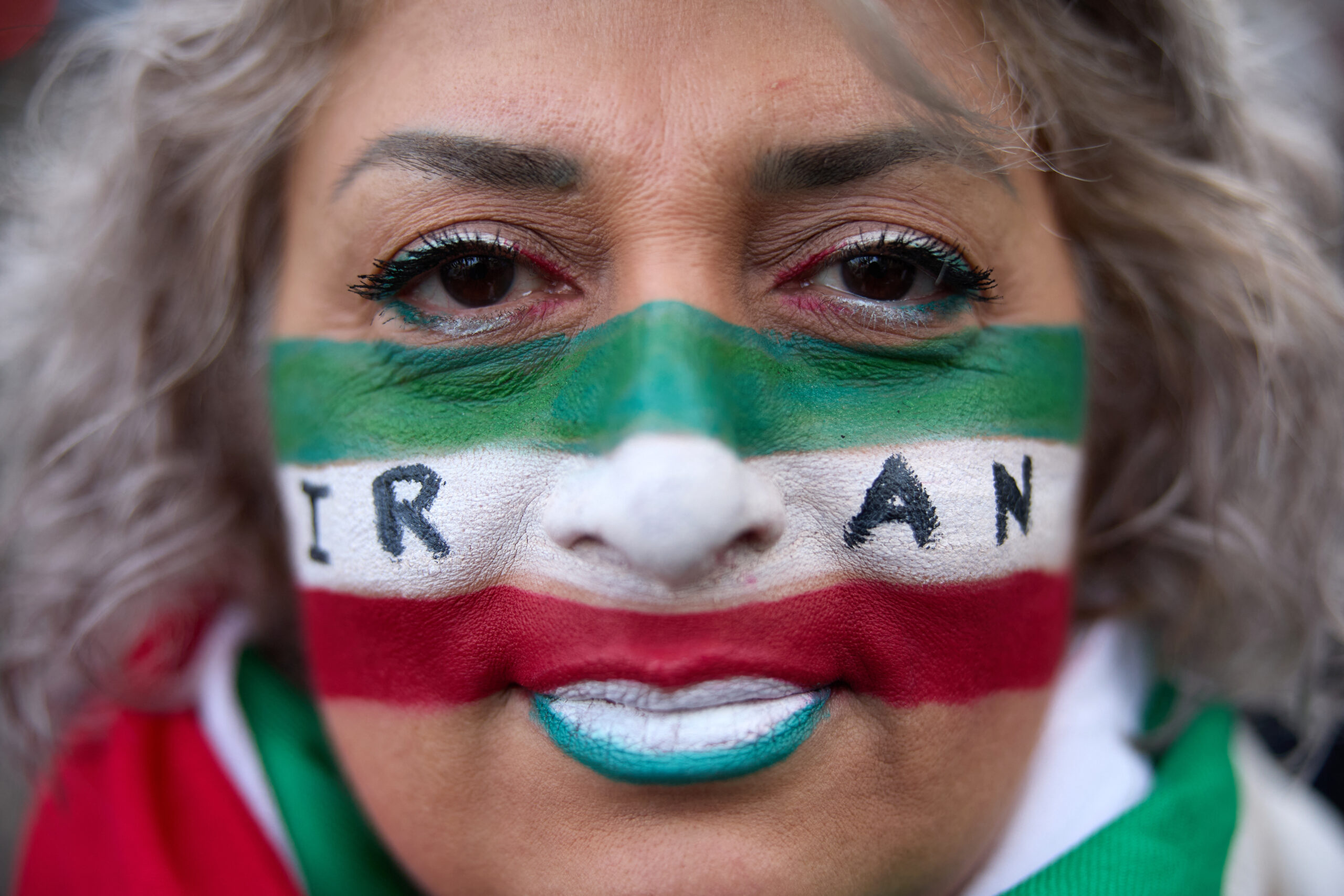
Social media has become a key arena where debates about the ongoing protests in Iran are playing out.
The protests, initially staged by shopkeepers angered by rising inflation, have since snowballed, both domestically and globally, into demands for political change.
Thousands of people have voiced their support for Iranians demonstrating against an ailing economy and the political establishment, while others have expressed trepitation as US President Donald Trump flirts with the idea of intervention and Israel encourages revolt against Iran’s leadership.
Many have responded to the political uprising with caution, warning of the risk that the movement can be co-opted by “imperialist powers”.
Amid a fierce online debate, many social media users are saying the issue should not be reduced to a black-and-white geopolitical debate.
New MEE newsletter: Jerusalem Dispatch
Sign up to get the latest insights and analysis on
Israel-Palestine, alongside Turkey Unpacked and other MEE newsletters
“It’s not hard to have a good take on what’s happening in Iran,” said Palestian-American comedian Sammy Obeid on X.
“Simply acknowledge: the Iranian government has oppressed its people, CIA and Mossad are capitalizing on this opportunity to make it far worse, the US and Western imperialism machine have created this situation after years of crippling economic sanctions and undermining psyops, the fate of Iran ultimately belongs to the will of the people there…
“A million things can be true at once.”
Another user agreed: “I think it’s not just possible, but probable, that as an Iran lover one would be against the islamic regime, dictatorship, monarchy, netanyahu, irgc, foreign intervention… I hope we learn to tolerate differences, move towards true democracy and learn from history and our own mistakes.”
“Iranian people who currently live under an oppressive dictatorship deserve to express themselves without state sanctioned violence and the US, western forces and Israel have cause irreparable harm to Iranians and only want to take advantage of them for their own profit,” said Ariana Jasmine Afshar, an Iranian-American who has been active on social media and commenting on Iran for several years.
Around 2,000 people, including civilians and security personnel, have been killed in the protests, which have entered their third week, reported Reuters on Tuesday, quoting an Iranian official.
Over 10,700 people have been arrested, according to US-based Human Rights Activists News Agency.
The demonstrations mark the largest protests in Iran since the “Woman Life Freedom” protests in 2022.
‘Iranian people deserve democracy and freedom’
The US has threatened to intervene in Iran in light of the protests.
“The military is looking at it, and we’re looking at some very strong options. We’ll make a determination,” Trump told reporters on board Air Force One late on Sunday.
In a similar vein, Israeli officials have made it clear that they want the Iranian leadership gone and have actively encouraged revolt.
“The regime in Iran must fall, and we need to exercise strategic patience, while remaining ready to act when is necessary,” former Israeli defence minister Yoav Gallant said this week.
But online – and elsewhere – many people are emphasising that Iranians don’t need US boots on the ground for political change; that the act of protesting against the government is not synonymous with welcoming US intervention.
Regional experts have pointed to Iran’s middle class and civil society as a potential driver for political change in the country.
“I think too often in the West, we are forgetting that [Iranian civil society] exists, and that those people have not been necessarily calling for foreign intervention through military strikes, and they have not been calling for a turn of violence by the protesters,” Ellie Geranmayeh, a senior policy fellow at the European Council for Foreign Relations, said during a recent event hosted by the Quincy Institute.
Western-imposed sanctions have not only decimated Iran’s economy by crippling the government’s primary source of revenue, oil exports, but have also disporportionately affected the same segment of society who could push for change, said Mohammad Ali Shabani, editor of the Amwaj news magazine.
“I think that [the] vast majority of Iranians would welcome a deal that lifts the shadow of war and invites the removal of sanctions,” he told the panel, adding that most Iranians accept that the Islamic Republic is not going to be there forever.
Trump also announced this week that he was imposing a tariff rate of 25 percent on any country that does business with Iran.
“Effective immediately, any country doing business with the Islamic Republic of Iran will pay a tariff of 25% on any and all business being done with the United States of America,” he posted on Truth Social on Monday.
Iran’s foreign minister said Tehran is ready for either “war” or dialogue and is keeping lines of communication with the US open.
