

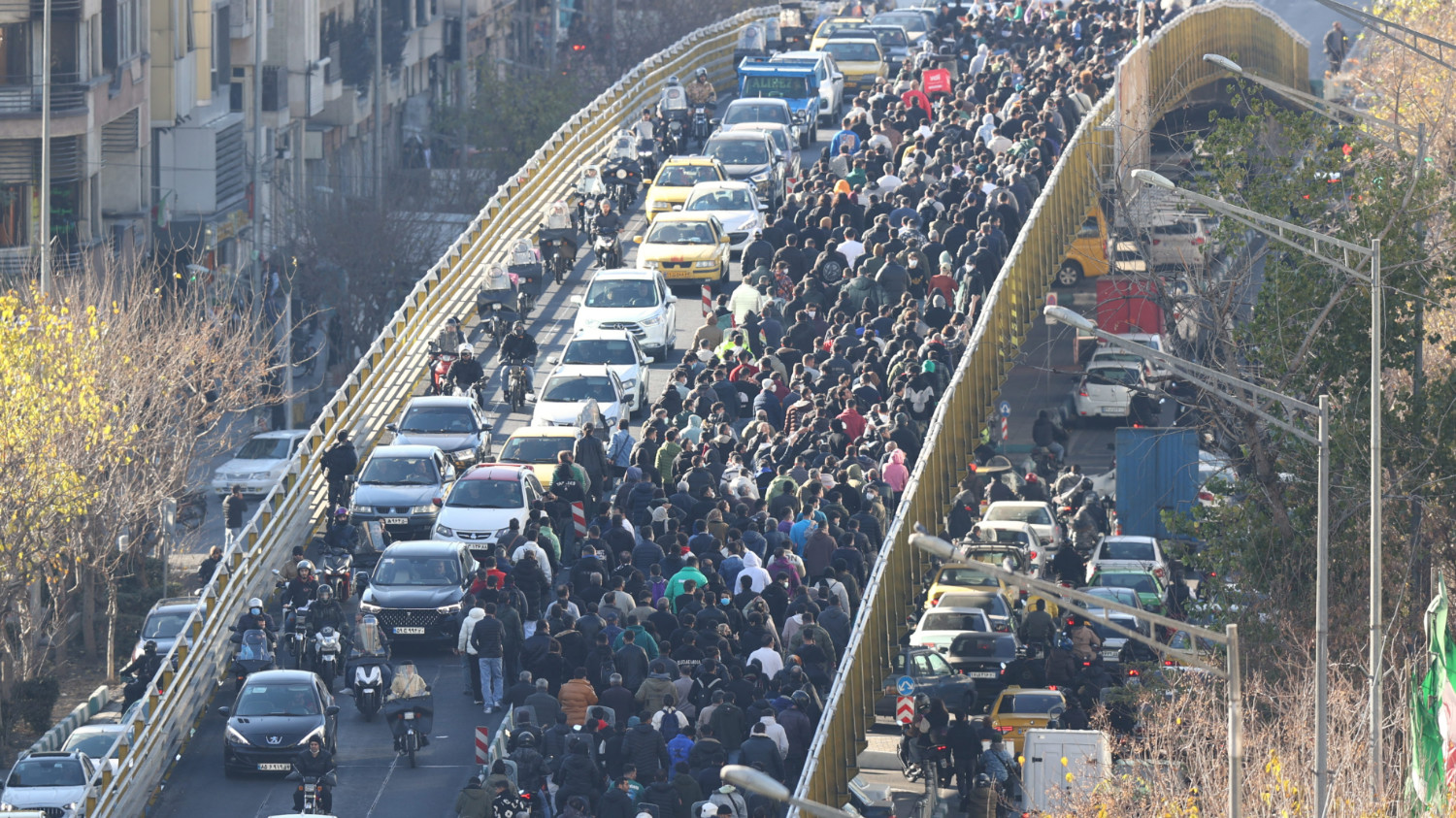
Prices on shop shelves across Iran are no longer holding steady for a week, or even a day. For many Iranians, the sudden jump in the cost of basic goods has become a daily reality – and a reason some are once again taking to the streets.
What began as strikes over spiralling prices and a currency plunging to historic lows has grown into a broader expression of discontent with Iran’s political leadership.
Over more than a week, the protests spread to dozens of cities, from Mashhad to Isfahan, stoking the most serious unrest in Iran since the Women, Life, Freedom movement in 2022-23.
In interviews with Middle East Eye, protesters described an economy that has become unmanageable for ordinary households.
“In just a few days, prices have multiplied. How can it be this disastrous? How can prices rise this much?” said Mani, a 27-year-old from Mashhad who has joined the demonstrations in recent days. “If this country had responsible rulers, things would not be like this.”
New MEE newsletter: Jerusalem Dispatch
Sign up to get the latest insights and analysis on
Israel-Palestine, alongside Turkey Unpacked and other MEE newsletters
The rial’s sharp depreciation has turned routine purchases into uncertain expenses from one week to the next. In Tehran, Maryam, 55, said she recently postponed buying sunflower oil because of its cost.
“Three days later, the price had more than doubled,” she said. “Has my income doubled in three days that I should pay this much for cooking oil?”
‘Our lives, wasted’
Iranian officials have acknowledged public discontent while warning against what they describe as unrest orchestrated by foreign enemies. Security forces have cracked down on the protests, using firearms and teargas in some areas, leading to violent clashes with demonstrators.
Rights groups monitoring the unrest say clashes between protesters and security forces have killed dozens, with estimates ranging from about 25 to 38 deaths so far, including minors. Thousands are said to have been detained.
Iranian authorities have not given a death toll for protesters, but have said at least two members of the security services have died and more than a dozen have been wounded.

Iran protests: What is driving the unrest?
Read More »
Last week, Supreme Leader Ayatollah Ali Khamenei said that while criticism was permissible, “rioters must be put back in their place”.
Days later, the head of Iran’s judiciary, Gholamhossein Mohseni Ejei, accused external forces of exploiting economic grievances to destabilise the country, saying protesters “who help the enemy” would not be shown leniency.
“Following announcements by Israel and the US president, there is no excuse for those coming to the streets for riots and unrest,” Ejei said.
Mani, like many Iranians, rejected the accusation, saying people’s anger is rooted in everyday hardship: “Every time we get tired of this situation and come out to the streets, we are suddenly called Israelis or CIA agents.”
For some protesters, the official statements and warnings have reinforced rather than deterred dissent.
Mehdi, 31, from Falavarjan in Isfahan province, said he joined demonstrations after hearing comments by senior officials. “We are exhausted,” he said.
“Our lives and our youth have been wasted under the Islamic Republic. Now they threaten us. What do we really have left to lose?”
Though the demonstrations have generally been smaller than the uprising following Mahsa Amini’s death at the hands of the “morality police” in 2022, their geographic reach and intensity have raised alarms.
In some western provinces, clashes between protesters and security forces have been particularly fierce.
‘We only want Pahlavi’
Many Iranians who have not joined the protests say they are concerned about what may come next. At the same time, the demonstrations have highlighted sharp differences of opinion over the country’s political future.
Supporters of Reza Pahlavi, the son of Iran’s last shah, have been visible at demonstrations in some cities, with chants calling for his return. Pahlavi, who has lived in exile since 1979, has not built an organised political movement inside Iran, but his supporters see him as a unifying alternative to the current system.
‘Our lives and our youth have been wasted under the Islamic Republic. Now they threaten us. What do we really have left to lose?’
– Mehdi, protester
Others remain wary. Mina, a 42-year-old woman in Tehran, said she opposed both the Islamic Republic and a return to monarchy.
“Under the Islamic Republic we are sinking every day,” she said. “But I am afraid that after all these years, we could go back 50 years, replacing a religious dictatorship with a royal one.”
Behrouz, a 23-year-old protester from Kerman, said he entirely rejected reformist politics and their return to power.
“We only want Pahlavi,” he said. “No other option. We will not allow deceitful reformists to fool us again.”
Despite these disagreements, many protesters say debates over leadership can wait. For now, their focus remains on economic survival and opposition to the current system.
Iran’s leadership has weathered repeated waves of unrest over the past decade, often combining limited concessions with repression. However, some political observers warn that this wave of unrest could be different, cautioning that small, scattered protests across multiple cities might merge into a broader movement capable of challenging the entire system.
