

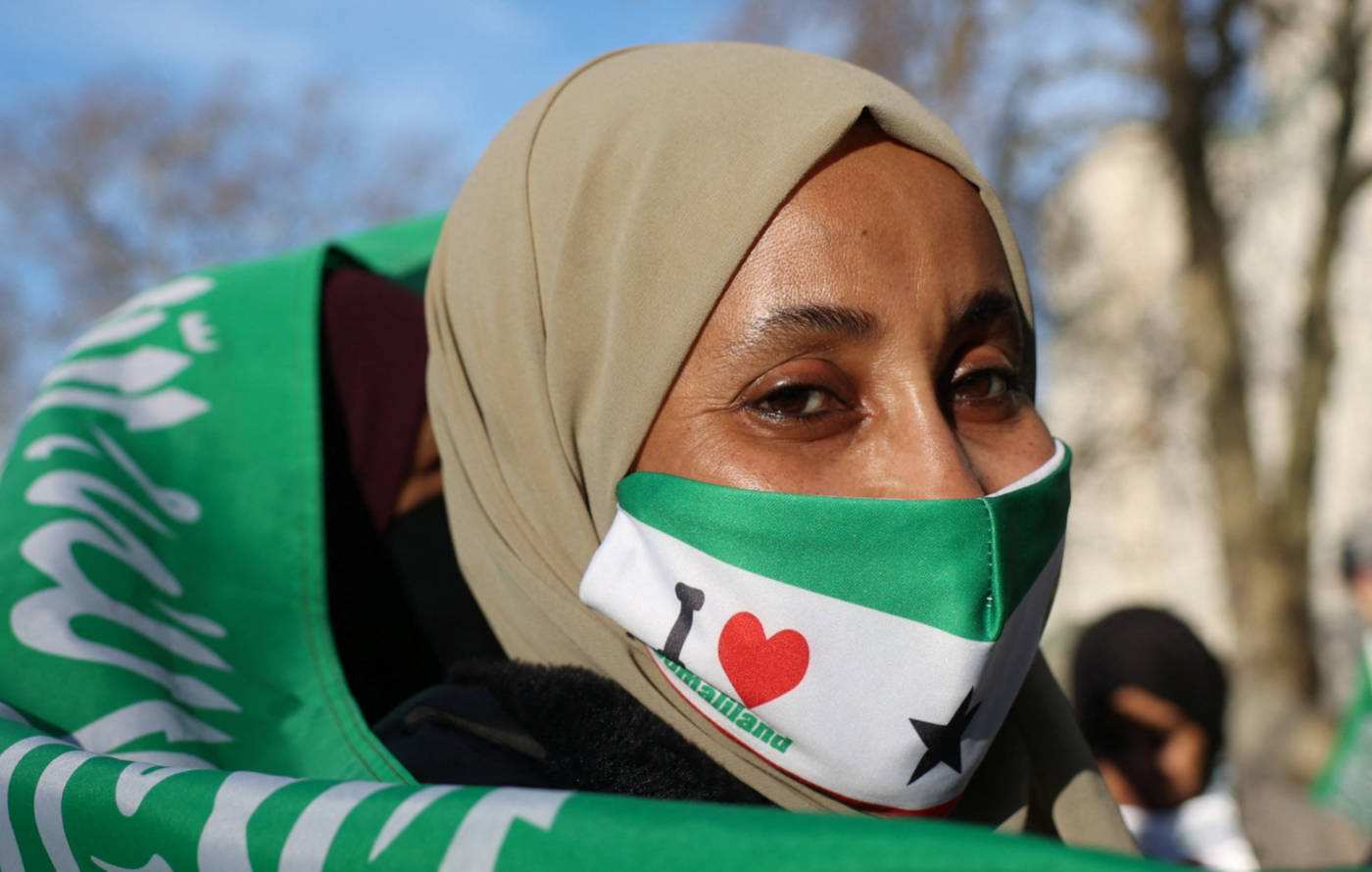
Somaliland is one of the world’s poorest territories, but sits in the strategically important Horn of Africa region that bridges the continent with the Middle East.
The region has often attracted the attention of powerful interests, and never more so than in the past few months.
In December 2025, Israel became the first UN member to recognise Somaliland as an independent state, for which it was widely criticised.
Meanwhile, the UAE and Saudi Arabia have clashed over the territory. The two regional powers have backed opposing sides in the wars in Yemen and Sudan.
In January, Saudi Arabia accused the UAE of taking Yemeni separatist leader Aidarous al-Zubaidi, who faced treason charges, to the territory before heading to Abu Dhabi.
New MEE newsletter: Jerusalem Dispatch
Sign up to get the latest insights and analysis on
Israel-Palestine, alongside Turkey Unpacked and other MEE newsletters
Somalia reacted angrily to the allegations, severing the UAE’s commercial and military contracts in Somaliland, although it retains little control over the territory.
Here, Middle East Eye explains why so many regional powers are becoming involved in Somaliland.
Where is Somaliland?
Somaliland is an autonomous region in northern Somalia that declared independence in 1991. No UN member state officially recognised it until Israel did so in December 2025.

Somalia has little control over the territory, which has its own constitution, currency, state institutions and military. It has a population of six million, including one million in its capital, Hargeisa.
From 1884 until 1960, the region was governed by the UK as the Somaliland Protectorate, situated between Italian Somaliland (current Somalia) and French Somaliland (now Djibouti).
On 26 June 1960, Somaliland became independent from the UK. Five days later, it voluntarily united with Italian Somaliland to form Somalia.
Somaliland is ethnically distinct, populated mostly by the Isaaq, who were persecuted by Somalia’s military dictatorship, led by Siad Barre.
In the early 1980s, rebel groups launched a campaign known as the Somali Rebellion, following which the Barre regime carried out a genocide during which an estimated 200,000 were killed between 1987 and 1989.

 When Barre was eventually toppled by the United Somali Congress in 1991, Somaliland issued a declaration of independence and said that its 1960 unification agreement with Somalia was null and void.
Since then, it has been more stable than Somalia, which is embroiled in a civil war that has seen UN (1993-95) and US-led military interventions (1993 and from 2007 to the present) .
There is broad support for independence in Somaliland. However, its eastern territory is disputed with Puntland, a semi-autonomous region of Somalia.
Puntland declared itself an autonomous state in 1998 and frequently contests the authority of Somalia’s government. Unlike Somaliland, it does not seek full independence.
Much of Somalia outside major cities is controlled by al-Shabaab, a militant group which has little presence in Somaliland.
Who recognises Somaliland?
Somaliland has long faced international opposition to its independence goals amid fears that its secession would encourage other regional separatist movements.
But on 26 December 2025, Israel became the first UN member to fully recognise Somaliland.

In exchange, Somaliland said it would sign up to the Abraham Accords, a series of US-led agreements in which Morocco, Bahrain, and the UAE “normalised” relations with Israel in 2020 and 2021, ending decades of diplomatic boycott. Sudan’s agreement to normalise remains unratified amid its civil war.
In Somaliland, the deal drew celebrations as well as protests against Israel’s genocide in Gaza, during which more than 72,000 Palestinians have been killed since October 2023.
Why has Israel recognised Somaliland?
Somaliland offers Israel a key ally in the Horn of Africa which can assist it commercially and militarily.
To Somaliland’s north is the 30km wide Bab al-Mandab strait that connects the Gulf of Aden with the Red Sea and, eventually, the Suez Canal. It’s a major maritime chokepoint through which passes around 30 percent of global oil shipments as well as other maritime trade.
Abdirahman Mohamed Abdullahi, the president of Somaliland, said on 6 February that he had “not ruled out the possibility of granting an Israeli company a port” in Somaliland. Israeli companies have little past record of operating seaports abroad.

Military coordination with Somaliland would assist Israel against the Houthi rebel group in northern Yemen, which has attacked Israel-linked ships in the Red Sea and Gulf of Aden in support of Palestinians during the genocide in Gaza. The group has also attacked Israel directly.
Since Israel’s recognition, Somaliland’s officials have discussed building an Israeli military base in the territory, despite previous denials of such a plan from Hargeisa’s foreign ministry.
Somaliland has also discussed with Israel and the US the prospect of resettling displaced Palestinians to its territory, according to the Associated Press. Hargeisa has also officially denied this.
Israeli Foreign Minister Gideon Saar visited Somaliland in January in the first official delegation since recognition.
During his trip, Saar said that “unlike Palestine, Somaliland is not a virtual state” and referred to the territory as “pro-western and friendly to Israel”.
How has Somalia responded to Israel’s recognition of Somaliland?
Somalia regards Israel’s recognition of Somaliland as a danger to its sovereignty and territorial integrity, with Somali President Hassan Sheikh Mohamud calling it an “existential threat”.
He also told Al Jazeera on 8 February that Somalia anticipates an Israeli base in Somaliland, but that Somalia “will fight in its capacity” if this happens.
Asked to confirm how Somalia would respond to an Israeli presence in its claimed territory, he added: “We are against that and will never allow that.”
The recognition was also met with thousands of Somalis protesting in Mogadishu on 30 December.
Abdisalam Abdi Ali, Somalia’s foreign minister, said on 30 December: “The step taken by Israel is a threat to the security of the region, the Red Sea, the Gulf of Aden, and even the Middle East, and at the same time encourages terrorist groups based in the Horn of Africa.”
How did the US react to Israeli recognition?
Donald Trump, the US president, told the New York Post on 26 December that the US was not yet ready to recognise Somaliland and that they would “study it”.
“I study a lot of things and always make great decisions and they turn out to be correct,” he said, before adding: “Does anyone know what Somaliland is, really?”
But at an emergency UN Security Council meeting on 29 December, US State Department spokesperson Tammy Bruce said: “Israel has the same right to conduct diplomatic relations as any other sovereign state.”
“Earlier this year, several countries, including members of this Council, made the unilateral decision to recognise a nonexistent Palestinian state. And yet, no emergency meeting was called to express this Council’s outrage.”
In Washington, right-leaning politicians and think tanks have called for the recognition of Somaliland.
A group of Republican congress members led by Trump ally Scott Perry launched a non-binding “Republic of Somaliland Independence Act” in the US House of Representatives on 6 December.
What about the rest of the world?
Elsewhere, Israeli recognition has received little support. It was condemned by the Arab League, the African Union and the Gulf Cooperation Council.
Saudi Arabia has been a leading voice against the move, affirming its support for the “unity and territorial integrity” of Somalia on 26 December.
“The Kingdom expresses its rejection of the announcement of mutual recognition between the Israeli occupation authorities and the Somaliland region, considering it an action that entrenches unilateral secessionist measures that violate international law,” it stated.
Saudi Arabia has long sought influence in Somalia. The two states signed a new agreement “to strengthen the frameworks of defence and military cooperation” on 10 February.

Turkey said on 26 December that Israeli recognition was “yet another example of the Netanyahu government’s unlawful actions aimed at creating instability at both the regional and global levels”.
On 29 January, Turkey deployed three F-16 fighter jets to Somalia, where it has deepened economic ties in recent months.
Qatar and Egypt, along with neighbouring Djibouti and Eritrea, denounced the move. China, which has boosted ties with Somalia as part of its Belt and Road Initiative megaproject, also condemned it.
The Houthis warned on 28 December that they would consider any Israeli military presence in Somaliland a “military target”.
In January 2024, Ethiopia, which neighbours Somaliland and Somalia and is the world’s most populous landlocked state, signed a bilateral deal to lease Berbera Port from Somaliland.
This led to a diplomatic feud between Somalia and Ethiopia that was mediated by Turkey. Ethiopia eventually signed a treaty in December 2024, agreeing to respect Somalia’s territorial integrity. It has not recognised Somaliland.
Beyond the Middle East, European powers reaffirmed their commitment to Somalia’s territorial integrity, including the UK, France, and the EU.
Where is the UAE in all this?
The UAE has developed close ties with Somaliland since the mid 2010s, and was a notable exception to the list of countries that condemned Israeli recognition of the territory.
Nor did it add its name to a 6 January joint communique signed by 22 Muslim-majority states condemning Saar’s visit to Somaliland.
Somaliland first licensed its Berbera port to DP World, the UAE’s logistics giant, in 2016. The following year it accepted the UAE’s bid to establish a military base in Berbera, amid hopes that striking friendships in the Gulf could help its case for independence. Relations between Somalia and the UAE have been strained since.
The Berbera site is one of several Emirati military bases in the Gulf of Aden (others are on the coasts of Puntland, Jubaland, and until recently southern Yemen and the Socotra archipelago).

The UAE has used this network to project its power in the region, including funnelling weapons to the RSF paramilitary group accused of widespread atrocities in Sudan’s civil war.
But its foothold in Somaliland was weakened this month after Saudi Arabia accused the UAE of evacuating Aidarous al-Zubaidi, the leader of the Southern Transitional Council, a UAE-backed Yemeni separatist group, to Somaliland via Berbera on 5 January.
Saudi Arabia and the UAE back rival forces in Yemen and Sudan’s civil wars amid a fallout between the two former allies.
Somalia, which has strong ties with Saudi Arabia, cancelled all security and commercial contracts with the UAE on territory it controls under international law, including the Emirati base and ports in Somaliland’s Berbera and Puntland’s Bosaso.
The governments of Somaliland and Puntland rejected the decision, calling it illegal.
Hassan Sheikh Mohamud, Somalia’s president, said in a televised address on 12 January: “We had a good relationship with the UAE, but unfortunately, they didn’t engage us as an independent and sovereign nation.”
Emirati military personnel have since left the bases in Berbera, Bosaso and Kismayo, according to Middle East Eye sources.
The long-term status of the UAE’s DP World commercial port in Berbera is now unclear. DP World insisted on 13 January that its Berbera operations remain unaffected by Somalia’s move.
What happens now?
Somaliland’s president met Eric Trump, son of the US president, at the World Economic Forum in Davos on 23 January. Officials from Somaliland said that the pair discussed potential US investment in Somaliland’s livestock and agriculture industries.

Egypt and Saudi Arabia focus on Eritrea as UAE bolsters ties to Ethiopia
Read More »
Abdullahi told Reuters on 3 February that he expects to reach a trade deal with Israel, and is willing to offer rights to mineral deposits on its territory as part of this.
Ties with Israel could offer Somaliland opportunities to strengthen its own military. The breakaway region has flagged threats to its security since the UN partially lifted its arms embargo on Somalia in 2023.
Countries that signed the Abraham Accords have gained access to Israeli military products, including its drone systems and its spyware.
But the closeness has worsened ties between Israel and Saudi Arabia, two US allies that Washington has long sought to reconcile.
With its influence in Somaliland weakened, the UAE has boosted its military ties in neighbouring Ethiopia.
Middle East Eye revealed in January that a cargo plane linked to weapons smuggling in Sudan and Libya had made several flights between Abu Dhabi, Israel, Bahrain and Ethiopia in recent weeks.
