

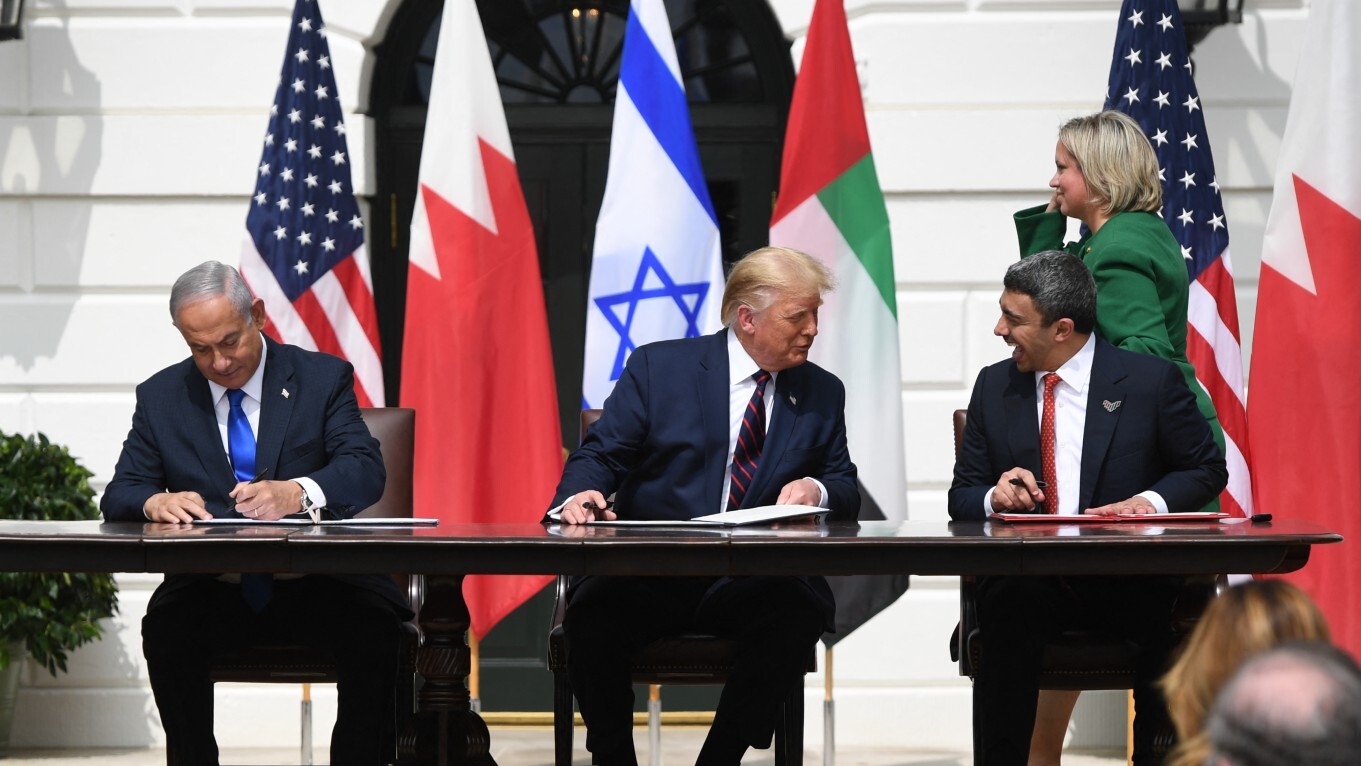
A prominent Saudi Arabian academic has accused the United Arab Emirates (UAE) of throwing itself “into the arms of Zionism” and functioning as “Israel’s Trojan horse in the Arab world” in order to weaken Saudi Arabia and emerge as a dominant regional power.
In a scathing column published on Thursday in the Saudi newspaper Al Jazirah, Ahmed bin Othman al-Tuwaijri accused leaders in the oil-rich emirate of Abu Dhabi of being “blinded” by “hatred and jealousy” and of turning against the kingdom despite decades of Saudi support.
Tuwaijri, a former dean at King Saud University and a former Shura Council member, singled out the emirate of Abu Dhabi for criticism, saying it was pursuing “hostile plots under the guise of diplomacy” and was behind several attempts to destabilise the region.
The Shura Council is a consultative, legislative body that advises the king on laws, policies and governance, with echoes of the traditional Majlis in Arab society.
Framing the emirate’s actions as both ideological and existential threats, Tuwaijri said that the UAE, which is governed by Mohammed bin Zayed – a staunch opponent of political Islam – had collaborated with Israel to the detriment of Arab interests. Zayed is also the crown prince of Abu Dhabi.
New MEE newsletter: Jerusalem Dispatch
Sign up to get the latest insights and analysis on
Israel-Palestine, alongside Turkey Unpacked and other MEE newsletters
“They are trying to shift loyalty from Arab and Islamic solidarity toward external influence,” Tuwaijri wrote.
“This is a betrayal of God, His Messenger, and the entire nation, and it cannot be ignored.”
‘Attacks on resistance groups’
Tuwaijri alleged that these collusions included direct military and intelligence cooperation, support for Israeli operations in Gaza, and the use of Emirati military bases in the Red Sea and the Horn of Africa to facilitate Israeli attacks on Palestinian “resistance groups”.

Exclusive: UAE flights linked to Sudan war tracked from Israel to Ethiopia
Read More »
Citing Yemen as a key example, he accused Abu Dhabi of sowing unrest by backing factions in the country’s south that had deliberately challenged the internationally recognised government.
Last month, fighters aligned with the separatist Southern Transitional Council (STC) swept through southern and eastern Yemen, seizing cities, military bases, ports, border crossings, and oil infrastructure from the Saudi-backed Yemeni government.
The advance outraged Saudi Arabia, which on 30 December bombed an Emirati shipment in southern Yemen and criticised the UAE’s role in backing the separatists.
Riyadh then launched strikes on the STC, and Saudi-backed forces subsequently advanced, with the separatists losing control across much of southern Yemen.
‘Chaos in Sudan’ and ‘vermin’ in Tunisia
In the article, Tuwaijri also condemned the UAE over the fragmentation of Libya, where two rival governments exist, and the country has been mired in more than a decade of civil war. He accused Abu Dhabi of seeking to splinter the country and support factions in the country’s east with “money and weapons”.
He further accused the UAE of “spreading chaos in Sudan” by arming the Rapid Support Forces (RSF) with money and weapons and using “secret air bridges” to support them.

How Oman went from mediator to silent Saudi partner in Yemen fight
Read More »
Turning to North Africa, Tuwaijri alleged that the UAE had “infiltrated Tunisia like vermin” and undermined Tunisian aspirations for freedom and justice following the 2011 Arab Spring uprising.
He said that in Egypt – once a major regional player – Abu Dhabi had flexed its financial muscle to dominate key sectors and influence Egyptian decision-making.
He also claimed that the UAE was deliberately backing Ethiopia’s Grand Renaissance Dam project despite the damage it could inflict on Egypt’s strategic interests.
Cairo, which relies on the Nile for roughly 97 percent of its freshwater needs, fears the dam could threaten its water security.
In the article, Tuwaijri also alleged that the UAE was intent on splitting up Somalia and establishing Israeli influence in the Horn of Africa for control of the Bab el-Mandeb Strait, a strategic maritime chokepoint.
Spillover beyond Arab world
Tensions between the UAE and Saudi Arabia have been simmering for years, but burst out in an unprecedented manner shortly after Crown Prince Mohammed bin Salman’s visit to Washington in November.
There, the Saudi leader lobbied US President Donald Trump against the UAE over its support for the RSF in Sudan. MEE was the first to reveal the lobbying plan. The following month, the STC launched its offensive, jolting Saudi Arabia into military action.
Saudi Arabia is also ramping up pressure on the UAE in Sudan. Along with Egypt and Turkey, Riyadh is backing the Sudanese Armed Forces against the UAE-backed RSF.
The downward spiral in ties between the two Gulf neighbours has spread beyond the Arab world, with signs that Saudi Arabia is courting Pakistan for military partnerships, and the UAE is inching closer to Islamabad’s arch-rival India.
Another arena of disagreement is Somalia. Saudi Arabia last week joined scores of countries in condemning Israel’s recognition of the breakaway region of Somaliland.
The UAE’s name was absent from a long list of Muslim and Arab countries opposing the recognition. Abu Dhabi is known to be working closely with Somaliland, including the construction of a military base there.
The fallout between the UAE and Saudi Arabia is a head-spinning turnaround from a decade ago when the two states partnered to blockade Qatar. Saudi Crown Prince Mohammed bin Salman was once a protege of UAE President Mohammed bin Zayed.
