

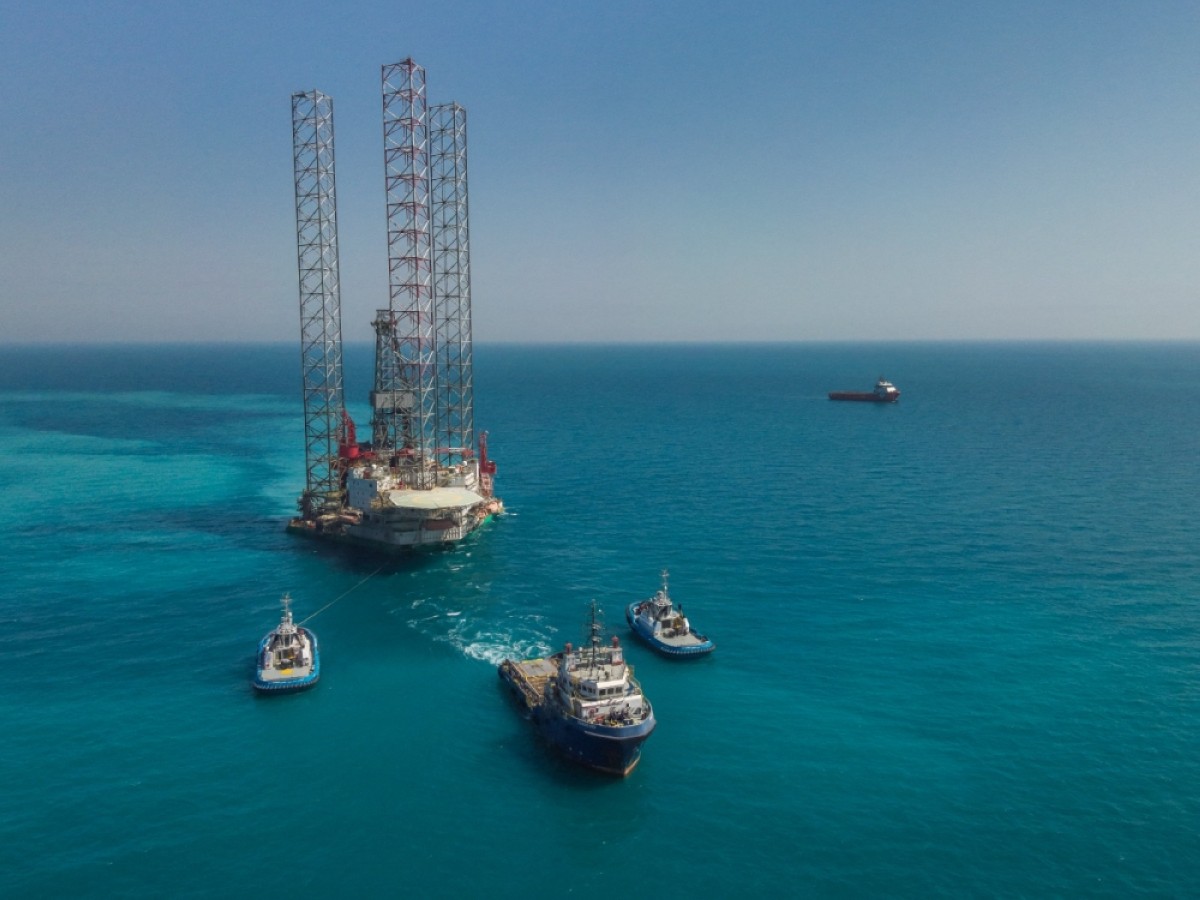
KUWAIT: Kuwait has entered a new phase of offshore oil exploration, moving from decades of preliminary studies to commercially viable discoveries, officials said on Wednesday. The recent offshore finds are expected to boost the country’s production capacity and strengthen its long-term technical expertise.
Speaking at a specialized panel discussion hosted by the Ministry of Oil, Sheikha Tamadur Khaled Al-Ahmad Al-Sabah, director of public relations and petroleum media, said offshore drilling has become “one of the vital pathways” for sustaining Kuwait’s energy resources. She added that the project highlights the role of Kuwaiti professionals at every stage, from geological studies to technical operations and future development. The panel, titled Jazza-1 Offshore Field, included KOC senior geologist Eman Alshehri and senior petroleum engineer Abdulmohsen Al-Qenaei, who outlined the evolution of offshore exploration and the timeline of discoveries.
The Jazza offshore field, discovered in October 2025, is Kuwait’s third fully offshore field. Preliminary data indicate it covers about 40 square kilometres, and production from the Jazza-1 well has already exceeded 29 million cubic feet of gas per day and more than 5,000 barrels of condensates per day—record levels for a vertical well. KOC said the field’s size is likely to grow following additional appraisal drilling and a three-dimensional seismic survey.
Earlier discoveries include the Noukhatha offshore field, announced in July 2024, which Kuwait Oil Company (KOC) described as the country’s first major offshore find, with estimated reserves of roughly 3.2 billion barrels of oil equivalent. The Julaia offshore field, revealed in January 2025, contains an estimated 800 million barrels of medium crude oil and 600 billion cubic feet of gas, offering potential for phased development of associated gas resources.
KOC representatives said offshore exploration in Kuwait dates back to 1961, but focused drilling began in 2014 with a two-dimensional marine seismic survey, followed by geological reservoir studies completed in 2018. The formal offshore drilling program started in 2022, with the Noukhatha-1 well drilled on August 8, 2022, using the Oriental Phoenix rig. A second well, Julaia-2, was drilled on September 23, 2023, using the Oriental Dragon rig.
Officials said Kuwait’s offshore area spans roughly 6,000 square kilometres. Seven exploratory wells drilled in the 1960s and 1980s targeted Cretaceous formations but did not yield commercial discoveries, although four wells showed promising results in the Mianageesh and Ratawi layers.
The ongoing exploration plan includes six new wells targeting both Cretaceous and Jurassic formations. Preparations are also underway for a three-dimensional seismic survey to guide future drilling, with two offshore rigs continuing operations. Sheikha Tamadur said the offshore drilling project goes beyond exploration, contributing to the development of national expertise and strengthening institutional readiness for the future of Kuwait’s energy sector. — KUNA
