

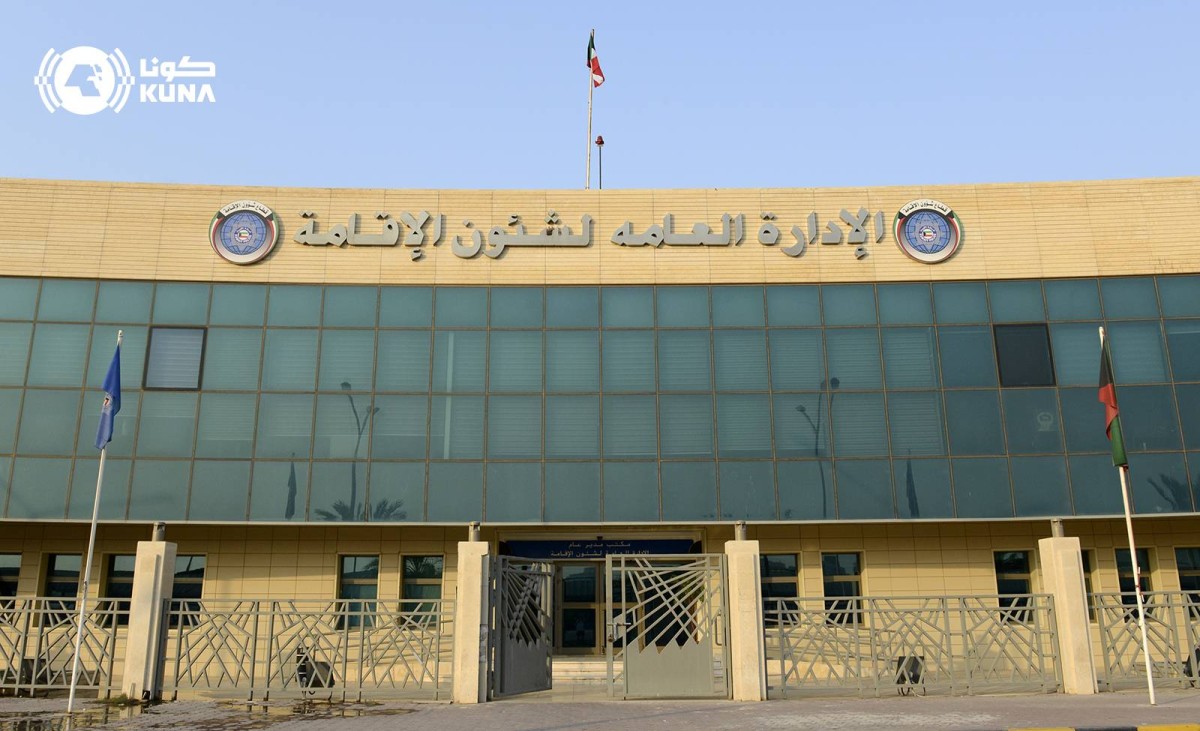
KUWAIT: Kuwait has entered a new era of residency management following the implementation of modernized executive regulations on December 23, 2025. In a recent interview with KTV’s Qabl Al-Aser, Colonel Turki Al-Saadoun, Director of Residency Affairs in Jahra, detailed how the Ministry of Interior is balancing streamlined digital services with rigorous penalties for those who bypass legal requirements. Kuwait Times has compiled some of the key points shared by Colonel Al-Saadoun to clarify information that might be confusing for people in Kuwait.
Residency with unlimited travel
In a move to attract investment and recognize deep-rooted ties, certain residency types are no longer connected to the length of stay within the country. While standard residencies may lapse if the holder is abroad for more than six months, the following categories remain valid regardless of time spent outside Kuwait: Article 21 (Foreign Investors) offers a 15-year residency that does not drop even if the investor lives abroad for years. Article 25 (Real Estate Owners) grants a 10-year renewal for property owners, allowing them to stay outside the country without losing their status. Article 27 (Children of Kuwaiti Women) can renew for 10 years and are not subject to the residency-lapse rules regarding stay abroad.
The “block” system
Kuwaiti law uses administrative “blocks” to ensure sponsors and employers remain compliant. A block essentially freezes an employer’s ability to conduct further government transactions. Harboring illegal workers: If an employer hires a “runaway” worker or someone not on their sponsorship, a total block on visas and sponsorships is placed on their file. The law considers the harborer a “partner in crime”. Personal violations: Even if the worker is compliant, the sponsor’s own record matters. Unpaid traffic violations or outstanding court judgments against a sponsor will block the renewal of all their workers’ residencies. Family negligence: If a father fails to register a newborn within four months, a block is placed on his file that halts his transactions across all government ministries, not just residency affairs.
Family sponsorship salary cap
To ensure that residents can adequately support their families, the ministry has established a minimum salary of KD 800 for those wishing to sponsor a wife and children under Article 22. Colonel Al-Saadoun explained that this salary cap was established to ensure that the residents are financially capable of providing for their family’s essential needs, specifically adequate housing and healthcare. The reasoning is that if a resident earns less than this amount, it would be difficult for them to properly support an entire family within the country.
The mechanics of visa transfers
Workers are prohibited from starting employment with a new employer until they transfer their residency permit through the Public Authority of Manpower. Working under the old residency is considered practicing work without a permit and can lead to arrest by the Tripartite Committee and potential deportation. The law also allows flexibility for moving between different employment types, such as transferring from a government position under Article 17 to the private sector under Article 18, provided the profession remains the same or very similar — for instance, a teacher moving from a government to a private school. Residents can also change their residency type within the same sponsor, such as from Article 18 to Article 20.
To protect workers, the law prevents employers from indefinitely blocking transfers. If a sponsor refuses to approve a transfer, the worker can file a formal complaint with the Public Authority of Manpower. In certain cases, the Authority can approve a transfer without the sponsor’s consent, such as when the worker has completed a year of service or if the sponsor has violated the contract, including failure to pay wages. During disputes, the worker must temporarily stop working until the case is resolved.
Certain professions face additional restrictions to prevent circumvention of the law. Drivers under Article 20 and delegates under Article 18 who leave their sponsor face a two-year lock, during which they cannot return to Kuwait to work for a different employer. However, they are allowed to return to their original sponsor at any time.
