

In November, protestors in Bulgaria were mobilising to topple their government over corruption and a cost-of-living crisis. Meanwhile, in Abu Dhabi, one of the Balkan country’s former foreign ministers was heralding “groundbreaking” talks on an economic deal between the European Union and the UAE.
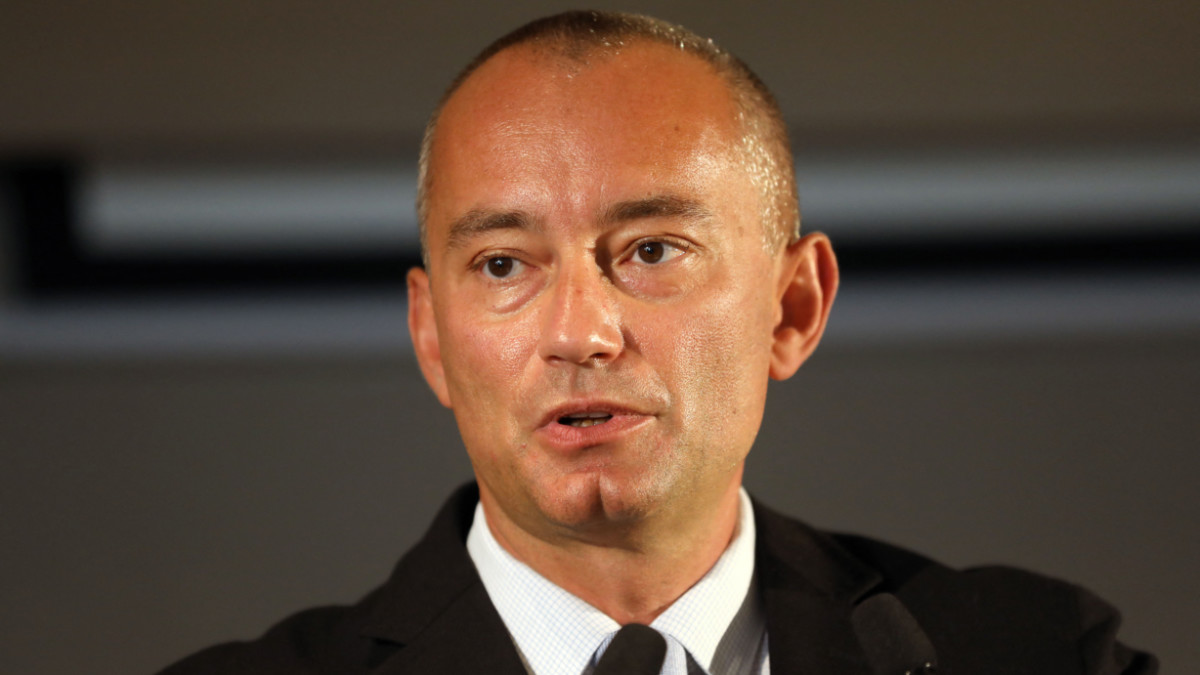
The former Bulgarian diplomat and defence minister, Nickolay Mladenov, is now being eyed to serve as the top official in Gaza working on behalf of US President Donald Trump’s “Board of Peace”.
His name is circulating as an alternative to Tony Blair, the former UK prime minister, whose name drew such widespread condemnation that it forced the US and Israel to seek alternatives.
The contrast between the political paralysis in Mladenov’s home country and his life in the Gulf shows how he tried to carve out his own elite niche in the Middle East and earned high marks serving as United Nations envoy for Middle East peace.
“A hell of a lot better than the alternative,” one Palestinian politician in the occupied West Bank told Middle East Eye when asked about him.
New MEE newsletter: Jerusalem Dispatch
Sign up to get the latest insights and analysis on
Israel-Palestine, alongside Turkey Unpacked and other MEE newsletters
Mladenov’s journey from European politics to the UN and finally the UAE, where he was hired to run the Anwar Gargash Diplomatic Academy, is one familiar to many former diplomats and generals from all over who are plucked up by oil-rich Gulf states, including Saudi Arabia and Qatar.
“It doesn’t matter about him. What matters is what it tells you, which is who is in control of this process,” one western official told Middle East Eye.
“Whoever is picked is going to get it on the neck, but Mladenov is very influenced by the UAE, and by extension Israel,” the official added.
MEE reached out to Mladenov on LinkedIn for comment on this article but did not receive a reply by the time of publication.
Post-Communist rise
Mladenov was born in 1972 in Sofia to a family of communist regime royalty. His father belonged to Bulgaria’s equivalent of the Soviet Union’s KGB, and his uncle was a communist-era ambassador.

What are the limits of the UAE-Israel partnership?
Read More »
“He was part of a breed of politicians that was very tied to the Communist regime as a family background, and turned right-wing in the nineties and noughties to lead Bulgaria’s transition rather than be associated with their original background,” Svetoslav Todorov, a Sofia-based journalist, told MEE.
In 1999, when Bulgaria was shedding its communist past and racing to join Europe, Mladenov founded the European Institute in Sofia to advocate for EU integration. He went on to work as a consultant for the World Bank, the International Republican Institute and the National Democratic Institute.
Bulgaria’s politics then became dominated by the populist centre-right party Gerb in the 2000s. Mladenov served as minister of defence between 2009 and 2010, then as minister of foreign affairs from 2010 to 2013. He was also a member of the European Parliament from 2007 to 2009.
Mladenov appeared in the 2021 Pandora Papers leak. Documents showed he started a company called Afron Enterprises Ltd in the Seychelles through Swiss intermediaries in 2013. He told the Bulgarian news site bird.bg that the firm was never active, and he created it before joining the UN.
‘I come from the Balkans’
After leaving his post as Bulgaria’s top diplomat, Mladenov served for nearly six years as the UN special coordinator for the Middle East peace process, a position held by only nine people since its creation in 1994, during the Oslo Accords. The position functions as the UN secretary general’s representative in the process.
In that role, he was praised by nearly all sides, including the Palestinian Authority, Israel and Hamas.
“We are proud to have known him,” Khalil al-Hayya, a senior Hamas official, told the New York Times in 2021.

How the UAE keeps the US close while hedging against it
Read More »
Bulgaria, Israel and the occupied Palestinian territories were once all part of the Ottoman Empire. The modern borders of Bulgaria were created amid ethnic conflict between Turks, Greeks and Bulgars. Mladenov attributed his Balkan roots to helping him serve as UN envoy.
“I come from the Balkans,” he told The New York Times in a 2021 exit interview. “We’ve changed borders. We’ve fought over holy places, languages, churches. We’ve exchanged populations, for 100 years, if not more. And when you carry that baggage, it does help you see things a bit differently. This is not a conflict where you can come in and just draw a line. It’s emotional.”
The UN’s envoys for Middle East peace are generally sidelined. For example, Mladenov’s successor, Tor Wennesland, was barely active in the ceasefire that the US, Egypt and Qatar brokered in Gaza earlier this year.
But Mladenov was credited with bolstering the UN envoy’s role. For example, in 2018, he worked with Egypt to broker a ceasefire between Israel and Hamas in Gaza, The New York Times reported.
“He has good knowledge of the region, good relations with almost everyone, and he worked hard for Gaza back then,” one Arab official who met Mladenov several times when he served as UN envoy, told MEE.
UAE’s emerging role?
The Gulf states have been carving out different roles for themselves since Trump returned to the White House.
In Syria, Saudi Arabia, Qatar, and Turkey are supporting the government of Ahmed al-Sharaa against Israel.
In Yemen and Sudan, the region’s two main hot conflicts, Saudi Arabia and the UAE are on opposing sides.
Before the 7 October 2023 Hamas-led attacks on Israel and the war on Gaza, Qatar had taken the lead in supporting Palestinians in Gaza with aid. Israel now opposes the deployment of Turkish peacekeepers in Gaza. It also attacked Hamas negotiators in Doha in September, hurting ties.
Saudi Crown Prince Mohammed bin Salman demurred in November when asked by Trump at the White House whether Riyadh would fund Gaza’s reconstruction.
Likewise, Qatari Prime Minister Mohammed Abdulrahman al-Thani ruled out a role for Doha in a December interview at the Doha Forum. “We are not the ones who are going to write the check to rebuild what others destroyed… Israel flattened this land,” he said, in reference to the war-torn enclave, where nearly 71,000 Palestinians have been killed.
Among the Gulf states, the UAE has now emerged as the biggest donor to Gaza.
Kushner confidant?
Now, Mladenov is in talks with US officials close to Jared Kushner, Trump’s son-in-law, about his new role, the western official told MEE. If he is tapped, he would serve as a go-between for Trump’s “Board of Peace”, which is expected to be made up of world leaders and Palestinian technocrats on the ground in Gaza.
Trump took a victory lap when his envoys Kushner and Steve Witkoff sealed a Gaza ceasefire in October. But the US’s 20-point peace plan for Gaza has stalled.

Return of Jared Kushner: Netanyahu’s friend and Gulf business ally reappears for Gaza talks
Read More »
Over 350 Palestinians have been killed by Israel in hundreds of attacks that have violated the ceasefire, according to Gaza’s Government Media Office. Trump himself said the US was weighing whether an Israeli assassination of a senior Hamas official in Gaza on Saturday violated the agreement.
The UN Security Council approved a mandate for an international stabilisation force to deploy to Gaza in November, but the Arab and Muslim countries expected to contribute to the force are afraid to be caught between Hamas, which has not disarmed, and the Israeli military, which occupies roughly half of Gaza.
The Trump administration’s postwar planning for Gaza is being run out of Tel Aviv by a group of political appointees close to Kushner. Aryeh Lightstone, an American rabbi, is overseeing an effort to divide Gaza in half, with Palestinians being screened to live in the Israeli-occupied zone in “alternative safe communities”.
Mladenov forged good ties with Kushner when the former was negotiating the 2020 Abraham Accords agreements, which saw the UAE, Bahrain and Morocco normalise ties with Israel, the Arab and western officials told MEE.
Kushner told The New York Times that the Trump administration “confided in” the Bulgarian diplomat during the negotiations and took his “constructive feedback”.
Critics saw those agreements as a betrayal of Arab states against the Palestinians. Mladenov defended them, saying that they helped prevent the annexation of the occupied West Bank at the time.
Saudi Arabia has rebuffed US lobbying to normalise ties with Israel. In a November White House meeting, Crown Prince Mohammed bin Salman publicly responded to Trump’s call for a deal by saying Riyadh needed a Palestinian state created first.
The UAE, on the other hand, has generally stood by Israel since 7 October 2023. The harshest criticism it offered was a warning of a “red line” in September, when the Israeli government was floating annexation of the occupied West Bank.
Trump later said he would prevent Israel from officially annexing the territory, although his administration has not imposed any penalties on the rapid expansion of Israeli settlements, which experts say is a de facto annexation.
“Emirati diplomacy was instrumental in halting Israel’s planned annexation of the West Bank in 2020 and in 2025,” Mladenov wrote in an article in November.
He called for a deepening of the Abraham Accords, touting the possibility of “a regional free-trade zone, shared investment funds for reconstruction, and climate-resilience projects”.
