

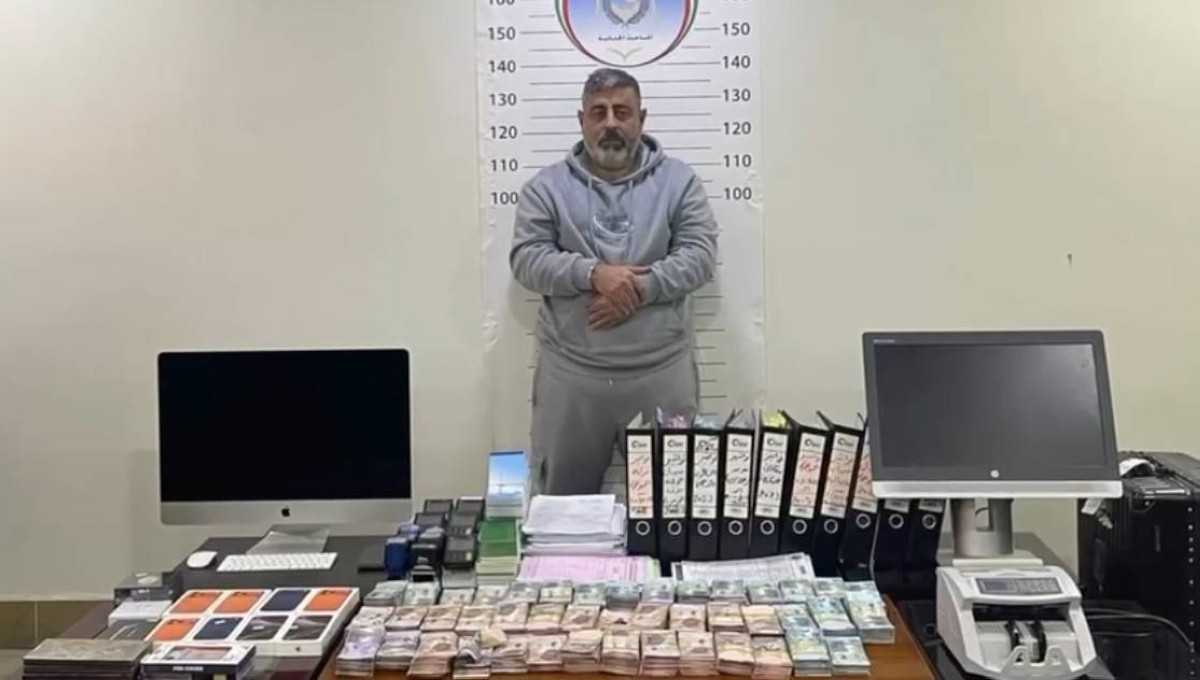
KUWAIT: The interior ministry announced on Monday it busted a major organized international gang involved in cyberfraud, money laundering, bank forgery and the smuggling of criminal proceeds through the informal “hawala” system, with operations worth KD 100 million since 2023. The operation was personally supervised by First Deputy Prime Minister and Interior Minister Sheikh Fahad Al-Yousef Al-Sabah.
Police arrested nine people involved in the gang’s operations including the Jordanian mastermind, who initially fled the country but was repatriated on the same day with the help of Jordanian security authorities, the ministry said in a statement. The gang was busted after a person complained to the ministry that he was the victim of an electronic fraud operation in which the culprits stole the money in his bank account, the statement said.
Police investigation found that the money was used to purchase mobile phones which were later resold in the local market through representatives working with the gang. The funds were finally deposited in bank accounts of shell companies established by one of the gang’s members and were later transferred abroad.
The suspect confessed to establishing shell companies at the request of individuals outside the country for the purpose of laundering illicit funds, giving them a semblance of legitimacy and subsequently transferring them to several foreign countries. Investigations showed that funds were deposited daily into the suspect’s company bank accounts through a money collection company. The suspect also forged fictitious invoices and submitted them to banks to conceal money laundering operations.
According to the ministry, the total amount deposited into the suspect’s company accounts during the current month alone reached approximately KD 6 million. Estimates indicate that the total amount laundered through these companies since their establishment in 2023 exceeded KD 100 million.
The ministry added that the source of the funds was an organized international criminal network involved in creating fraudulent websites to scam citizens and residents in Kuwait through bank forgery, cyber fraud, informal money transfers and the circulation of funds from unknown sources. The operation resulted in the seizure of KD 108,000 in the possession of one suspect prior to its transfer to the shell companies, as well as nine smartphones purchased through cyber fraud operations.
Nine suspects were referred to the Public Prosecution, including the owner of the shell companies, whose role was limited to registering the firms in his name in exchange for an annual fee. Seized funds and forged invoices were also submitted for legal action.
The ministry noted that legal measures were taken, in coordination with the Central Bank of Kuwait, against the company responsible for collecting funds linked to the suspects’ bank accounts. Investigations revealed that the company violated the scope of its licensed activity — money transfer services — by storing large amounts of cash in breach of applicable regulations and conditions.
Separately, the criminal court on Monday sentenced 19 people, including a senior ministry of commerce and industry official, to 10 years in jail for committing fraud and deception in the commercial draws scam. The court fined the 19 convicts KD 3 million. It also sentenced 28 others to four years in jail. The court acquitted 13 defendants and refrained from punishing 14 others.
The defendants were charged with forming an organized criminal network to divert the outcome of the draws, used in commercial promotions, to certain people linked to the network. The defendants were also charged with transferring the awards of the draws into an operation of fraud and deception, illegally obtaining personal gains from them.
According to the prosecution, the draws that were investigated were held between 2021 and early 2025, involving at least 110 draws, carrying prizes worth KD 1.244 million. The prosecution said the draws were rigged by members of the network who seized the prizes and distributed them among themselves. The defendants were also charged with bribery, forgery of official documents and money laundering. The case will now go to the court of appeals and the court of cassation.
