


Liverpool forward Mohamed Salah remains a Saudi Pro League target despite the league’s shift to signing younger players.
Salah’s future is up in the air after his bombshell interview last month in which he accused the club of throwing him “under the bus” and suggested he had no relationship with boss Arne Slot.
In the wake of his explosive comments, Sky Sports News reported that Saudi clubs want to sign the Egypt international, but they would need to have a clear indication that he is ready to play there before making a move for the Reds star.

Salah returned to training ahead of Liverpool’s Champions League match in Marseille
Clubs including Al Ittihad and Al Hilal have tried to sign Salah over the past two years, but he has never shown the firm desire to leave the highest level of club football in Europe and move to the Saudi Pro League (SPL).
SPL clubs have changed strategy and are now targeting younger players rather than stars approaching the end of their careers.
But Francesca Petriccione, a legal and strategic advisor to Serie A, Premier League and LaLiga clubs specialising in the Saudi Arabian market, says an exception will be made by the SPL for 33-year-old Salah.
Asked whether Salah was a unique case for the SPL, she told Sky Sports News: “Yes, exactly.
“The technical contribution and the global visibility that Mohamed Salah can bring to the Saudi Pro League is unbelievable.
“But today we are in a more mature phase, and this is not about football players going to Saudi Arabia for money and then leaving.
“This is about careers evolving and Saudi football becoming one of the legitimate stages of that evolution.”
Does Cancelo exit weaken SPL’s position?
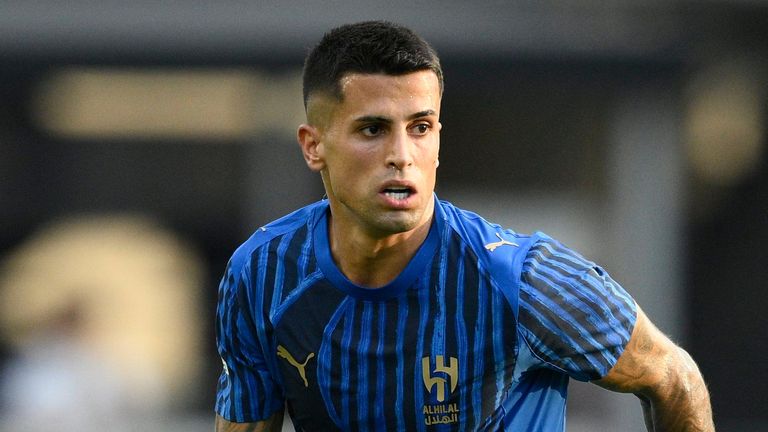
Joao Cancelo joined Al Hilal from Manchester City in August 2024
The SPL suffered a high-profile exit this month following Joao Cancelo’s loan departure to Barcelona.
The ex-Manchester City defender returned to the LaLiga club after just 18 months at Al Hilal after joining from Manchester City in August 2024.
The Portugal international’s departure comes months after ex-Aston Villa striker Jhon Duran also moved back to European football following a loan move to Fenerbahce, raising doubts over the SPL’s ability to hold on to star players.
Petriccione, though, argues Cancelo’s exit is not “a weakness of the system”.
She said: “First of all, Joao Cancelo didn’t leave a void. He left a footprint.
“The fact that today a football player can arrive, deliver and move on, it’s not a weakness of the system. It is evidence that the system is mature enough to generate value without depending on permanent retention.
“This does not diminish the attractiveness of the league but rather repositions it within a context in which value is no longer tied solely to individual stars’ names but to the robustness of the system as a whole.”
