

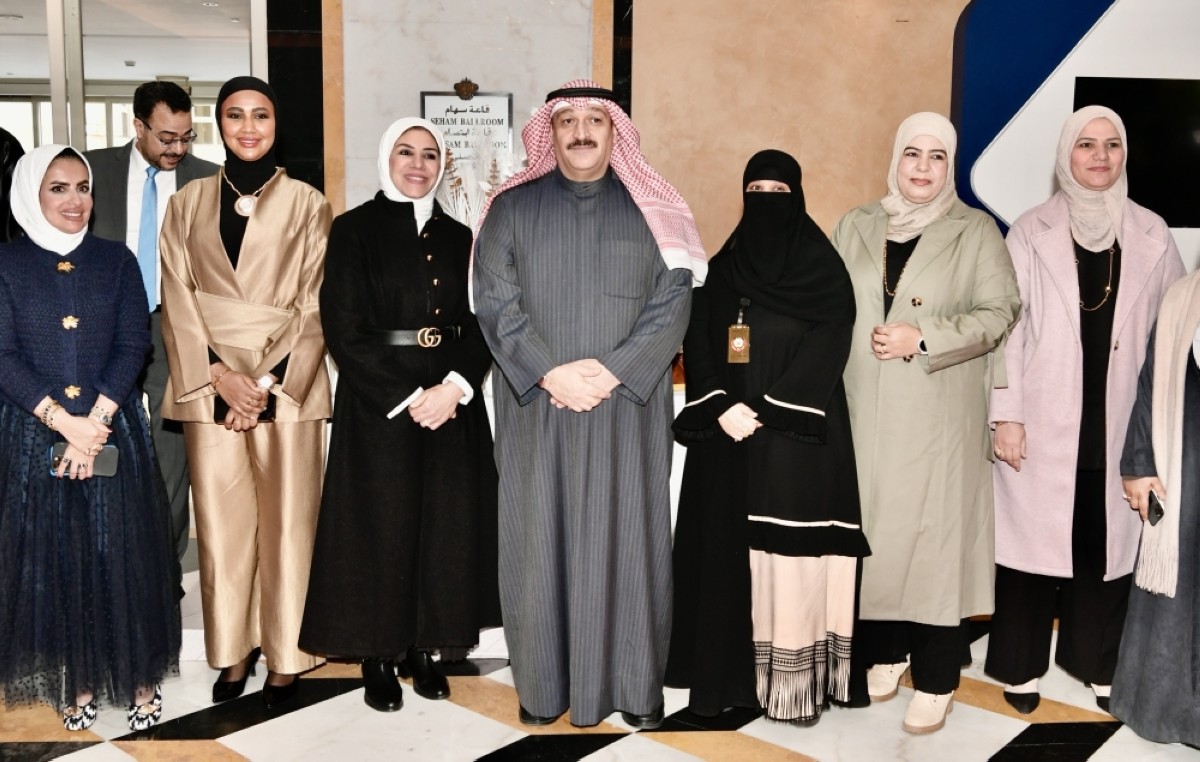
KUWAIT: Minister of Health Dr Ahmad Al-Awadhi announced on Saturday that the Ministry has updated its treatment plan and system for cancer patients, incorporating new, globally recognized biological therapies administered subcutaneously.
These therapies are being offered for the first time in Kuwait in certain specialties. Speaking to reporters after inaugurating the first Kuwait Conference on Gynecological and Urological Oncology, Minister Al-Awadhi emphasized the ministry’s commitment to supporting modern cancer treatments and adopting the latest technologies.
He explained that the opening of the new Kuwait Cancer Control Center (KCCC), equipped with state-of-the-art technology, is part of the ministry’s plan to support and develop national talent and leverage international expertise among physicians, nurses, technicians and administrators. This initiative culminates in a global agreement with the Gustave Roussy Hospital in France. In his opening remarks at the conference, the minister stated that the Kuwait Cancer Control Center is a cornerstone of the country’s healthcare system, providing comprehensive diagnostic and treatment services, as well as playing a vital role in scientific research, training medical personnel, and raising public awareness about the importance of early detection and prevention.
He added that the conference brings together a select group of experts and consultants from Kuwait and abroad within a high-level scientific framework aimed at exchanging experiences and discussing the latest developments in the diagnosis and treatment of these tumors, thereby enhancing the quality of healthcare provided to patients.

Minister Al-Awadhi speaks during the opening of the Kuwait Conference on Gynecological and Urological Oncology on Saturday.– KUNA photos

Dr Mariam Al-Otaibi addresses the conference.
He explained that the health sector has witnessed rapid development in recent years in the concepts of medical care, based on accurate diagnosis, advanced treatment and specialized care, placing the patient at the heart of the healthcare system and ensuring the highest levels of quality and efficiency. He emphasized the Ministry’s commitment to establishing a new specialized cancer treatment center, which will be opened soon, equipped with the latest technologies and medical equipment according to the highest international quality standards, thus contributing to accelerating treatment procedures and improving healthcare outcomes.
He highlighted what distinguishes the Kuwait Cancer Control Center is its Kuwaiti and non-Kuwaiti human resources, in which the state has invested for years. He pointed out that these national cadres – doctors, surgeons, nurses, radiology and laboratory technicians, and administrators – represent the first and most important element in confronting this disease.
He stated that holding this conference embodies the awareness of our medical staff of the importance of precise specialization and their keenness to keep pace with the rapid scientific development, as this has a direct impact on raising the recovery rate, which exceeds 70 percent in many cases for some tumors when detected early, and 90 percent in some of them, and improving the quality of life of patients, especially in diseases that affect the health of women, the family and society.
For her part, Dr Mariam Al-Otaibi, Head of the Conference Organizing Committee, stated in a similar address that the conference represents a leading scientific platform that brings together minds and expertise, opens avenues for cooperation, and solidifies Kuwait’s position as an influential and effective center on the global map of oncology. Al-Otaibi added that Kuwait pays great attention to this field through awareness programs, early detection initiatives and the provision of the latest treatments.
These efforts have been reflected in patient outcomes, and Kuwait’s experience has become a model to be emulated and is highly regarded in scientific and international forums. She emphasized that the field of oncology has witnessed rapid scientific development in recent years, which has impacted diagnostic and treatment methods, leading to a qualitative leap in improving patients’ quality of life, extending their lives – God willing – and increasing recovery rates. — KUNA
