

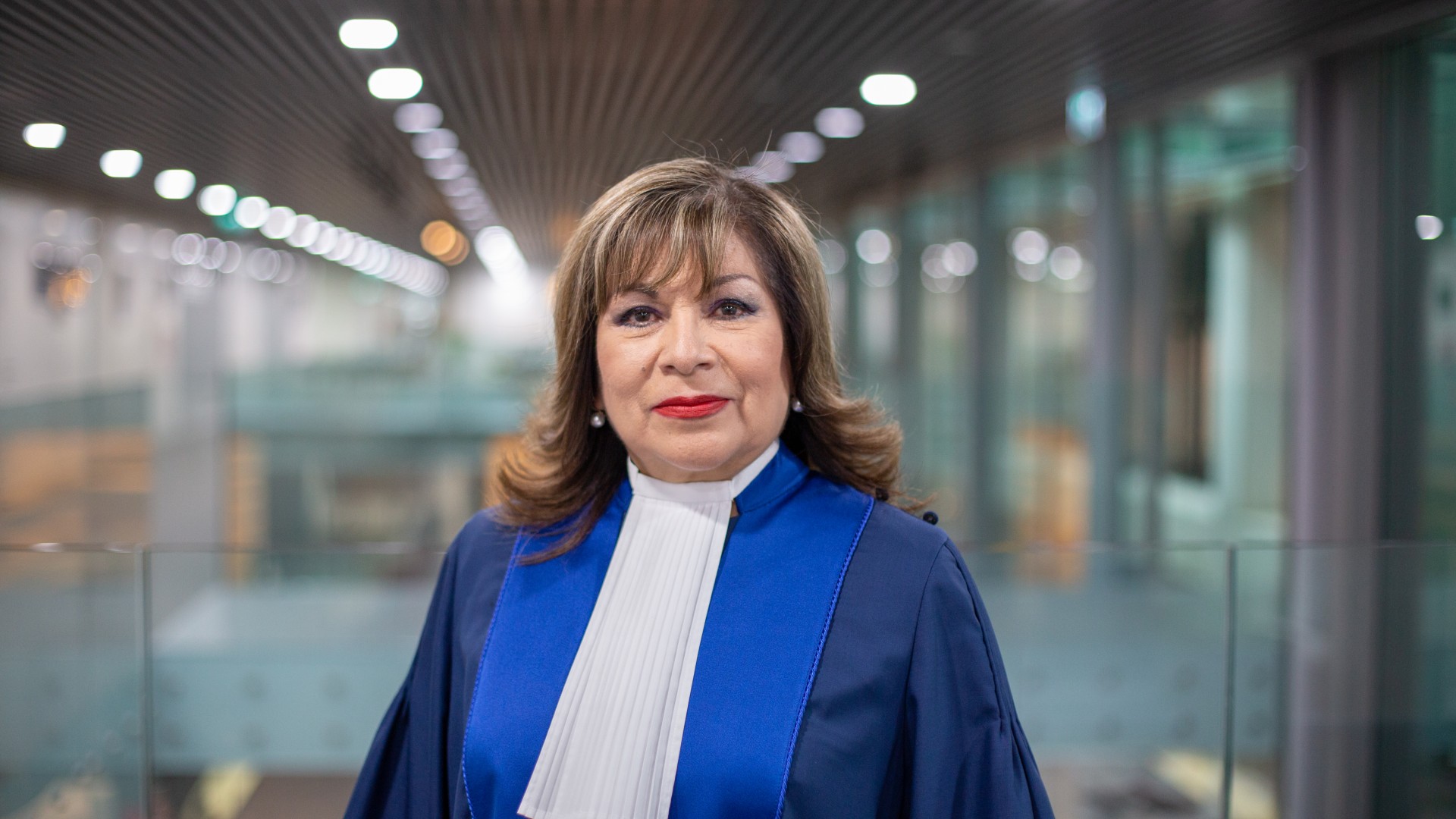
Judge Luz del Carmen Ibanez Carranza, from Peru, was sanctioned by the administration of US President Donald Trump in June for her role in authorising an investigation into crimes committed in Afghanistan since 2003.
She is among six International Criminal Court (ICC) judges sanctioned over the past year by the US for their work.
As an appeals judge, Ibanez was part of the 2020 ICC panel that paved the way for investigating alleged war crimes by the Taliban, Afghan National Security Forces, the US military and CIA personnel.
The sanctions against her, however, were imposed despite a 2021 decision by ICC prosecutor Karim Khan to deprioritise Afghanistan investigations involving US citizens, focusing instead on Afghan nationals.
So far, the ICC has issued two arrest warrants for senior Taliban leaders on charges of the crime against humanity of persecution based on gender.
New MEE newsletter: Jerusalem Dispatch
Sign up to get the latest insights and analysis on
Israel-Palestine, alongside Turkey Unpacked and other MEE newsletters
Ibanez has served on the ICC Appeals Chamber since March 2018, with her term set to continue until March 2027.
Middle East Eye sat down with Ibanez on Friday, the final day of the 24th Assembly of States Parties in The Hague, where the ICC’s governing body issued a final declaration this week defying US sanctions and pledging support for the sanctioned officials.
Below is the full Q&A, slightly edited for length and clarity.
MEE: Why has the US government sanctioned you?
Judge Ibanez: I don’t take it personally. I think I have been sanctioned or designated in my capacity as a judge of the ICC, among other five colleagues from the Court, because of the work we are doing adjudicating the most serious international crimes. And we do this work to put an end to impunity for such horrendous crimes, and to give justice to millions and millions of victims all around the world. This is the reason, and we are doing it well.
How have the sanctions affected your life and your ability to carry out your work as an ICC judge?
There are some difficulties because these sanctions are designed to block property and ban travel to the US, and essentially they’re intended to block our accounts – not only bank accounts in the US, which for me is of no significance, but also in Europe.
But the thing is that in Europe, the accounts we have are in European banks that normally should work independently from any US policy.

Exclusive: ICC shuns US demands to drop Israel war crimes probe and amend treaty
Read More »
So at the beginning, I was called by the bank, I won’t disclose the name, to announce to me that they were cancelling my credit card and that I couldn’t move any bank account in dollars. I couldn’t touch it because they were kind of frozen.
And then we discovered that I couldn’t even use Uber. I couldn’t even ask for an Uber meal or an Uber taxi. I couldn’t use Western Union, where normally I send money to my country for the maintenance of my house. Western Union has simply frozen my money without any explanation.
But the most interesting thing, or terrible thing, here is that the sanctions are not only against us, the judges, for our job, but against our families. In my case, they also affected my daughter’s visa. I have a daughter who serves in a senior professional role, and they sent her an email saying that they had cancelled her US visa without any explanation, preventing her from travelling to the US for some capacity building, attending conferences, or doing business. She’s an international lawyer. So it’s really the saddest part for me about the sanctions.
I have also heard from my colleagues that the sanctions have affected their husbands, their wives, children, etc. So this is the worst part for me. I come from Peru and Latin America; we are not so used to having these digital accounts. I don’t have PayPal. I don’t have Amazon accounts. But my colleagues do, and they now cannot use their accounts.
Also, in my country, I cannot move my accounts in dollars. They say that I am ineligible to move my own accounts. Also, we cannot buy flight tickets, etc. That’s how it is affecting our daily life.
What measures are you taking in order to counter the impact of these sanctions for yourself, and has the Dutch government provided any support?
I live in Europe, but still, I am Latin American, I am Peruvian. We are very resourceful people in my country. So I’m having my strategies – which I won’t reveal – but it is true that in Europe, where you don’t usually use cash, it’s very difficult to carry out daily transactions without the banking system.
But none of these have deterred us as judges, because those sanctions are designed to attack our independence as judges, and we are not giving up our independence. As judges, we are more united than ever, and we are carrying out our daily functions with the best of our abilities, although it has impacted the Court, the personnel, morale, etc.
But now we are doing well. I think that the Court has proven to be very resilient, and the judges as well.
Throughout the Assembly of States Parties gathering this week, there have been many calls on the European Union to activate the Blocking Statute in order to protect you and others from the extraterritorial impact of sanctions within Europe. Has the EU supported you in any way? And what’s your message to the EU Commission?
Well, I could say that at the beginning it was very difficult. But we, the affected judges, gathered with the Dutch authorities from the ministries of Foreign Affairs and Economic Affairs. We asked them to support us in a very practical manner.
I remember that I said to these high officials that I feel defenceless, because if they can do nothing – if they are doing over-compliance with these sanctions – then where is the sovereignty of this country? Because the banks are independent. Why should they be subordinated to American policies?
Sanctions affect the system of the Court, where we deliver justice for the victims, the most defenceless and vulnerable victims who nobody listens to
I think that this impacted the authorities, because we, all the colleagues, also narrated how we were doing, and the difficulties we were facing. And I think they felt a little bit ashamed. And then the next day I received a call from my bank announcing that now I could move at least my account in dollars to be converted into euros so I could have the disposition of my assets. That was a good development.
And now I think that because the Registrar of the Court has made some arrangements with the bank, for the moment we can use our money in euros. But you never know what will happen in the future.
Now, the European Commission – I think that it has been clear during this week that everybody, at least in their speech, is supporting us. But what we are asking for are practical measures. What we are asking for is action. We need the support of the entire world. But we are in Europe now, and the EU is a powerful structure. They should react as such. They cannot be subordinated to American policies.
I think that they should do something else besides only saying that they show solidarity with us, because solidarity is not only a word. It should be enacted, as you said, with practical measures, legislative measures, and others to support the Court – not only to support the judges but to support the system: the system of Rome. Because with these sanctions, what is affected is not only the judges. We are just individuals, we are just persons, and probably we will be gone in the next few years. But they want to affect the system of Rome, the system of the Court, where we deliver justice for the victims, the most defenceless and vulnerable victims who nobody listens to. So they are the affected ones with this.
And I think that this is the reason why not only the EU, not only Europe, but the entire world should not support this, including people in the US.
Can you talk about your role as an appeals judge and why that was the reason for sanctions?
I’m a permanent judge of the Appeals Division and Appeals Chamber since 2018. So it’s been around eight years that I’ve been working there. In 2019, the panel – the bench composed of five judges – issued a unanimous decision authorising the investigation in the territory of Afghanistan for atrocious crimes, because we have jurisdiction. We have jurisdiction on the territory of Afghanistan, no matter who the perpetrators are. Could it be Taliban? Could it be state forces? Could it be international forces? So the case was never against the US. The case is for atrocity crimes committed in the territory of Afghanistan and associated with the conflict.
In the executive order of President Donald Trump, the US government specified that they were targeting you alongside other judges because of your investigations into either nationals of the US or its allies. What was your first reaction when you heard about these sanctions?
I have other previous professional experience dealing with threats and attacks. Before the International Criminal Court, I served for 35 years as a prosecutor in my country. The last 15 years of my career as national prosecutor, specialising in terrorism, crimes against humanity, and grave violations of human rights.
As Nelson Mandela said, the cause of the ICC is the cause of humanity
And I was the prosecutor in the trial against Abimael Guzman, the leader of the terrorist organisation Shining Path, Sendero Luminoso, and the entire leadership group. It was a very difficult case where I suffered threats, attacks, threats against my family, etc. And after that, I prosecuted crimes against humanity. I prosecuted high military rank people, politicians, etc. So I was quite used to suffering threats and attacks against my person.
Two years before the US administration’s sanctions against me, while I was the first vice president of the ICC, elected by my colleagues, I got an arrest warrant from Russia, although I was not among the judges that issued the arrest warrant for [President Vladimir] Putin.
The Putin government issued arrest warrants against the three members of the Pre-Trial Chamber that issued the arrest warrant in the Ukraine case. But months later, they made an extension. They issued arrest warrants against the members of the ICC Presidency, including myself.

Who is Phoebe Okowa? The newly elected ICJ judge and her opinions on Israel-Palestine
Read More »
I never dealt with the Ukraine case, and I probably never would, but as I already had this kind of attack against my person, when I received the sanctions of the US, I told myself, well, I must be doing something good, because a powerful country from the East took these measures against me, and now a powerful country from the West is doing the same.
Although those are financial and economic immigration measures, for me, it was not quite unexpected. Of course it’s unfair, it’s unjust. But I felt that it was a decoration for me because my job is now meaningful for the world – and the job and the work of the ICC.
But I would like to highlight why the judges now, and this Court, are not deterred. Because at least in my case, and I think that I am speaking for my colleagues, I don’t think I am here because I need the job. I’m not here because I need the money. I’m here because I feel that I have a mission for humanity.
The work of the ICC is for humanity.
As Nelson Mandela said, the cause of the ICC is the cause of humanity. This is why we are resilient, this is why we need not only to stand together as judges, but the entire international community needs to do that, because as such we are working for peace and global security.
