

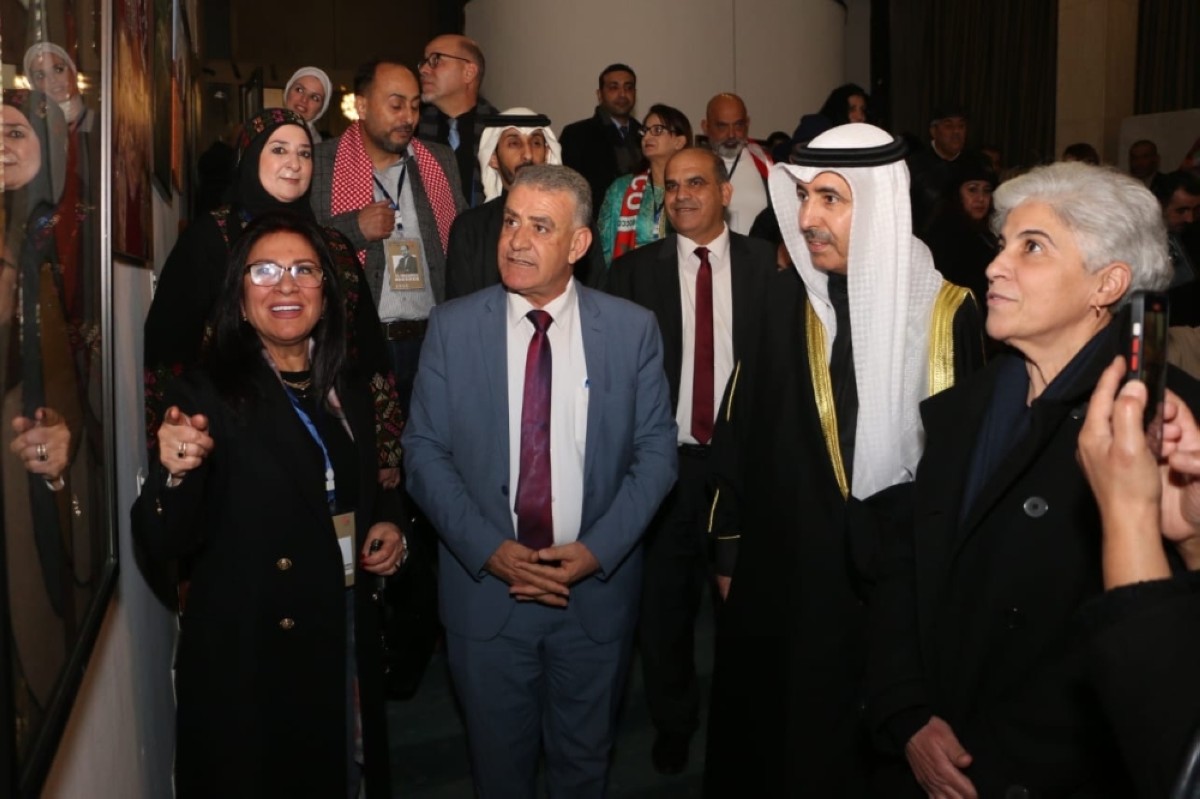
KUWAIT: Kuwait’s Ambassador to Jordan Hamad Al-Marri affirmed on Sunday that the participation of Kuwaiti fine artists in an international exhibition in Jordan represents a distinguished Kuwaiti presence on the Arab art scene and reflects the deep-rooted relations between Kuwait and Jordan, as well as the two countries’ shared vision in supporting art as a human and cultural value. Al-Marri made the remarks in a statement to Kuwait News Agency (KUNA) after attending the fifth edition of the international exhibition held in Amman under the theme “Art… Culture and History of Peoples.” The event was organized by the Jordanian Ministry of Culture in cooperation with the Dar Association for Culture and Arts, with the participation of fine artists from Kuwait and several other Arab countries.
He said the exhibition constitutes a significant cultural event that highlights the essential role of art in bringing peoples closer together and promoting human dialogue, underscoring culture’s ability to build bridges of communication that transcend geography and differences. Al-Marri noted that Jordan has become an important hub for culture and the arts, thanks to its supportive environment for creativity, vibrant cultural scene and openness. He added that the diversity of Arab and international artistic experiences on display, and Amman’s hosting of such exhibitions, reflect its status as a leading center for Arab intellectuals and artists.
For her part, Kuwaiti artist and head of the participating delegation Fadila Ayada told KUNA that she took part with an artwork inspired by the symbol of Arab hospitality, the dallah (traditional coffee pot), presenting her piece using gold leaf in a visual expression rich in cultural symbolism. She expressed her happiness at participating alongside artists from various Arab countries, noting that the exhibition provides a valuable platform for exchange of artistic experiences and reflects the spirit of cultural dialogue and cooperation.


Visual artist Mona Mubarak told KUNA that her participation offered an important opportunity to meet artists from different countries and exchange experiences within a comprehensive cultural setting. She explained that her artistic message draws inspiration from the Kuwaiti environment, with works reflecting local heritage and folklore. Her participating pieces, including “The Painting of Joy,” “Eyes of the Palm Trees,” and “Under the Shade of a Palm Tree,” depict elements of Kuwait’s traditional environment and popular occasions rooted in collective memory.
Kuwaiti artist Fawaz Al-Duwaish said he is participating with three ceramic works representing different styles and techniques. He explained that one of the works focuses on the interconnectedness of peoples and conveys a humanitarian message aligned with the exhibition’s theme of cultural exchange among Arab countries. He stressed that the exhibition provides an important space for cultural dialogue and contributes to enriching the Arab visual arts movement, noting that art remains a universal language for mutual understanding.
Meanwhile, Kuwaiti visual artist Atard Al-Thaqib told KUNA that her participation is in line with her artistic vision of reinterpreting Kuwaiti heritage through a contemporary lens. She explained that her works prominently feature the camel as a central symbol in Kuwaiti and Gulf cultural memory, reimagined in modern artistic styles that reflect her personal approach. Al-Thaqib added that her works incorporate traditional Sadu weaving motifs and colors within a modern framework, creating a visual dialogue that blends authenticity with innovation and reflects the continuity of heritage in the present. — KUNA
