

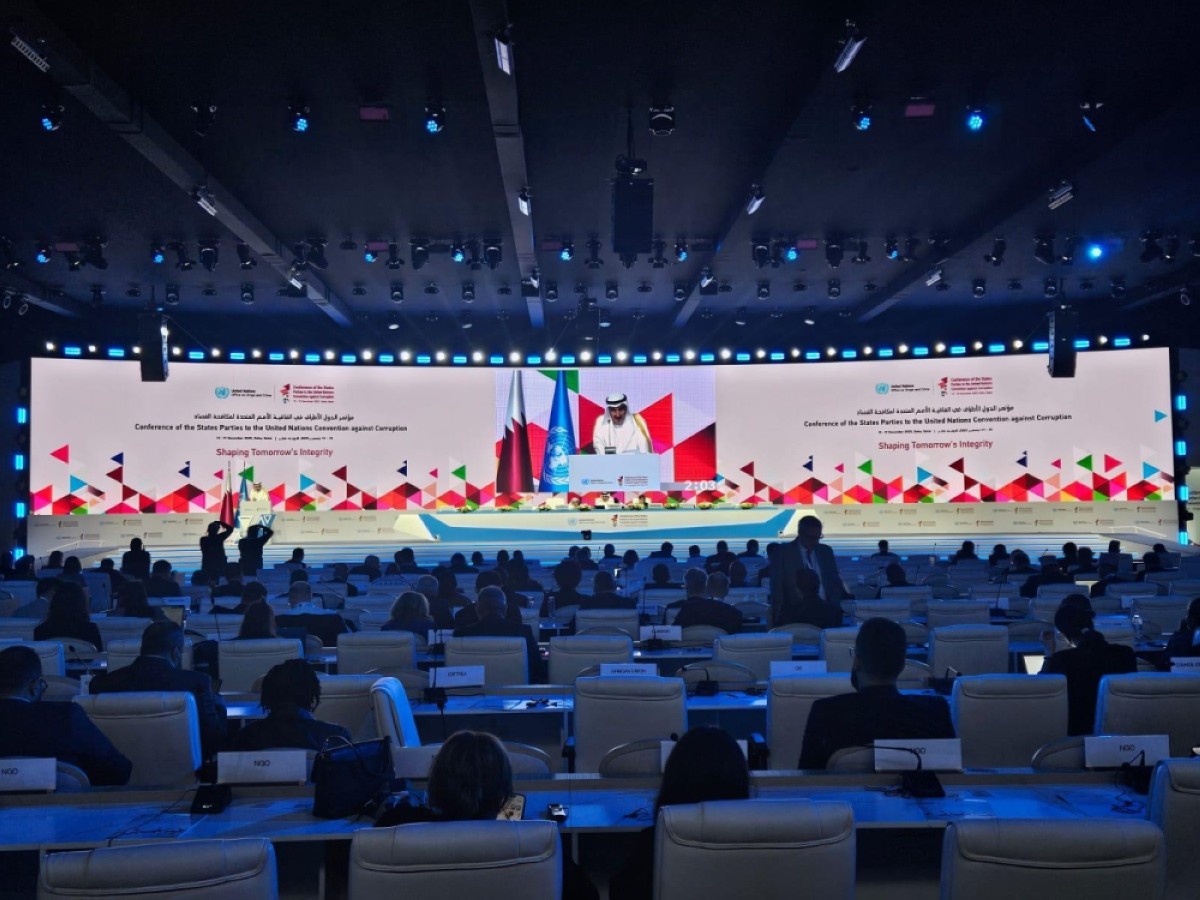
KUWAIT: Head of the Kuwait Anti-Corruption Authority (Nazaha) Abdulaziz Al-Ibrahim said on Monday that Kuwait is currently working on the preparation and implementation of the second phase of its national strategy to enhance integrity and combat corruption. In Kuwait’s address to the Conference of the States Parties to the United Nations Convention against Corruption (UNCAC), currently being held in Doha, Al-Ibrahim said Kuwait is also developing its national strategy to combat money laundering and the financing of terrorism, in line with the standards and recommendations of the Financial Action Task Force (FATF).
He explained that these efforts represent a continuation and development of Kuwait’s strategic policies in the areas of corruption prevention and combating financial crimes, while keeping pace with the latest international and national developments. He stressed Kuwait’s ongoing and systematic efforts to update its national legislation, procedures, and policies to ensure full compliance with the provisions of the United Nations Convention against Corruption.
Al-Ibrahim noted that, alongside existing legislative, procedural and oversight frameworks, Kuwait has enacted several new laws directly aimed at strengthening effective implementation of the Convention. Among these is Law No. 69 of 2025, which amends provisions of the law establishing the Public Authority for Combating Corruption, introducing measures that support the authority’s objectives, expand its mandates and enhance its technical independence.

He also referred to the issuance of Law No. 79 of 2025 on international judicial cooperation in criminal matters, enacted in response to international requirements and recommendations. He described the law as a significant step toward strengthening Kuwait’s legislative and procedural framework for international criminal cooperation, as it establishes clear mechanisms and measures to ensure the effective receipt, execution and exchange of cross-border judicial assistance requests. Al-Ibrahim emphasized the importance of intensifying research and studies on corruption risk assessment, mechanisms for measuring perceptions of corruption and its causes, and analyzing emerging trends, particularly in light of the increasingly evident links between corruption and other forms of organized crime.
As head of the Kuwaiti delegation, Al-Ibrahim expressed his appreciation to the president and vice presidents of the bureau of the conference’s 11th session, and commended the United Nations Office on Drugs and Crime (UNODC) for its efforts in supporting States Parties in implementing their obligations under the Convention. The Kuwaiti delegation, represented by Nazaha, is participating in discussions on draft resolutions submitted by States Parties. A total of 11 draft resolutions are currently under negotiation, with Kuwait seeking to support or propose initiatives that contribute to combating corruption and holding perpetrators accountable.
Earlier on Monday, the 11th session of the Conference of the States Parties to the United Nations Convention against Corruption (COSP11) opened in Doha under the theme “Shaping the Integrity of Tomorrow.” Over five days, participants will discuss implementation of the Convention, mechanisms for technical assistance, activation of anti-corruption and asset recovery programs, as well as challenges and measures aimed at preventing corruption and strengthening international cooperation. — KUNA
