

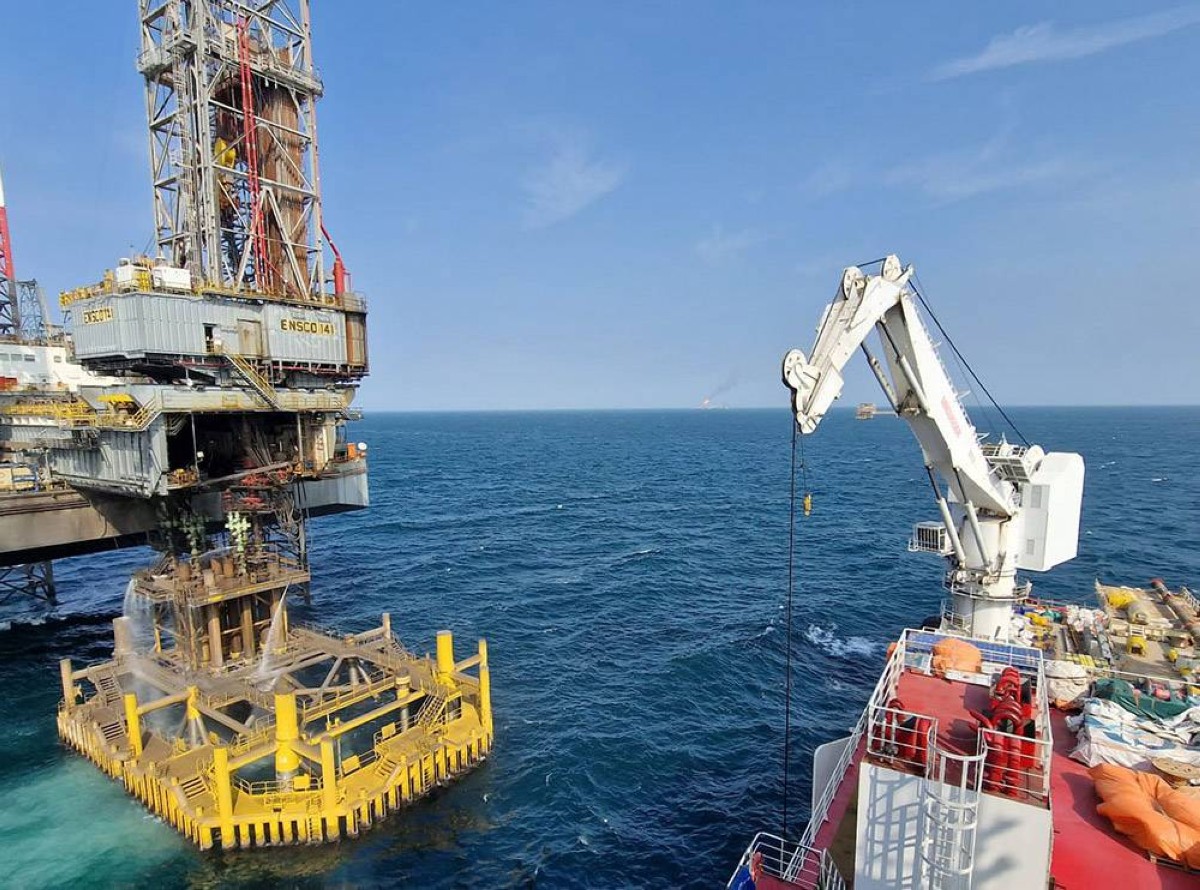
KUWAIT: Kuwait’s offshore oil exploration is entering a new phase, with recent discoveries laying the groundwork for further breakthroughs in the country’s energy sector. Kuwait Oil Company (KOC) said its work has confirmed the presence of a functioning petroleum system and commercially viable hydrocarbons in the Nokhatha and Julaia offshore fields. “These discoveries provide the essential building blocks for future successes in offshore exploration,” KUNA said in a report.
To better understand the offshore potential, KOC is conducting a three-dimensional seismic survey as part of its evaluation phase. The survey will help map reserves and guide drilling strategies for 18 planned exploratory wells. Two Jurassic wells, Nokhatha-2 and Julaia-3, are especially important because they pass through the largest Cretaceous reservoirs discovered so far and allow productivity testing during drilling.
Offshore exploration has faced several technical challenges, including transporting equipment, preventing marine pollution, and preparing drilling sites, KUNA reported. But it reported that KOC ensured that pollution-control systems were ready and provided support for diving and subsea maintenance operations. Tugboats moved rigs into position, and sites were cleared and stabilized before drilling began.
The lack of reference data from previous wells meant KOC had to develop detailed drilling plans with safety measures for worst-case scenarios. During the first two wells, Nokhatha and Julaia, pressures and temperatures were higher than expected, requiring specialized equipment for future wells.
Julaia’s location close to the shore required additional precautions. “We conduct regular drills and inspections to prevent leaks and secure a safety zone extending 500 meters to protect maritime traffic,” the company said. Drilling waste and fluids are sent to specialized treatment facilities, while wells are isolated and secured on the seabed to avoid accidents.
Advanced well-isolation systems ensure high environmental and operational safety. Productive wells are secured with protective structures that allow future surface operations, while non-productive wells are fully sealed on the seabed.
Looking ahead, KOC is exploring options for early production from discovered wells and developing the necessary infrastructure. The second phase of offshore exploration will involve 17 additional wells. Designs for wells, drilling platforms and logistics are being reviewed to reduce costs, shorten timelines and maintain quality. The company is also studying plans for a dedicated port to support offshore operations. — KUNA
