

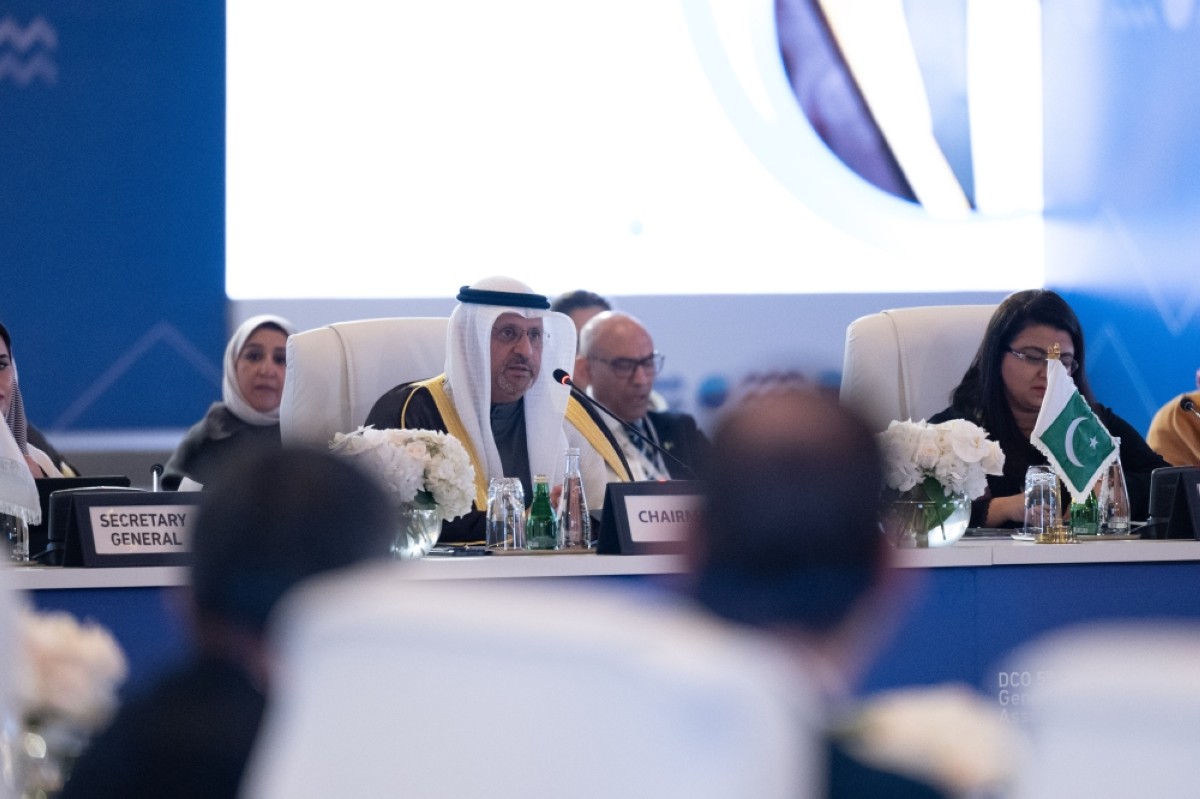
General Assembly underscores collaboration on cybersecurity, AI ethics, digital transformation
KUWAIT: Omar Al-Omar, Chairperson of Digital Cooperation Organization (DCO) Council and Minister for Communication and Information Technology, announced Wednesday the launch of a DCO campaign to combat online misinformation, creating a platform for member states and partners to commit to concrete legislative and cooperative actions.
“This is only the beginning of a longer journey. Kuwait was proud to help place the issue of online misinformation at the center of the multilateral digital agenda,” he said, reaffirming Kuwait’s dedication to the work of the DCO and to strengthening international cooperation in the digital age.
The announcement came at the 5th General Assembly of the DCO, which kicked off in Kuwait on Wednesday, offering a key platform to unveil strategic initiatives and strengthen international partnerships. The conference brought together Ministers of Information Technology, Communications and Digital Economy from 16 member states, alongside guest-country ministers, ambassadors, and senior representatives of international organizations. It included the ceremonial handover of the DCO Presidency from Kuwait to the Islamic Republic of Pakistan for the next four years.
Al-Omar warned that misinformation poses serious risks to social cohesion and national security, noting that a significant share of identity-related misinformation now threatens government systems worldwide. He added that online content integrity was prioritized as a key partnership initiative during Kuwait’s council presidency. Under Kuwait’s leadership, the DCO activated the Ministerial Committee on Online Misinformation and advanced practical tools and policy guidelines designed for real-world implementation, he said.
Secretary-General of DCO, Deemah Al Yahya, underscored the urgency of inclusive digital transformation and artificial intelligence governance, noting that Kuwait’s stewardship over the past year helped guide the organization at a critical moment for the global digital economy.
Recalling the founding of the DCO five years ago, Al Yahya said the organization was built on the conviction that the digital economy is too important to be shaped by a few and too critical to be left to chance, stressing that it must be developed deliberately and inclusively.
She said the DCO has emerged as a platform of trust and dialogue, offering a practical model for countries to work together toward a more balanced, resilient and inclusive digital future. “Digital prosperity in the age of AI has never been more urgent, as it is already reshaping industries,” she said, warning that the gains of digital transformation remain uneven, with infrastructure, capital and skills concentrated among a limited number of countries and communities.
Pakistan’s Federal Minister for Information Technology and Telecommunication Shaza Khawaja reaffirmed her country’s commitment to international digital cooperation. During its tenure as DCO president, Pakistan will focus on strengthening collaboration in areas such as digital public infrastructure, digital skills, artificial intelligence, data governance, cybersecurity and the ethical use of emerging technologies, she said.
In a recorded message, UN Secretary-General Antonio Guterres emphasized the critical role of digital cooperation in promoting stability amid growing geopolitical fragmentation, commending members for their focus on advancing inclusive prosperity in the age of AI. He said the UN will soon launch an independent scientific panel on AI to provide evidence-based assessments of the technology’s opportunities, risks and impacts.
Guterres also announced that the Global Dialogue on AI Governance will convene for the first time at the UN in July, bringing together stakeholders to advance international cooperation on AI, expressing readiness to work closely with the Digital Cooperation Organization and its partners to develop accountability guidelines, promote shared standards and bridge the global AI divide, ensuring that the benefits of artificial intelligence are accessible to all.
