

KUWAIT: The ministry of foreign affairs said on Saturday that Kuwait is following the latest political and military developments in the sisterly country of Yemen that pose a threat to the unity of Yemeni people and undermine their security and stability. The ministry added that while affirming its keenness on maintaining security and stability in Yemen, Kuwait calls on brothers in Yemen to opt for dialogue, the only optimal way for unifying the Yemeni ranks.
Kuwait commended the call of chairman of Yemen’s presidential leadership council for holding an inclusive conference in Riyadh, with the participation of different southern components, in a manner that shows the unified ranks and boosts constructive dialogue, the statement noted. Kuwait has called on all concerned parties to effectively and positively partake in this conference, extolling Saudi Arabia’s response to host the congress, the statement concluded.
Saudi Arabia on Saturday called for dialogue between factions in southern Yemen. In a statement posted on social media, the Saudi foreign ministry called for “a comprehensive conference in Riyadh to bring together all southern factions to discuss just solutions to the southern cause”. Riyadh said the Yemeni government had issued the invitation for talks.
Also on Saturday, the UAE urged Yemenis to “halt escalation and resolve differences through dialogue”. In separate statements, the Gulf states of Qatar and Bahrain also voiced their support for dialogue in Riyadh. Egypt’s foreign ministry also urged dialogue and voiced its support for the “unity, sovereignty, and territorial integrity of the Republic of Yemen”.
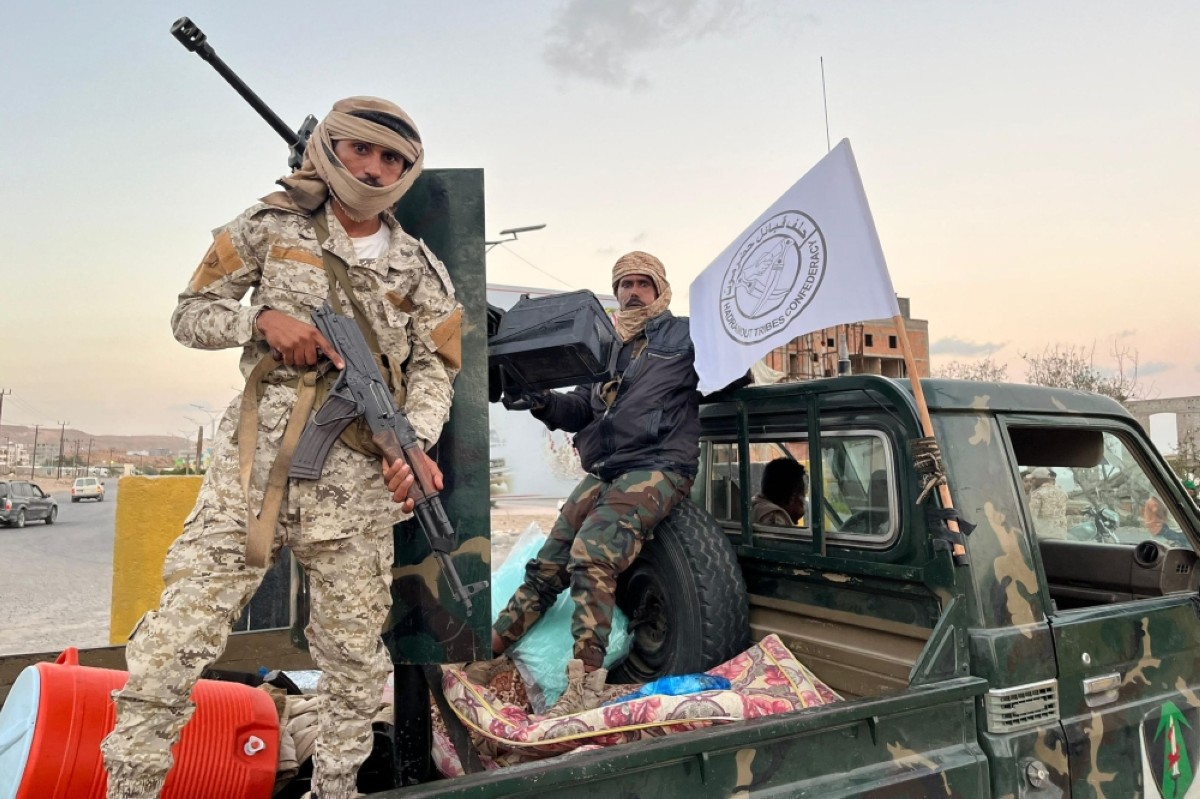
Saudi-backed troops of the internationally recognized government on Saturday made advances in Yemen’s resource-rich Hadramawt province, military officials said. In a statement, the military of the Saudi-aligned government announced that “all military and civilian facilities” in Mukalla, the capital of Hadramawt province, had “been secured” by Riyadh-backed forces.
Later two government military officials told AFP neighboring Mahra province and its armed forces, which had also fallen in with the secessionist Southern Transitional Council (STC) during its December advance, had switched their loyalty to Saudi-backed forces without any resistance. One of the two officials said the Mahra forces had “lowered the separatist flag and raised the Yemeni flag”.
The Saudi-led coalition has launched repeated warnings and air strikes over the past week, including one on an alleged Emirati shipment to the STC. On Friday, a strike on the Al-Khasha military camp in Hadramawt left 20 dead, according to the separatist group. On Saturday, a military official with the STC told AFP Saudi warplanes had carried out “intense” air strikes on another of the group’s camps at Barshid, west of Mukalla. The official said the strike had resulted in fatalities, without giving a number of those killed.
Footage aired by the Aden Independent Channel showed the moment one strike hit the STC forces, igniting a massive orange fireball and sending a plume of black smoke into the sky. According to an AFP journalist, gunfire could be heard in Mukalla early Saturday. While residents described a security breakdown there accompanied by looting, Saudi-backed forces appeared to advance with little resistance.
Hani Yousef, a Mukalla resident, said he “saw retreating forces using their military vehicles to transport motorbikes and household items, including refrigerators and washing machines”. In the province’s city of Seiyun, 160 km northwest of Mukalla, a government military official said pro-Saudi forces had taken control of the airport, targeted in Friday’s strikes, as well as administrative buildings. “We are working to secure them,” the military official said.
The STC military official said: “There has been a retreat of our forces and we are resisting the attacking forces in Seiyun.” “We carried out a complete withdrawal from the areas of Al-Khasha… as a result of pressure from Saudi air strikes on us,” he added. Residents in Seiyun also said they heard gunfire and clashes.
The STC is now pushing to declare independence and form a breakaway state, which would split the Arabian Peninsula’s poorest state in two. On Friday the separatists announced the start of a two-year transitional period towards declaring an independent state and said the process would include dialogue and a referendum on independence.
STC president Aidaros Alzubidi said the transitional phase would include dialogue with Yemen’s north — controlled by Iran-backed Houthi rebels — and a referendum on independence. But he warned that the group would declare independence “immediately” if there was no dialogue or if southern Yemen was attacked again. The Saudi-backed coalition was formed in 2015 in an attempt to dislodge the Houthi rebels from Yemen’s north. But after a brutal, decade-long civil war, the Houthis remain in place while the Saudi and Emirati-backed factions attack each other in the south.
The crisis began early last month when the STC suddenly seized swathes of territory including Hadramout, establishing firm control over the whole territory of the former state of South Yemen that merged with the north in 1990. The leadership of the internationally recognized government, which had been based in Aden and included several ministers from the STC, departed for Saudi Arabia, which regarded the southern move as a threat to its security. – Agencies
