

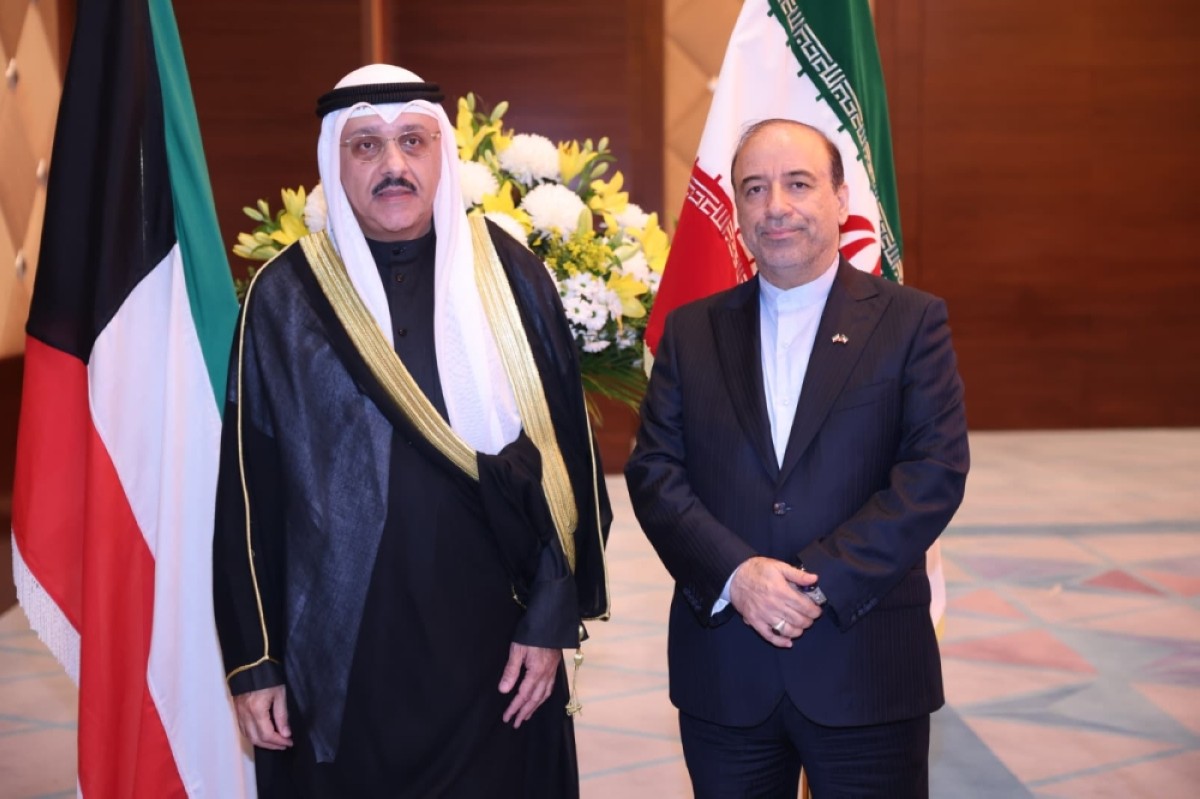
KUWAIT: Kuwait has always called for dialogue and diplomacy to maintain regional stability, Assistant Foreign Minister for Asian Affairs Ambassador Sameeh Essa Johar Hayat said, emphasizing the importance of avoiding conflict. Speaking on the sidelines of Iran’s National Day reception in Kuwait on Tuesday, Hayat said it is “essential to keep the region away from the specter of war and destruction,” adding that Kuwait looks forward to a collective regional dialogue that serves the interests of all parties.
“We seek a collective dialogue that brings together regional states, friendly Iran and other countries in the region,” he said. Iranian Ambassador to Kuwait Mohammad Toutounchi echoed calls for dialogue, saying Iran remains open to returning to the negotiating table if talks are based on “equal dialogue, mutual respect and justice.” He stressed that Iran would not bow to external pressure and said the country has lost trust in the United States as a negotiating partner following Washington’s withdrawal from the 2015 nuclear agreement. Iran, he added, remains determined to safeguard its sovereignty, security and regional stability.

Dean of the Diplomatic Corps, Zubaydullo Zubaydzoda, Hayat and Tantounchi cutting the cake ceremony.

Iranian ambassador Mohammad Toutounchi and his spouse.
“Iran has lost confidence in the United States as a party to negotiations after it withdrew from the previous agreement. A wise person is not stung from the same hole twice,” Toutounchi said. His remarks came amid renewed indirect nuclear talks between Iran and the United States, hosted by Oman. Toutounchi said Iran seeks security and stability for itself and its neighbors, stressing that freedom of navigation in the Arabian Gulf and the safe passage of commercial vessels through the Strait of Hormuz are vital to Iran and other regional states. “We have repeatedly affirmed that the presence of foreign forces in our region has contributed to escalating tensions and instability,” he added.
Protests erupted across Iran on December 28, 2025, after soaring prices followed the Iranian rial’s plunge to a record low against the US dollar. The demonstrations began with shopkeepers in Tehran’s Grand Bazaar, who closed their stores in protest, before spreading to other provinces. Addressing the unrest, the ambassador said hostile parties had sought to exploit the economic protests in several cities, portraying them as attempts to undermine stability rather than legitimate demands for reform.
He claimed that after what he described as failed “Israeli-American attacks” and Iran’s subsequent response, adversaries attempted to stoke unrest by backing individuals involved in violence, vandalism and attacks on public institutions. According to Toutounchi, large numbers of Iranians later took to the streets to reject such actions, blaming economic hardships on international sanctions rather than domestic governance. Toutounchi said the Iranian government has since taken what he described as “bold decisions” to address economic challenges, including measures to combat poverty, corruption and rising prices, as well as providing food assistance to vulnerable families.
Hayat also said cooperation between Kuwait and Iran continues through existing joint committees, noting that they are held across several sectors. These include economic, commercial, maritime and consular affairs, he said, adding that the committees convene alternately in Kuwait and Tehran. He said the meetings have produced positive outcomes that serve the interests of both countries and their peoples, stressing that Kuwait consistently encourages the continuation of these consultations — a position shared, he added, by senior Iranian officials.
