

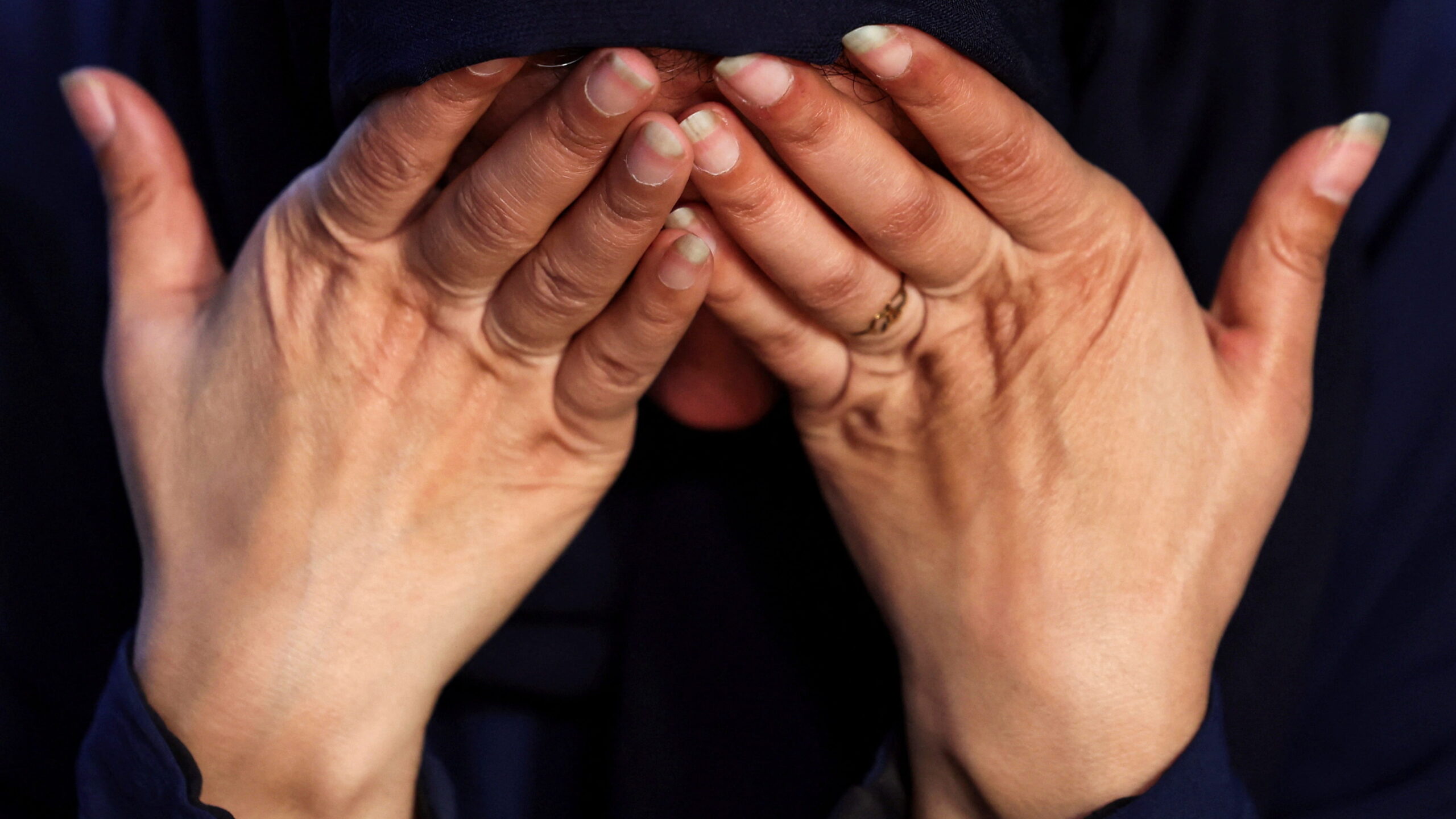
Palestinians returning to the Gaza Strip on Monday said Israeli forces abused them at a newly established checkpoint in Rafah, subjecting them to interrogations and psychological “torture”.
Rotana al-Raqab, a Palestinian woman who reached her family in southern Gaza in the early hours of Tuesday, said she and 11 others who entered via the Rafah crossing with Egypt were seized by Israeli-backed armed groups after leaving the border crossing.
The militiamen took them to an Israeli military checkpoint located around half a kilometre inside Rafah, according to Al Arabi TV.
Raqab told local media that she, her mother and another woman were separated from the rest of the group, which included nine women and three children in total.
She said she remained in Israeli custody for hours, from sunset until around 11pm.
New MEE newsletter: Jerusalem Dispatch
Sign up to get the latest insights and analysis on
Israel-Palestine, alongside Turkey Unpacked and other MEE newsletters
During that time, she said, the three women were blindfolded and handcuffed for hours and subjected to interrogation by Israeli troops.
The soldiers questioned them about issues she said she “knew nothing about and had no connection to”.
She added that one soldier threatened to take away her children, who were already inside Gaza, and to detain her. Another urged her to take her children and leave the strip permanently.
“They want to deprive us of our children. They don’t want us to return to Gaza,” she said.
“They don’t want large numbers to return; they want large numbers to leave.”
A Palestinian woman has reported that Israeli forces blindfolded and restrained her and others while they were trying to return to Gaza through the Rafah border crossing pic.twitter.com/6NadOMbgzp
— Middle East Eye (@MiddleEastEye) February 3, 2026
Raqab also said an officer attempted to recruit the women to spy for the Israeli army inside Gaza, and that one soldier made threats of “improper things” against another woman in the group.
She described the interrogation as “psychological torture” aimed at discouraging Palestinians from returning to Gaza.
Israeli forces also confiscated all her belongings except one bag of clothes, banning her from bringing in any items, including food, children’s toys and a phone charger.
“We couldn’t bring our children anything to make them happy,” she said.
Another elderly woman who returned on Monday described a similar ordeal.
She said the group was taken to an area under Israeli military control, where she was subjected to a three-hour interrogation despite her medical condition.
“We were subjected to bad treatment,” she told local media.
Limited reopening
Raqab was among the first group to enter Gaza via the Rafah crossing in nearly two years, after the city was occupied by Israeli forces and the border crossing was destroyed in May 2024.
The crossing reopened earlier this week under strict Israeli restrictions on both the identity and number of people permitted to travel.
Of the 42 people scheduled to return on Monday, 30 were turned away, according to Al Araby TV.
Meanwhile, only five patients, accompanied by 15 people, were allowed to leave Gaza for medical treatment – far fewer than the agreed quota of 150 departures per day.
Raed al-Nams, spokesperson for the Palestine Red Crescent Society, said travel arrangements had been prepared on Tuesday for 45 patients and 90 companions.
Hamas condemned Israel for the reported abuse at the crossing, calling on the ceasefire mediators “to take immediate action to stop these fascist practices”.
The Palestinian faction described the abuse of returnees as part of a policy of collective punishment and intimidation aimed at deterring Palestinians from returning to Gaza.
