

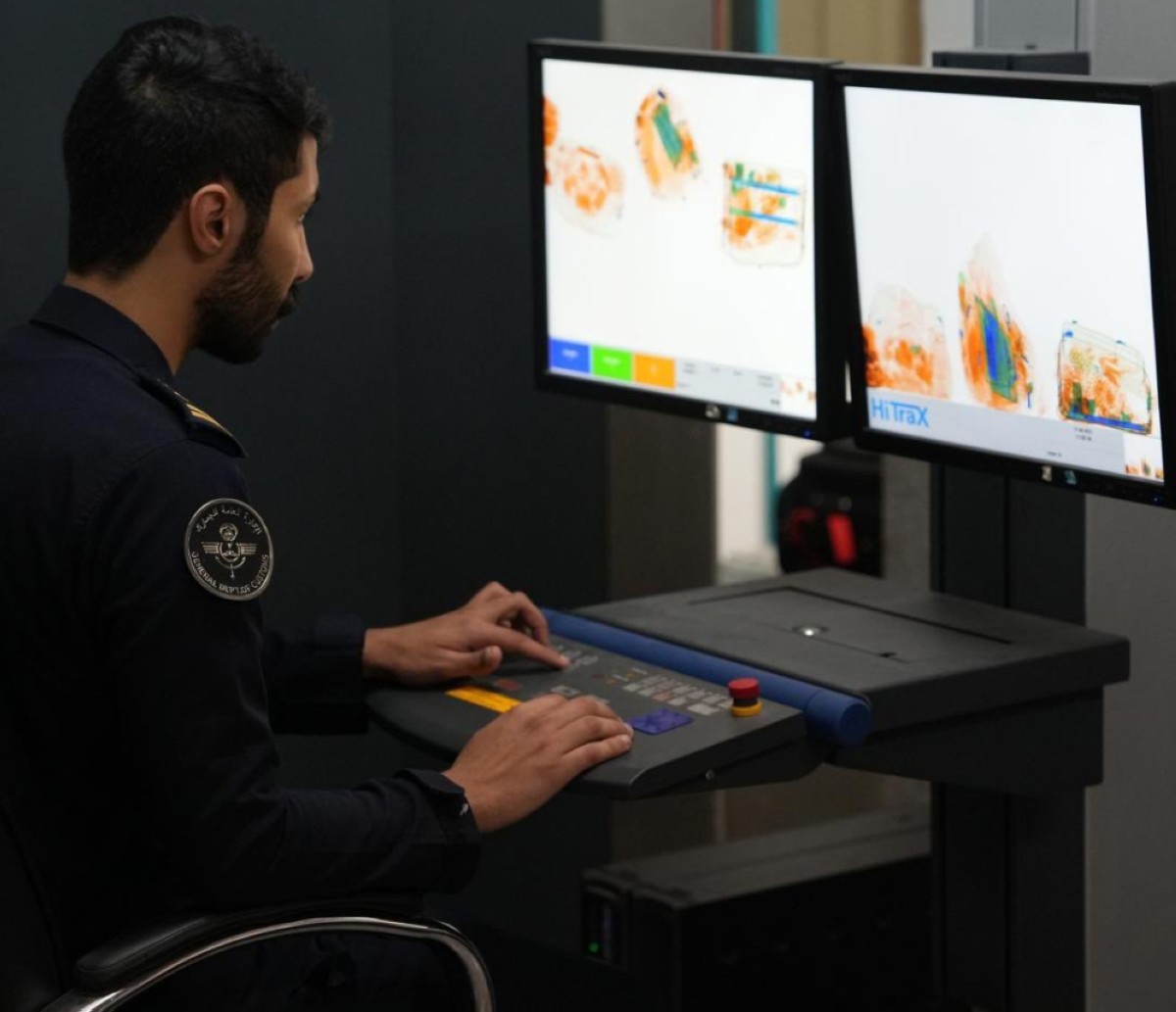
KUWAIT: From airport luggage and shipping containers to online shopping parcels, Kuwait’s Customs officers say they are intercepting an expanding range of smuggled goods, counterfeit products and narcotics at every entry point into the country.
Some violations are obvious. Others are hidden inside routine shipments or quietly pass through local post offices. To perform their duties, customs officers are not only stationed at Kuwait’s borders, but also at postal offices and air cargo warehouses.
“Customs represents the first line of defense,” said Fatima Al-Qallaf, Deputy Head of Financial, Administrative and Technical Affairs at the General Administration of Customs. “We work 24 hours to ensure the smooth flow of goods and to prevent any shortages of commodities within Kuwait.”
Customs inspections cover everything from passenger bags to large commercial shipments. Officers are trained to detect narcotics and psychoactive substances regardless of how they enter the country.

A customs officer uses a sniffing dog to inspect a shipment of animal feed at Doha Port, before uncovering large quantity of narcotics in this KUNA photo taken in August 2025.
“Combating narcotics and psychoactive substances is purely a security matter,” Al-Qallaf said in an interview with KTV’s Nabd Al-Share’e.
Customs uses modern detection devices that provide initial indicators when substances are suspected. But customs officers do not make the final call. Final testing and prosecutions are handled by the Anti-Narcotics Department at the Ministry of Interior, with whom Customs coordinates directly, she said.
Procedures vary depending on the case. Drugs found in luggage, postal parcels, or cargo shipments are each handled under different protocols, she added.
Tax evasion
Customs officers regularly uncover undeclared items in shipments, helping prevent tax evasion before goods reach the market. Al-Qallaf said violations often involve mismatches between goods and customs declarations. She cited an example where a shipment is declared as tables, but additional items such as chairs are found inside the same container without being listed.
“This could be a clerical error or an attempt to avoid customs duties,” she said.
Customs inspectors compare shipment contents with audited documents to confirm quantities and specifications. Undeclared items can result in legal action and recovery of unpaid duties, which are set at 5 percent.
Damaged goods are also reviewed. If damage occurred during transport, responsibility lies with shipping companies, not Customs, she added.
Counterfeit items
Counterfeit goods are another frequent challenge. All counterfeit goods are banned from entry into Kuwait, including items carried for personal use, Al-Qallaf said.
“That said, there are cases where personal items are discovered during inspection — for example, a single counterfeit T-shirt. The question then becomes whether it is reasonable to confiscate and destroy it, given that it is clearly for personal use,” she said. “Not everyone is aware that a bag or item they own is counterfeit. In such cases, the assessment is left to the inspector’s discretion.”
However, if a traveler meets certain criteria, such as repeated attempts to bring in counterfeit goods, even in small quantities, then even a single item is considered a violation, and legal action is taken.
Customs also works closely with the Ministry of Commerce on counterfeit goods linked to trade.
Gold imports, she said, are examined by the Ministry of Commerce to verify purity, weight and carat. “This ensures that when consumers buy from the gold market, they can trust that the product is sound,” she said.
Customs works with foreign embassies, international trademark bodies and major companies to train staff on identifying fake products. The French Embassy, Al-Qallaf said, has organized workshops focused on combating counterfeit goods.
Online shopping
With online shopping now widespread, Customs has expanded its presence inside the country. Air cargo facilities act as customs zones, handling parcels shipped by express courier companies. Selected post offices, including Hateen and Al-Siddiq, also function as customs points.
“Parcels are inspected to ensure they contain no prohibited items or drugs before delivery,” Al-Qallaf said.
Parcels are not opened unless the recipient or a representative from the courier or postal service is present, she added. If a consumer later discovers a product is counterfeit, the case is referred to the Ministry of Commerce’s Consumer Protection Department.
International network
Customs relies on a Risk Management and Targeting Department to monitor smuggling trends globally. Officers analyze seizure data and warnings from international organizations to identify high-risk shipments, routes, or companies before goods reach inspection points.
“We also receive information through the relevant departments at the Ministry of Interior — for example, alerts that a certain substance is being smuggled in specific countries, or warnings to closely monitor shipments arriving from certain locations,” she said.
Not everything is cleared through physical inspection. Before inspection, information is analyzed — about names, companies, and shipment patterns — so that decisions are made at earlier stages, before the goods even reach the inspector, she said.
At the same time, Customs aims to facilitate compliant trade through the Authorized Economic Operator program at the GCC level.
“If a company has a clean record and complies with laws and regulations, it is given privileges that speed up the entry of its goods,” she said.
At the same time, compliant companies benefit from faster clearance through the GCC Authorized Economic Operator program. “This program grants advantages to Kuwaiti and Gulf companies. If a company has a clean record and complies with laws and regulations, it is given privileges that speed up the entry of its goods,” she said.
For example, if normal clearance takes three hours, an Authorized Economic Operator can complete procedures through a special fast-track channel, with designated staff and streamlined processes in the automated customs system.
Rewarding vigilance
Initiatives by First Deputy Prime Minister and Minister of Interior Sheikh Fahad Al-Yousef Al-Sabah have strengthened staff motivation. Officers involved in significant seizures receive rewards.
“Customs officers work long hours at border points. Preventing the entry of smuggled goods is part of the job, but some seizures involve personal risk, obstacles or even threats,” Al-Qallaf explained. “Providing incentives reassures employees that their efforts are recognized and protected.”
These rewards have had a strong and positive impact on performance. “The more an employee works and achieves results, the more motivated they become,” she said.
