

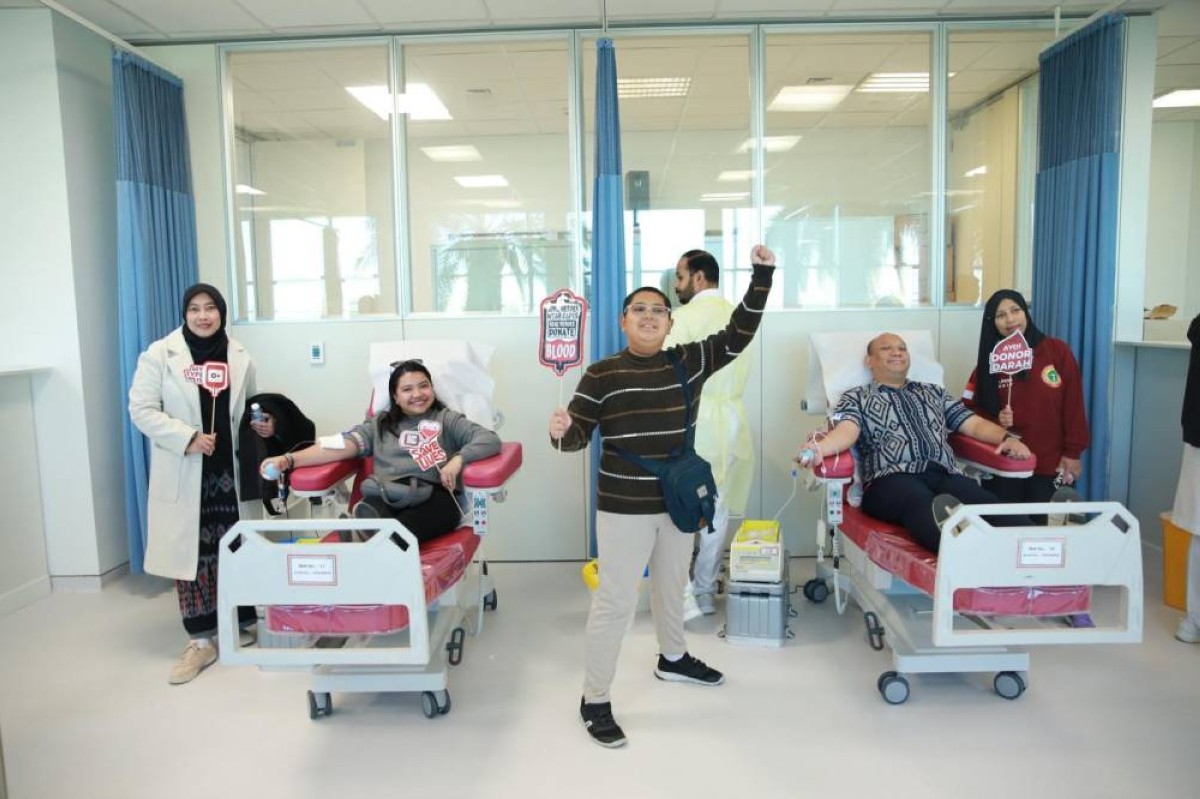
KUWAIT: The Overseas Branch Board of the Indonesian National Nurses Association (DPLN PPNI) in Kuwait, in collaboration with the Indonesian Embassy to Kuwait, organized its annual blood donation campaign at the late Sheikha Salwa Al-Sabah Stem Cell and Umbilical Cord Center on Saturday.
Indonesian Ambassador Lina Mariana emphasized that the campaign is both critical and timely. “This is a small but meaningful initiative to support the people of Kuwait,” she said, highlighting the importance of solidarity and community engagement through humanitarian actions such as blood donation.
The Ambassador noted that there are currently nearly 500 Indonesian health professionals working in the country, consisting of approximately 450 nurses and 50 midwives. She expressed optimism about increasing the number of Indonesian nurses in Kuwait in the future, particularly as Kuwait continues to advance its healthcare sector and aspires to become a regional health hub.
Regarding bilateral cooperation, the Ambassador explained that Indonesia and Kuwait have had a memorandum of understanding in the health sector since 1996. Discussions are currently underway on a new government-to-government (G2G) memorandum of understanding, which is expected to cover broader cooperation beyond manpower, including healthcare development and collaboration in other related sectors. She further pointed out Indonesia’s capacity in the pharmaceutical and vaccine industries, noting that Indonesia has large-scale vaccine centers and medication manufacturing facilities, some of whose products are already being exported to Kuwait.
Beyond the health sectort, the Ambassador expressed hope for strengthened bilateral relations, including political consultations planned for this year, the visit of 12 outstanding Kuwaiti students to Indonesia and the organization of the first Indonesia–Kuwait Energy Forum. She also voiced expectations for enhanced cooperation in commerce and industry between the two countries in the future.
Masita Hanifiyah, a member of the organizing committee, said the blood drive is a long-running annual initiative that has now been conducted for approximately six years. She said the campaign drew an estimated 150 participants, consisting mostly of nurses, along with donors from other professions and the wider community.
She affirmed that the main objective of the blood donation drive is to help meet the increasing demand for blood in hospitals. “The need for blood continues to rise day by day, while donation requirements are becoming stricter. This is why activities like this are increasingly important,” she added.
She also expressed hope that the initiative will continue in the coming years and that more people will be encouraged to donate safely and regularly. The event aims not only to support the national blood supply but also to raise public awareness of the importance of voluntary blood donation.
Organizers highlighted that a single blood donation can potentially save lives and play a crucial role in emergency response and ongoing medical care. The blood donation was open to eligible donors aged 17 to 60 years, with a minimum body weight of 50 kilograms, in good health, and with at least three months since their last blood donation.
