

Western news organisations, which often style themselves as “the international media”, wear masks.
They wear masks when they say they “speak truth to power”. They wear masks when they say they “give a voice to the voiceless”. And they wear masks in the manner in which they cover western allies versus adversaries.
Those masks, despite their best efforts, have slipped regularly during Israel’s genocide against the Palestinian people – the story that has perhaps most nakedly exposed the inherent weakness of foreign correspondents since British and American journalists first began sending dispatches to London and New York by telegraph in the 1800s.
That weakness, among others, is an inability to separate the tenor of their coverage from the policies of their own governments.
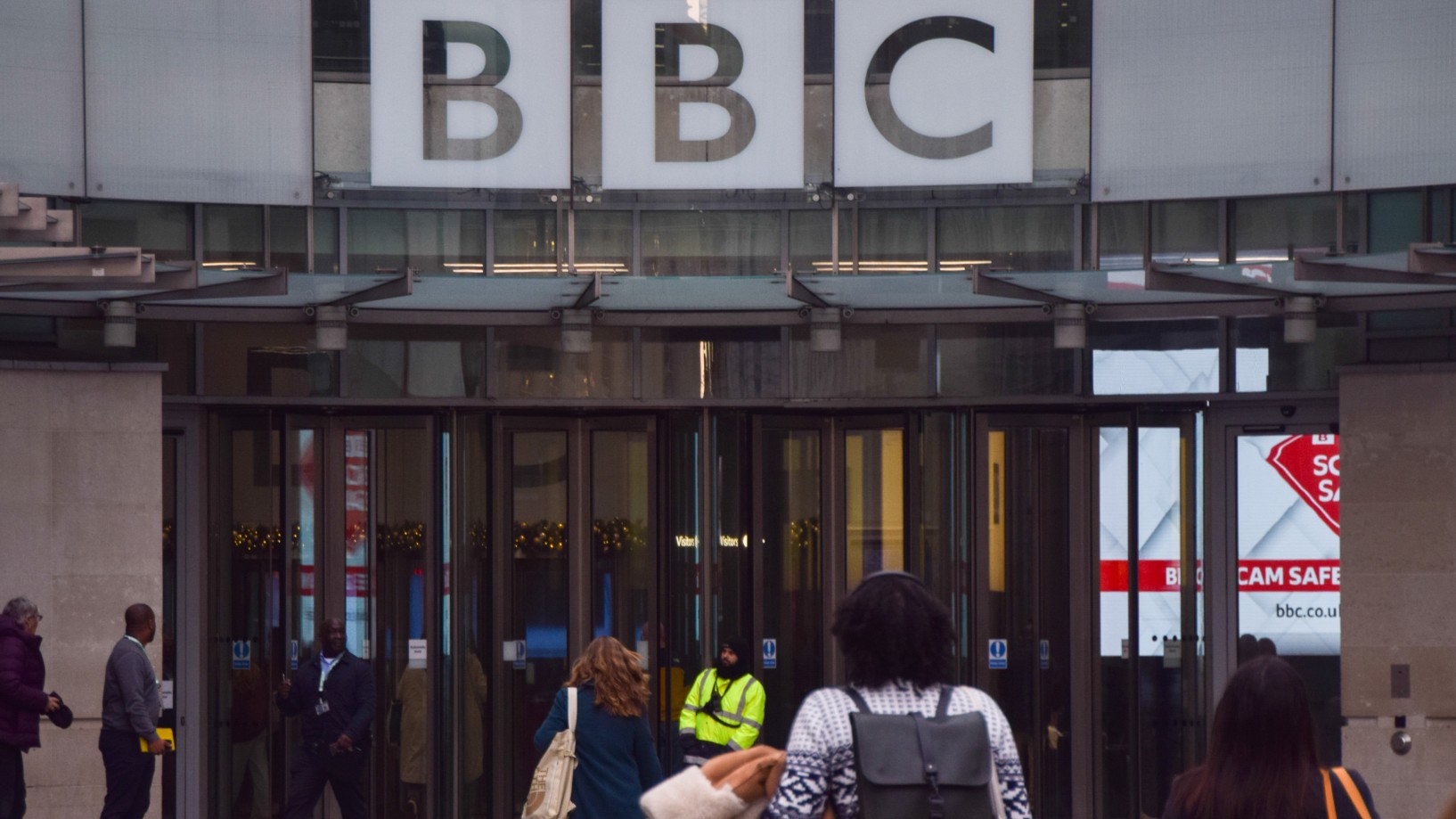
They would fiercely deny it, but the world’s biggest news organisations – the BBC, the New York Times and CNN, to name just a few – approach friends and foes of the West very differently.
New MEE newsletter: Jerusalem Dispatch
Sign up to get the latest insights and analysis on
Israel-Palestine, alongside Turkey Unpacked and other MEE newsletters
Russia and Egypt are not judged by the same rules. Saudi Arabia’s Mohammed bin Salman is treated as a complex reformer, while North Korea’s Kim Jong Un is lampooned as a bumbling dictator.
And in recent weeks, we’ve seen a masterclass in double standards in coverage of the massive anti-government protests in Iran, and US President Donald Trump’s boorish threats to attack the country.
Well-worn pattern
To be clear, I’m not making a value judgment. I’m not saying that Iranian protesters do not deserve to be humanised and to have their stories told. I’m not saying that reports of demonstrators being killed and imprisoned in huge numbers are not horrifying and important. And I’m not saying that Iranian authorities should not be held to account.
That is not the point here. The point is that the scrutiny is not applied evenly.
The most obvious contrast is with how the Israeli government, its relentless assault on Gaza, and its leader, Prime Minister Benjamin Netanyahu, are handled in the news.
I have not witnessed any news presenter counter a guest with ‘Iran would say’ since the protests began. Not once. It would be unthinkable
Take Newsnight, the BBC’s flagship current affairs talk show. On 9 October 2023, one of the most extraordinary exchanges I’ve ever seen on television took place when Husam Zomlot, then head of the Palestinian mission to Britain, appeared on the show.
By that point, more than 800 people had been killed by Israel in Gaza, and Zomlot had just learned that seven members of his extended family, including children, were among them. After he described the circumstances of their killings, presenter Kirsty Wark expressed the briefest of sympathies, before immediately confronting him.
“I’m sorry for your own personal loss,” she said. “Can I just be clear though? You cannot condone the killing of civilians in Israel, can you? Nor the kidnap of families?”
It was to become a well-worn pattern. Palestinians were not permitted to be on western television without facing the “Do you condemn Hamas?” refrain.
They were not allowed to talk about their own suffering, to ring the alarm over the ethnic cleansing of Gaza that they rightly told us all along was a genocide, without first satisfying the presenter that they were the “good” sort of Palestinian.
No pushback
The other ritual interruption, often used in response to statements of verifiable fact from Palestinian guests, representatives of aid agencies, and just about anyone critical of Israel’s actions in Gaza was: “But Israel would say.”
I have not witnessed any news presenter counter a guest with “Iran would say” since the protests began. Not once. It would be unthinkable and, if it did happen, there would be howls of rage from the political and media establishments.
The point, again, is not that the media should interject on a point of confirmed fact that Iranian authorities may refute. It’s that they shouldn’t do it with Israel either.
Now compare Zomlot’s experience of Newsnight with that of a panel assembled to discuss Iran as the drumbeat of war drew closer.
Omid Djalili, a British-born comedian of Iranian descent, was the star guest in a line-up that also included former MI6 chief Alex Younger, Baroness Helena Kennedy, and right-wing columnist Matthew Syed.
Trump’s pretext, that he wanted to “help” the protesters, was treated earnestly. During a 15-minute discussion, the “regime” (a word only ever applied to western foes) was lambasted for its brutality, with no qualifying statements from presenter Victoria Derbyshire. And in a pitch-perfect illustration of the media’s double standard, Syed, after a thinly veiled attack on Islam, described Iranian authorities as “genocidal”.
Again, nothing from Derbyshire.
Though Djalili stopped short of advocating for the US to bomb Tehran, he did want Trump to get involved, and claimed he was speaking on behalf of the Iranian people.
“The people of Iran are saying … if there’s some kind of outside help, we’ll take it,” he said. “If Trump wants to do something that will help us, we’re not going to say no.”
The comedian, who hasn’t been to Iran since he was six years old in 1971, said that Iranians were rallying around Reza Pahlavi, the son of the last shah of Iran. “He represents national unity,” Djalili said to absolutely no pushback, clarifying questions, or context from the presenter.
It is, however, by no means clear that most of the Iranians bravely protesting in the streets either a) wanted Trump to intervene in any way, or b) supported Pahlavi.
Little diversity
Why is this important? Because this segment, and many others, were happening as the US and Israel were attempting to manufacture consent for an attack on Iran. And as recent history has taught us, major media organisations – some out of complicity, others out of ignorance and gullibility – are key to that effort.
Though circumstances are slowly changing, one of the key drivers of this is a lack of diversity in newsrooms, and the inability of many western journalists to step back from and transcend the propaganda they consumed growing up in the West.
I happened to be in a television newsroom in 2017 when it was announced that Martin McGuinness – a Sinn Fein leader, former deputy first minister of Northern Ireland, and past Irish Republican Army (IRA) commander – had died.

How Israel and the US are exploiting Iranian protests
Read More »
That day, the senior journalists on shift, as well as the presenter, happened to be almost uniformly British. It was quickly decided that the death of McGuinness would be the lead story, but I watched as those experienced journalists wracked their brains and fretted about how to describe him.
“Terrorist” was suggested. Then “militant”. “Paramilitary?”
How about “self-confessed terrorist”?
There was no need for any of that. We had a clear policy.
Whether al-Shabab, Boko Haram or the Revolutionary Armed Forces of Colombia, we called these organisations “armed groups”. Senior members were “leaders” and the troops were “fighters”. But the British journalists could not shake their conditioning when it came to the IRA.
This won’t change anytime soon – because the current crop of newsroom leaders don’t see the problem. The only hope may be a changing of the guard in the future.
Though the protests have ebbed for now, they were always a pretext for Trump, and there is still a very real possibility that he will launch an attack on Iran.
If he does, expect the western media to cheerlead it all the way.
The views expressed in this article belong to the author and do not necessarily reflect the editorial policy of Middle East Eye.
