

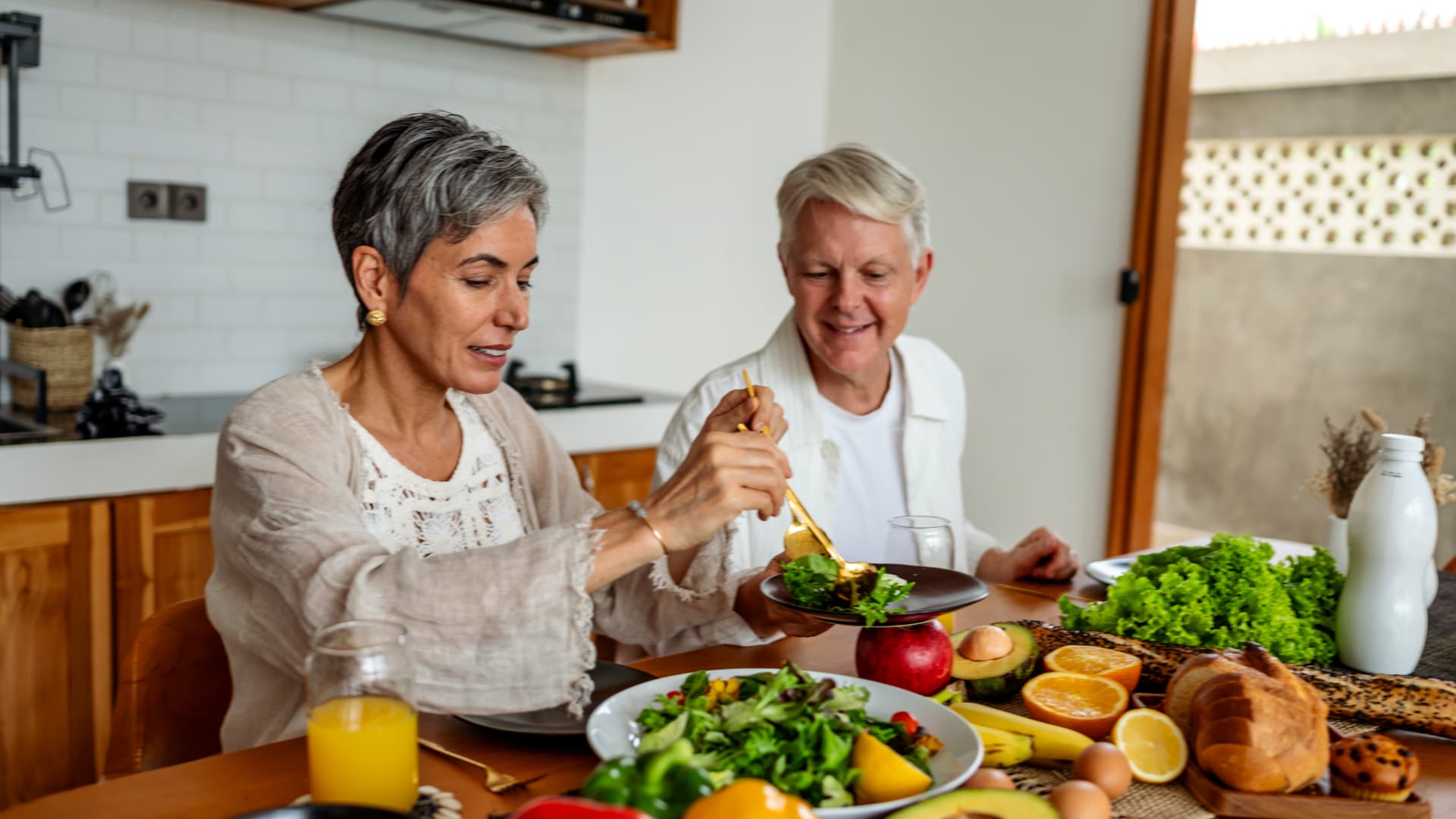
Research shows that what you eat, how you move your body, and even who you form relationships with are all important factors for longevity. But, genetics and luck also play a major role in how long you live.
There is a lot of advice floating around about how to get healthy and stay healthy — especially on social media — so it can be hard to know where to start.
Dr. Petter Attia, a physician and researcher who studies longevity medicine, recently led a MasterClass series called “Science for a Longer, Better Life.” In each episode of the series, Attia shares how to create your own personalized “longevity toolkit.”
“We don’t get to choose when or how we die,” Attia says in episode one. “But we get to choose how we live.”
To create your personalized longevity plan, it’s important to understand what’s important to you as it pertains to health and wellness, Attia said. He suggests writing down 10 specific things that you think will matter to you most in the last 10 years of your life. Attia refers to this list as the “centenarian decathlon.”
Some examples of what might make it onto this list include living on your own, walking up stairs without assistance, playing with your grandkids or even skiing down a mountain, he said.
This list will help you determine the goals to work towards. After that, you can shape your daily practices to boost the likelihood of achieving them, he explained.
Use these 5 factors to create your ‘longevity toolkit’
Attia also says there are five pillars that we should all focus on if we want to increase our chances of not only living longer, but actually enjoying the final years of our lives.
Attia’s five “pillars of longevity” are:
Exercise: Develop a routine that involves cardio, strength training and improving your balance. Do at-home tests like seeing how many push-ups you can do to gauge your current strength, or standing on one foot with your eyes closed to learn how long you can maintain your balance.Nutrition: Prioritize getting an adequate amount of calories a day without overeating or undereating, Attia said. Also, eat a sufficient amount of protein, and ensure that you’re getting enough vitamins and minerals from the foods you eat.Sleep: Practice good sleep hygiene by waking up at the same time every day, aiming for about eight hours of sleep a night and having a wind-down routine before bed that doesn’t include looking at your phone.Supplements: Ask yourself what the benefits of the supplements you’re currently taking are, and determine if you can actually measure those benefits. Always speak with your doctor before adding new supplements to your routine.Emotional health: “Life without emotional health is really not that rewarding,” Attia said. Challenge your inner critic by recording voice memos or journaling when you’re being hard on yourself; speak or write as if you’re talking to a friend who did the same thing that made you upset at yourself.
Prioritizing these fundamentals can lead to healthy outcomes regardless of what’s on your personalized list, he said.
“Death is inevitable,” Attia said. “But what I don’t think is inevitable is that we spend the final decade of our life in such a state of decline that we fail to enjoy the activities we love and being with the people we love.”
Want to stand out, grow your network, and get more job opportunities? Sign up today for Smarter by CNBC Make It’s online course, How to Build a Standout Personal Brand: Online, In Person, and At Work. Learn how to showcase your skills, build a stellar reputation, and create a digital presence that AI can’t replicate.

