

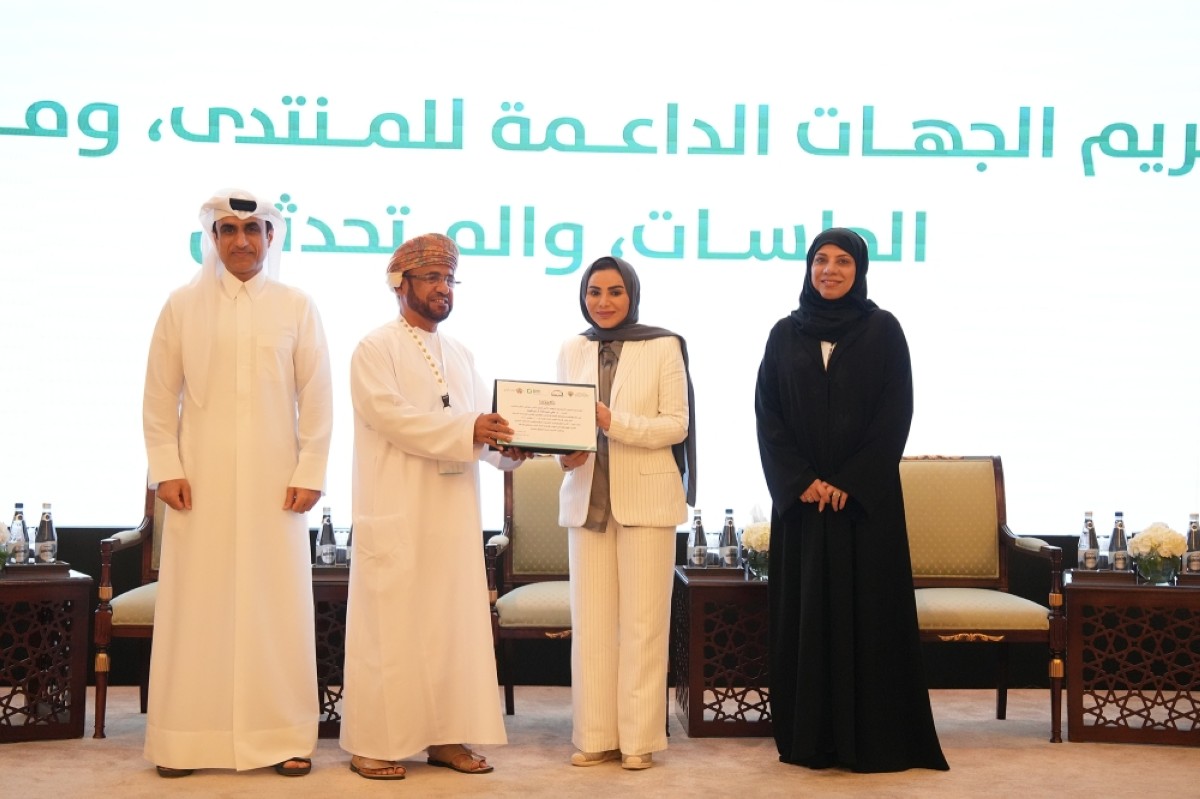
KUWAIT: Minister of Social Affairs, Family and Childhood, Dr Amthal Al-Huwailah, affirmed on Sunday that prioritizing family support policies is not optional but essential for ensuring social security and sustainable development. Her remarks came during the launch of the Fifth Gulf Forum on Family Policies, hosted by Kuwait over two days under the theme “The Gulf Family Between Digital Challenges and Opportunities for Human Investment.”
Organized by the Kuwaiti Ministry of Social Affairs with Gulf participation, the forum welcomed Director General of the Executive Office of the Council of Ministers of Labor and Social Affairs, Mohammed Al-Obaidli, and Executive Director of the Doha International Family Institute, Dr Sharifa Al-Emadi. Dr Al-Huwailah described the forum as a high-level regional platform for exchanging ideas on a fundamental pillar of Gulf societies: the family.
She stressed that the forum complements joint Gulf efforts to develop social policies that underscore the family’s vital role as the nucleus of society and its capacity to address changes imposed by the digital age, while emphasizing investment in human capital to build a sustainable future. “The family is the cornerstone of a prosperous and stable society, and the primary incubator of values, morals, identity, and the environment in which the children of the future are raised,” she said.
Dr Al-Huwailah highlighted the challenges facing families today, including economic shifts, technological advancements, and pressures of modern life. She noted that the “digital silence” between generations, excessive use of smart devices and social media, cybersecurity concerns, and the influence of digital content on traditional Gulf values require a deliberate reassessment of policies and programs to ensure family cohesion and resilience.

Minister of Social Affairs, Family and Childhood Affairs, Dr Amthal Al-Huwailah
She called for transforming these challenges into opportunities to develop skills, enhance emotional intelligence, and strengthen communication within families. She stressed leveraging technology as a tool for family empowerment—through education, training, and skill development—via collaborative efforts between educational and media institutions, civil society, and government entities.
Dr Al-Huwailah emphasized that these initiatives reflect the directives of His Highness the Amir Sheikh Meshal Al-Ahmad Al-Jaber Al-Sabah and His Highness the Crown Prince Sheikh Sabah Al-Khaled Al-Hamad Al-Sabah to promote family values and strengthen family bonds at national, regional, and international levels. She also called for enhanced regional cooperation to build strong Gulf families, which she described as the foundation of a cohesive society and sustainable development.
She expressed gratitude to the Executive Office of the Council of Ministers of Labor and Social Affairs of the GCC states, the Doha International Family Institute, the Kuwaiti Ministry of Social Affairs, and the Supreme Council for Family Affairs for their contributions, expressing hope that the forum’s recommendations would constitute “a blessed step towards a more stable and cohesive future for the Gulf family.”
For his part, Mohammed Al-Obaidli emphasized to Kuwait News Agency (KUNA) the importance of strengthening family support policies amid rapid digital transformation, stressing the need to invest in human capital as a pillar of sustainable development. He noted that GCC social affairs ministers have adopted a unified policy to support families in response to the effects of the digital environment and changing patterns of living, learning, and work, while preserving values and enhancing family members’ capabilities. He highlighted challenges such as intensive technology use by children and adolescents, its impact on family relationships, and the need to balance work and life responsibilities, calling for modern social databases and information systems to aid decision-making.
Dr Sharifa Al-Emadi, Executive Director of the Doha International Family Institute, told KUNA that digital challenges are a global phenomenon affecting families worldwide. She noted that studies by the institute show the absence of parental supervision and limited quality time with children increases device and social media use, with children often replicating their parents’ online behavior.
Dr Al-Emadi stressed the importance of shared family activities—such as traditional games, sports, and visits to parks—to foster real-life interaction and reduce digital isolation. She emphasized positive dialogue and attentive listening as key to building balanced parent-child relationships, noting that children represent the true investment of the family and society. She called for structured educational and training programs for parents, in cooperation with relevant institutions, to create a supportive family environment capable of meeting contemporary challenges. — KUNA
