

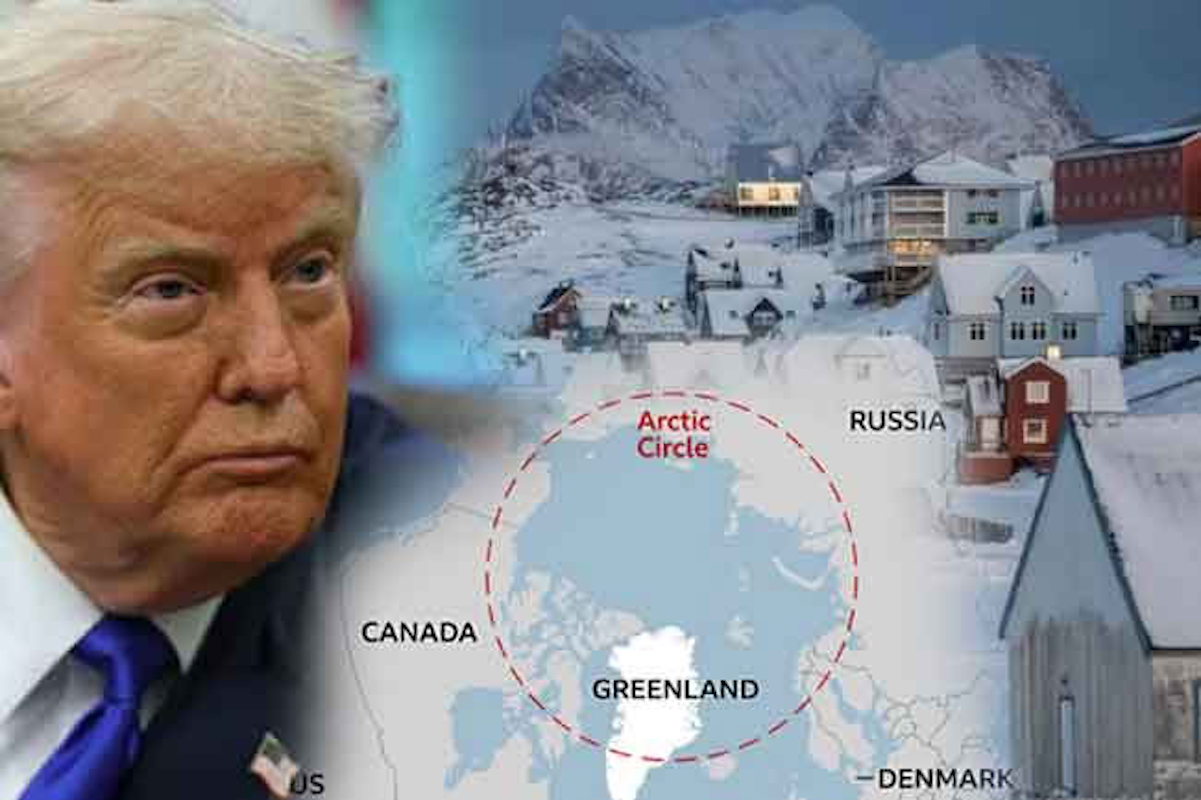
Asia should pay close attention to what markets are signaling on the Greenland crisis. Distance offers no protection in a global system where trade, capital and confidence remain tightly interlinked.
Moves this week across asset classes show investors are treating this episode as more than a political sideshow. Gold hitting record highs alongside falling global equities reflects a judgment call by markets.
Investors don’t reposition portfolios simply because of headlines. They do so when intent appears credible and consequences appear acceptable. Capital shifts when escalation sits within the realm of probability.
Asia faces direct exposure because its economic model remains closely tied to conditions in the US and Europe.
History shows that when confidence weakens across those economies, the effects travel quickly through trade volumes, earnings and investment decisions across the region. Asia doesn’t need to sit at the center of a dispute to absorb impact.
Trade friction between Western allies compresses demand on both sides of the Atlantic. This feeds directly into Asian supply chains built around components, intermediate goods and advanced manufacturing.
China, South Korea and Taiwan, to name but a few, are deeply embedded in these networks. Margins narrow, order visibility deteriorates and capital spending slows.
Japan feels this transmission through export volumes and corporate confidence. Germany and the US remain critical destinations for Japanese machinery and autos. Any deterioration in transatlantic relations weakens that demand base, with likely knock-on effects for earnings and investment.
Southeast Asian economies face a similar risks. Vietnam, Malaysia and Thailand benefit from diversified supply chains serving Western markets.
Typically, when trade uncertainty rises, multinational firms delay expansion decisions. Any hesitation of this kind can be expected to show up in slower foreign investment flows and reduced manufacturing momentum.
Markets understand this transmission mechanism instinctively and price it in early, with currency markets often reacting before equities fully adjust. Asian currencies tied closely to trade and manufacturing tend to absorb that shift.
The Korean won and Taiwanese dollar often weaken during these phases as global funds reduce cyclical exposure. Meanwhile, the Chinese yuan comes under pressure as export expectations soften.
Equities follow the same logic. Asian stock markets historically underperform during moments when global cooperation weakens, reflecting exposure rather than weakness.
Asia benefits most when trade flows remain open, predictable and rules-based. When those assumptions come under pressure, portfolio allocations adjust accordingly.
The Greenland dispute also pulls Asia closer to strategic competition that increasingly overlaps with economics.
Arctic shipping routes, resource access and security considerations connect directly to long-term trade planning. Asian economies rely on secure sea lanes and stable logistics. Investors reassess those assumptions when territorial ambition enters the picture.
China views the Arctic as commercially relevant over the long term, particularly for shipping routes that could shorten transit times to Europe.
Japan and South Korea depend on uninterrupted maritime trade for energy and raw materials. Elsewhere, Southeast Asia benefits from predictable global shipping networks that support export growth.
Commodity markets underline the shift, as we’re currently seeing in real time. Gold’s rise reflects demand for protection against rising geopolitical uncertainty.
In parts of Asia where gold plays a role in savings and wealth preservation, higher prices support balance sheets in the short term while constraining consumption over time. India feels this dynamic acutely, given gold’s cultural and financial importance.
Energy and industrial commodities introduce additional strain. Greater geopolitical tension increases volatility, complicating planning for energy-importing economies across Asia.
Japan, South Korea and India remain highly sensitive to swings in global energy prices. Inflation sensitivity rises, policy flexibility narrows and corporate forecasting becomes less reliable.
The deeper issue involves precedent. Investors increasingly view trade measures as tools deployed for strategic objectives rather than purely economic ends. And market expectations are adjusting accordingly.
Asia has prospered in an environment where disputes remained transactional and solvable. Any shift toward coercive economics reshapes the region’s risk calculus.
Timing also amplifies the effect. Asian markets face these pressures while valuations remain demanding and margins thin. Tolerance for external shocks narrows under such conditions, with investors acting sooner and with less patience.
The dynamic is clear. The Greenland crisis shows how quickly geopolitical tension can reprice assets worldwide. Political risk now belongs firmly within growth assumptions, currency strategy and capital allocation.
Markets are currently showing us that they believe escalation over Greenland is possible, if not likely, and are positioning accordingly. If markets are right, the consequences for Asia will likely be felt through trade flows, capital movement and risk-off portfolio decisions.
