

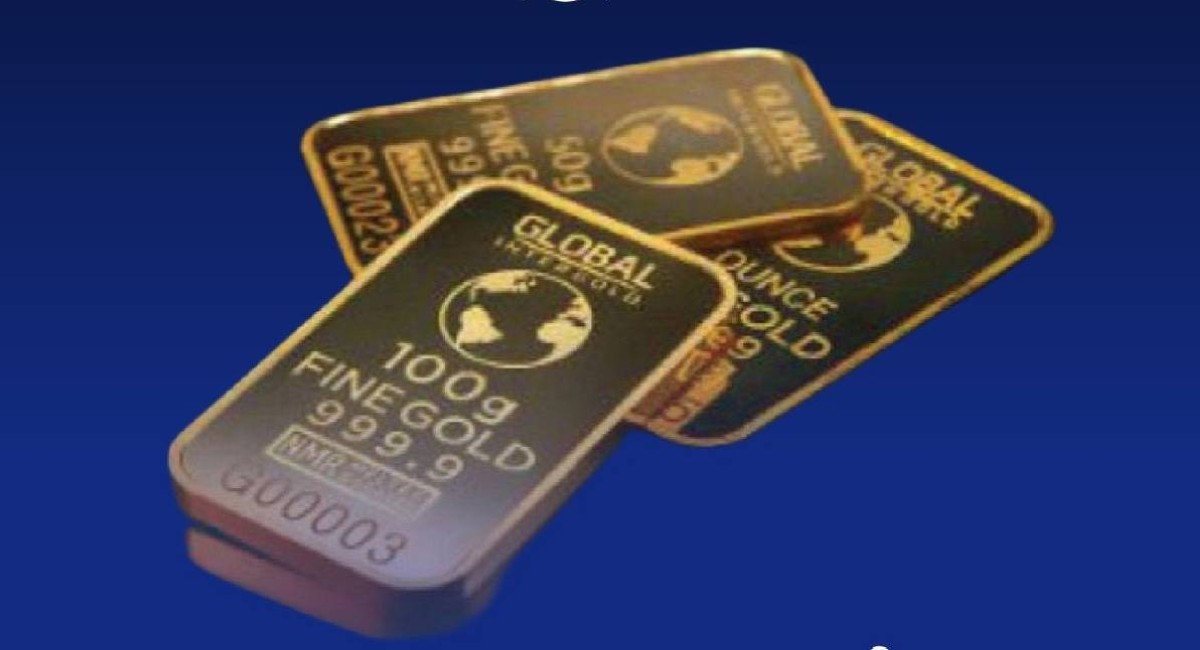
KUWAIT: Gold prices held steady at the end of last week’s trading after a notable decline due to profit-taking and a relative easing of geopolitical tensions, closing at $4,595 an ounce. This comes amid expectations that the US will maintain its restrictive monetary policy for a longer period. A report issued by the Kuwaiti company Dar Al-Sabaik on Sunday stated that despite this daily decline, gold ended the week with clear gains, supported by the strong rises it recorded in the first half of the week after reaching new record highs.
The report added that gold futures for February delivery fell by 0.61 percent, while weekly gains reached approximately 2.4 percent. This performance followed a surge that pushed prices to historic levels, encouraging investors to secure profits, especially with the decline in geopolitical concerns that had previously supported gold demand. The report explained that gold received strong support during the week with the escalation of geopolitical risks and US statements hinting at the possibility of directing Military action against Iran was a concern before these fears subsided later, with signals from the US administration indicating a possible postponement of any military move.
This led to a reduction in the risk premium and a decrease in demand for safe-haven assets in recent sessions. The report also noted that strong US economic data contributed to the pressure on gold prices. Industrial production figures showed growth exceeding expectations, and the US labor market continued to demonstrate remarkable resilience, with unemployment claims declining and the unemployment rate remaining below the Federal Reserve’s projections.
The report from Dar Al-Sabeek stated that these factors strengthened the US dollar and raised Treasury bond yields, diminishing the appeal of gold as a non-yielding asset. It argued that these developments reinforced the market’s conviction that the Federal Reserve would not cut interest rates in the near term. Instead, it became more likely that rates would remain unchanged at the next meeting, postponing any large-scale monetary easing until mid-2026. This contributed to reducing investors’ bets on the continuation of gold’s strong upward momentum in the short term. From a technical perspective, the report indicated that gold stabilized below $4,600 per ounce after hitting its lowest level on Friday.
Gold fell to $4,537 before rebounding above the support level of $4,550. The report indicated that technical indicators reflect a shift in momentum from bullish to neutral, with increasing likelihood of continued volatility within a wide range given the market’s sensitivity to any sudden political or economic developments.
The report noted that the $4,550 level represents a pivotal support level at present, while the $4,600 to $4,640 area constitutes a key resistance zone. It stated that gold’s movements over the past week were characterized by sharp fluctuations, with prices moving within a wide range between $4,536 and $4,640 per ounce, driven by a flow of news related to US monetary policy and geopolitical developments. The report added that despite the recent declines, prices remain close to their historical highs, reflecting the continued structural support for the precious metal.
He pointed to analysts’ opinions, which showed a clear division regarding gold’s short-term outlook amid a balance of support and risk factors. Some saw the possibility of a temporary correction due to profit-taking and rising yields, while the overall trend remains supported by long-term fundamentals, including high levels of global debt and continued political uncertainty. He explained that markets are awaiting the release of a set of important economic data from the United States in the coming period, including the Federal Reserve’s preferred inflation indicators, personal income and spending data, GDP readings, as well as purchasing managers’ indices and consumer confidence, which are expected to play a crucial role in reshaping monetary policy expectations and determining the future path of gold prices.
The report from Dar Al-Sabaik added that gold is currently moving in an environment characterized by high levels of volatility and uncertainty, as investors await any changes in the course of US monetary policy or a return to geopolitical escalation, factors that could quickly restore upward momentum to prices. Locally, the report indicated that the global performance of precious metals was reflected in the Kuwaiti market, where the price of a gram of 24-karat gold recorded approximately KD 45.420 (about $150), while the price of a gram of 1-karat gold reached (22) approximately KD 41,630 (about $137.30), while silver prices stabilized at around KD 965 dinars per kilogram (about $3,100), supported by continued global momentum in the metals markets. — KUNA
