

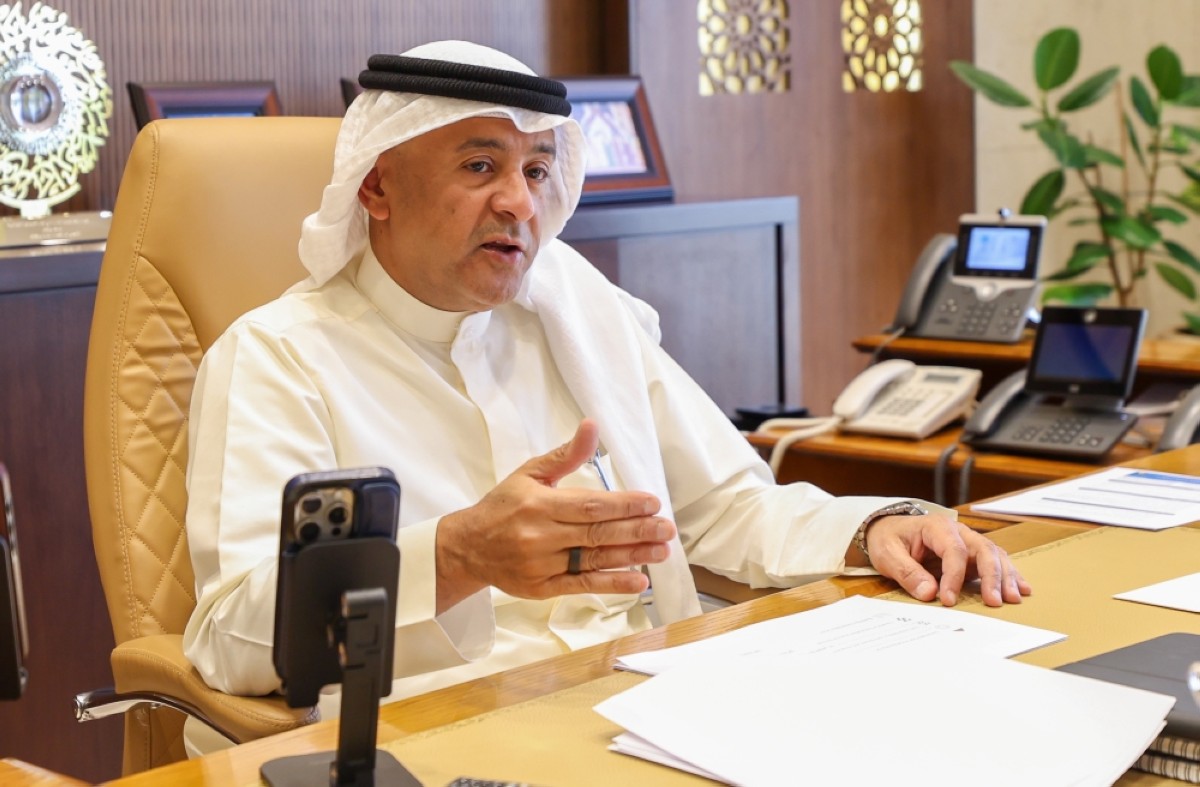
MANAMA: Secretary-General of the Gulf Cooperation Council (GCC), Jasem Al-Budaiwi, has affirmed that GCC countries are witnessing significant development across multiple sectors, alongside notable progress in implementing the United Nations Sustainable Development Goals (SDGs) 2030. Speaking to the Kuwait News Agency (KUNA) on Tuesday ahead of the 46th Gulf Summit in Bahrain, Al-Budaiwi emphasized that ambitious national visions, prioritizing quality of life, have been central to these achievements.
“The development we are witnessing reflects the GCC’s commitment to building healthier and more prosperous societies, achieving comprehensive development, and enhancing our global standing,” Al-Budaiwi said. He noted that government policies and strategic investments in health, education, and clean energy have been instrumental in advancing SDG targets. Data from the Gulf Statistical Center indicate that GCC countries now cover 80 to 90 percent of health and education indicators, with improvements exceeding 70 percent in key areas in recent years.
Al-Budaiwi highlighted the 2025 Global Sustainable Development Report, which confirmed that GCC states have outpaced the global average in clean energy (SDG7) and industry and innovation (SDG9), driven by renewable energy initiatives and economic diversification programs. Social progress was also evident through higher education enrollment, reduced child mortality rates, expanded social protection, and environmental improvements in Gulf cities. The Secretary-General described the overall GCC performance as “very good,” noting ongoing efforts to achieve deeper regional integration and elevate indicators in line with national development visions.
Railway link project
On the GCC railway link project, Al-Budaiwi described it as one of the most important joint initiatives among member states, witnessing steady progress. He noted that the UAE and Saudi Arabia have completed certain segments, while other countries are finalizing regulatory and technical requirements. Full operation is targeted for December 2030. “The railway will facilitate intra-regional trade, create job opportunities, attract foreign investment, localize industries, engage the private sector, and provide a cost-effective transport alternative,” he said. Passenger traffic is projected to rise from six million in 2030 to eight million by 2045, boosting tourism and regional mobility.
One point travel
Al-Budaiwi also elaborated on the “One Point Travel” system, which enables travelers to move between GCC countries without in-person check-ins, streamlining passenger flow and reducing waiting times. The system will gradually extend to all GCC citizens and residents. He further highlighted GCC free trade agreements, a key pillar of long-term economic strategy. The Council has signed agreements with Lebanon (2004), Singapore (2008), and the European Free Trade Association (2009). Current negotiations include the UK, Turkey, Malaysia, New Zealand, Pakistan, Korea, Japan, and Indonesia, while exploratory talks are ongoing with Vietnam, Georgia, and ASEAN.
Economic diversification
Al-Budaiwi noted significant progress in economic diversification, with non-oil sectors contributing around 76 percent of GDP, equivalent to nearly $1.7 trillion in 2024, driven by tourism, logistics, technology, renewable energy, and manufacturing. While diversification expands economic opportunities, oil remains central to global energy security and market stability. He added that GCC countries are pioneering renewable energy and green economy initiatives, citing major solar, wind, and hydrogen projects in the UAE, Saudi Arabia, Oman, Qatar, Bahrain and Kuwait. The Gulf has also adopted strategies to enhance energy efficiency, reduce emissions, and increase clean energy’s share in the energy mix, positioning the region as a leading contributor to global sustainable energy transition.
Youth empowerment
Al-Budaiwi emphasized that youth empowerment drives economic productivity, innovation, entrepreneurship, and social stability. GCC countries invest in developing youth skills, promoting national identity, and supporting voluntary and civic initiatives. These efforts underpin the achievement of national visions and ensure sustainable development through human capital investment. On human development, he noted ongoing initiatives to enhance healthcare, education, income, and quality of life. Advanced medical services, updated curricula, international partnerships, and economic diversification have placed all GCC countries in the “very high human development” category.
Social, Health achievements
Al-Budaiwi highlighted GCC progress in health, social development, and sports. Health sector improvements include expanded medical infrastructure, digital transformation, preventive care, and comprehensive insurance coverage. Social initiatives focus on empowering families, youth, and women, strengthening social protection, and supporting voluntary initiatives. In sports, investment in facilities, talent development, and hosting international events has enhanced community health and sports diplomacy.
Regional security
The Secretary-General described the 46th GCC Summit as occurring amid rapidly evolving regional developments, reaffirming GCC cooperation and integration. Political discussions at the summit are expected to focus on regional security, the Iranian nuclear program, maritime security, and developments in Palestine, Gaza, Lebanon, and Syria. Al-Budaiwi stressed the GCC’s commitment to sovereignty, territorial integrity, peaceful dispute resolution, and international law. The Council supports comprehensive solutions to the Palestinian issue and provides political, economic, and humanitarian assistance to Syria and Lebanon, emphasizing their security, stability, and economic recovery.
Security cooperation
Regarding security, Al-Budaiwi outlined the GCC strategy against money laundering, terrorism, and extremist financing (2026–2030), emphasizing legislation, joint operations, technology, international coordination, and capacity building. He highlighted the Permanent Committee for Combating Terrorism, established in 2007, and the GCC Security Strategy for Combating Extremism (2010), noting strong regional coordination in confronting threats. He concluded that GCC countries maintain high levels of security cooperation, contributing to regional stability and supporting international counterterrorism efforts. — KUNA
