

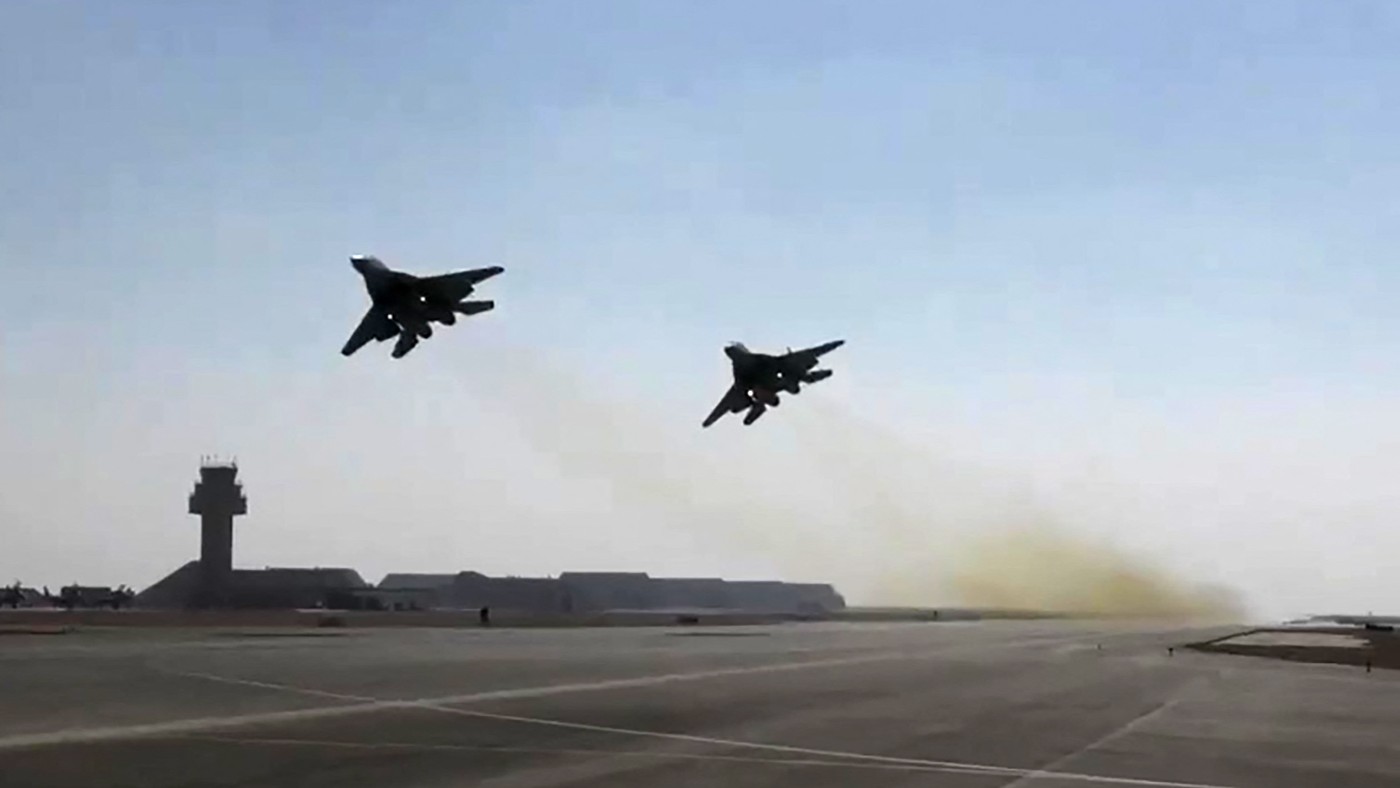
Egypt is using a secretive airbase to carry out drone strikes on the Rapid Support Forces (RSF) in Sudan, according to a new report.
Satellite images, flight records and videos seen by the New York Times – as well as interviews with officials – suggest that the strikes have been going on for at least six months from the base, which is hidden amid a vast, agricultural project in the country’s western desert.
Cairo is supportive of the Sudanese government and the Sudanese Armed Forces (SAF), which in recent months has lost a string of strategic towns and cities to the RSF, most notably North Darfur’s el-Fasher, where thousands of civilians have been massacred by the paramilitaries.
Previously, Egypt had been mainly a diplomatic player in Sudan, but the new evidence suggests that its direct involvement in the conflict has increased significantly.
After the RSF took el-Fasher, Middle East Eye reported that Egypt and Turkey had both agreed to step up military support for the SAF. MEE also reported in January that Egypt had “begun bombing RSF supply convoys running close to its territory”.
New MEE newsletter: Jerusalem Dispatch
Sign up to get the latest insights and analysis on
Israel-Palestine, alongside Turkey Unpacked and other MEE newsletters
Egyptian President Abdel Fattah el-Sisi went on to describe the horrors of el-Fasher as a “red line”.
In early December, almost two months before the NYT report, regional analyst Jalel Harchaoui posted on social media that Egyptian MiG-29 jets were “carrying out destructive air strikes against RSF convoys moving from Haftar-held Libya into Sudan”.
The RSF is supported by the United Arab Emitrates, though the country has denied it, while Qatar, Turkey and Saudi Arabia are among those now backing the army.
Emirati support for the RSF has been facilitated in part by Libya’s eastern military commander Khalifa Haftar, who controls the key airbase of al-Kufra, which is currently closed. Egypt has recently put pressure on Haftar to stop this support for the RSF, so far without success.
Regional rivals
A feud between erstwhile close allies Saudi Arabia and the UAE has erupted in public in recent weeks, which has also drawn in Egypt and further raised pressure on the Emiratis over their backing of the RSF.
The Emiratis have sown discord across the Middle East and Africa in recent years by backing several insurgencies and separatist groups, including the RSF, which has been accused of a litany of war crimes, including genocide.
In Yemen, the UAE-backed Southern Transitional Council separatist group was last month routed by pro-Yemeni government fighters backed by Saudi air strikes, after briefly seizing all of the country’s east.
The developments were accompanied by rare statements of condemnation between Saudi Arabia and the UAE, and Riyadh has since been openly assertive against Emirati policy in the region.

Exclusive: UAE flights linked to Sudan war tracked from Israel to Ethiopia
Read More »
Earlier this month, MEE reported that Cairo shared intelligence with Riyadh on the UAE’s activities in Yemen.
Ironically, the East Oweinat desert reclamation project from where Egypt’s new drone operation has been launched, about 65km from the border with Sudan, has received foreign investment from major Emirati agricultural companies.
The RSF acknowledged in a statement in November that drones striking its forces were “being launched from a foreign base”, and warned they would respond “at the appropriate time and place”.
Last month, Doctors Without Borders (MSF) visited the city of el-Fasher for first time since February 2025 and described it as “largely destroyed” and “empty”.
MSF said its staff spent four hours in the city on 15 January, after being granted access to assess the needs of civilians and medical facilities.
“We saw destroyed areas, largely emptied of the communities that used to live there. The regional capital now looks like a ghost town, with few civilians remaining,” MSF said in a statement.
The organisation added that its visit was “too limited” to allow for “more than a glimpse of el-Fasher”, yet revealed the “sheer scale of the destruction that took place in the city as many of its residents were wiped out”.
