

KUWAIT: Zain Kuwait announced the successful conclusion of its partnership with the “Together for E-Waste Free Schools” initiative, in collaboration with the ECO Business Incubator, the Ministry of Education, and the Environment Public Authority (EPA). This partnership comes as part of Zain’s ongoing efforts to advance environmental sustainability and support the shift toward more responsible practices in managing electronic waste, helping embed a circular economy mindset among younger generations.
Over five months, students from 12 schools across Kuwait’s six governorates collected more than 5.5 tons of e-waste, equivalent to the weight of three cars. This achievement reflects students’ growing environmental awareness and their ability to create tangible impact when awareness efforts are reinforced through hands-on implementation.
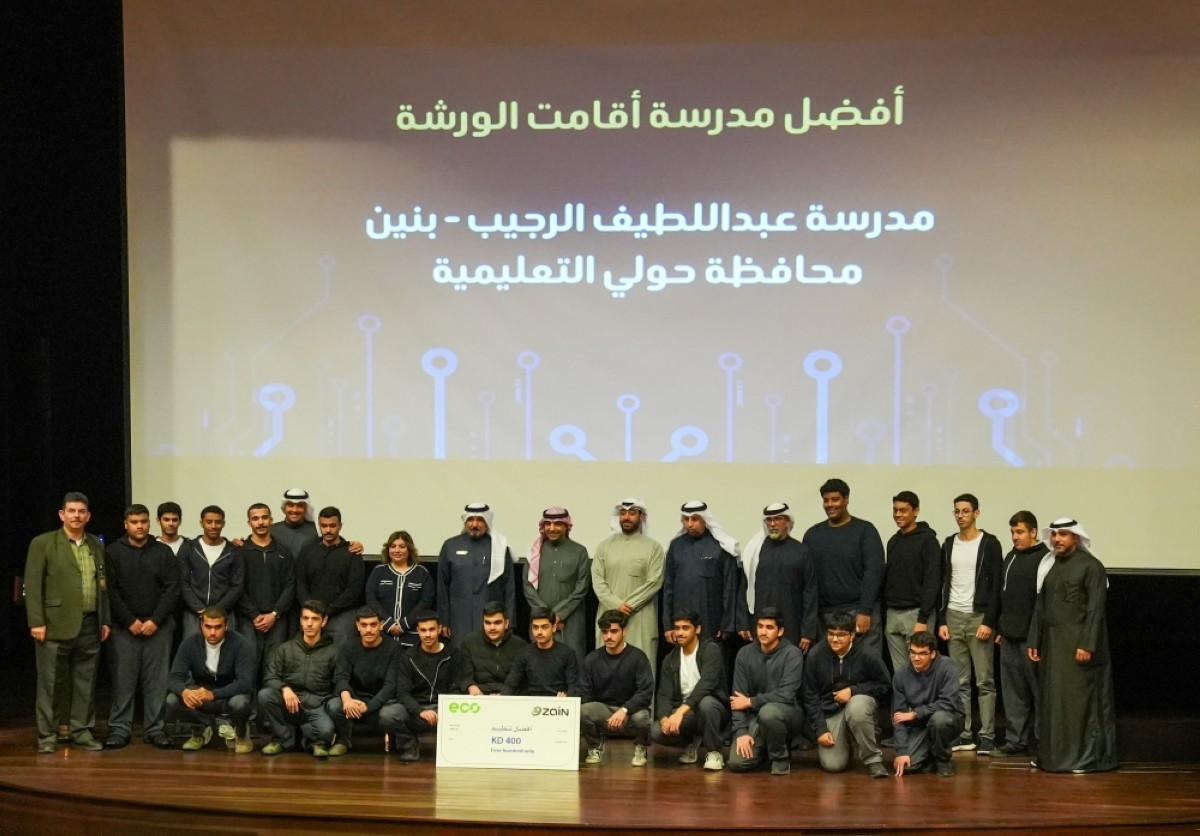
The closing ceremony was held at the Ministry of Education headquarters, attended by ministry leadership and Zain officials. The company took part in honoring the winning schools in recognition of their excellence and commitment, in line with the initiative’s conclusion, which included evaluation, issuing final outputs, and recognizing outstanding entities and schools.

Zain honors one of the winning girls’ schools.

KUWAIT: Ministry of Education officials honor Zain for their partnership in the “Together for E-Waste Free Schools” initiative.
Launched in September 2025 as part of an institutional collaboration that brought together national public and private entities, the initiative implemented an awareness and practical program within schools. It aimed to encourage students to adopt responsible environmental behaviors and to activate a practical model for managing e-waste through school collection points, monitoring collected volumes, and preparing periodic and final reports.
This partnership reflects Zain’s ongoing approach to supporting national initiatives with sustainable impact, particularly those that promote the proper management of e-waste and mitigate its risks, while linking technological progress to long-term environmental and social responsibility by investing in school-based awareness as a first line of defense for building sustainable daily habits across homes and communities.
