

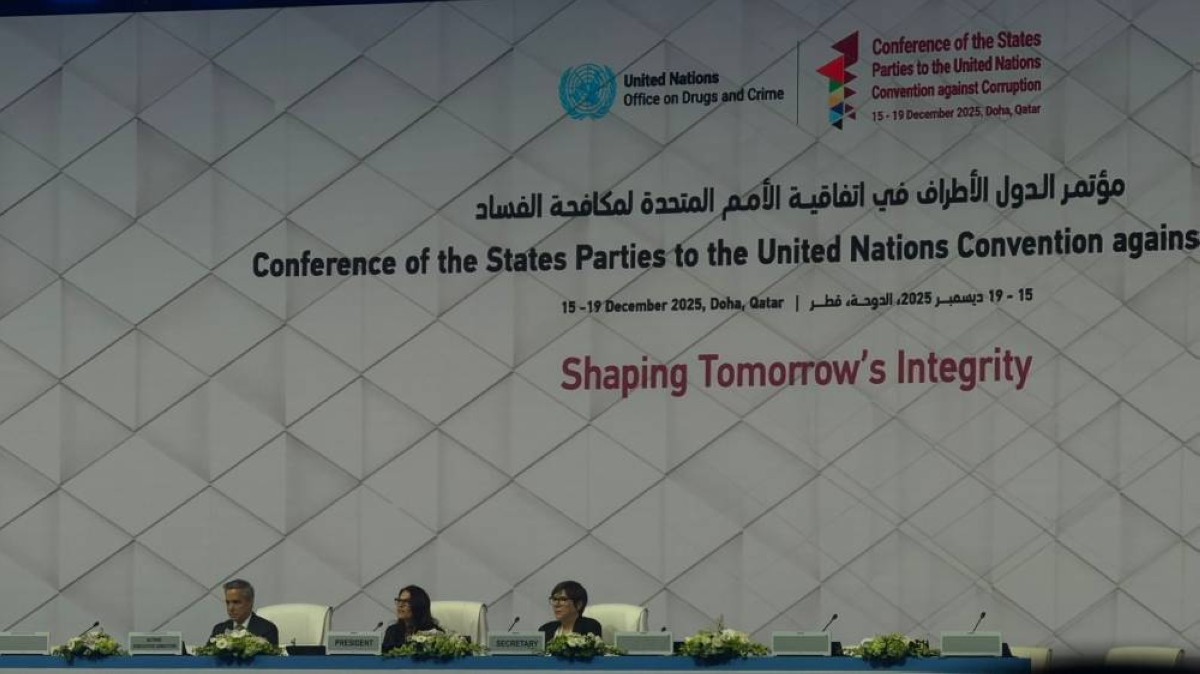
KUWAIT: The 11th session of the Conference of the States Parties to the United Nations Convention against Corruption (COSOC11) opened on Monday in Doha, Qatar, under the theme “Shaping Tomorrow’s Integrity.” Kuwait is represented by a delegation from the Kuwait Anti-Corruption Authority (Nazaha), headed by its Chairman Abdulaziz Al-Ibrahim. The conference will run until December 19. In her opening remarks, outgoing President of the 10th session Christine Klein described the conference as “an important platform for advancing the fight against corruption and combating the crimes it facilitates.”
She stressed the need for states to fulfil their obligations under the Convention, enhance cooperation on cross-border anti-corruption matters, and facilitate coordination among enforcement agencies. Klein also highlighted the importance of targeting crime proceeds and money laundering, which underpin organized crime and other illicit activities. Hamad Al-Misnad, Chairman of Qatar’s Administrative Control and Transparency Authority and newly elected President of the 11th session, said, “This high-level international event brings us together to renew our collective commitment to combating corruption, enhance integrity, consolidate transparency and broaden the horizons of international cooperation in this vital field.”
He expressed gratitude for his election and described the conference as a key platform for exchanging experiences and mobilizing global anti-corruption efforts. Al-Misnad noted that previous sessions have delivered tangible achievements, including recommendations on preventing and criminalizing acts of corruption, asset recovery and facilitating mutual legal assistance. He emphasized that success in combating corruption requires strong political commitment, effective international cooperation and the integration of efforts across multiple sectors.
He added, “We meet today at a critical juncture in the fight against corruption, as challenges grow increasingly complex with technological advances, digital spaces and cross-border financial instruments. This requires us to reassess priorities, update working mechanisms and strengthen institutional capacities.” In a recorded message, UN General Assembly President Annalena Baerbock thanked Qatar for hosting the conference and stressed that “preventing and ultimately eradicating corruption is our shared responsibility.” She highlighted the importance of using modern technologies to dismantle transnational corruption networks and translate pledges into concrete actions.
UN Secretary-General António Guterres, also in a recorded message, warned that “corruption is not a victimless crime; it fuels conflicts, perpetuates inequality, and depletes resources needed to protect people and the planet.” He noted that emerging technologies, including artificial intelligence, can both accelerate corruption and help detect and prevent it if properly regulated. Acting Executive Director of the United Nations Office on Drugs and Crime (UNODC) John Brandolino expressed appreciation for Qatar’s long-standing partnership and commitment to hosting the conference. He said, “Corruption provides the illicit infrastructure for criminal groups to operate and profit with impunity worldwide,” underscoring the need for coordinated, cross-sectoral approaches to dismantle crime networks.
Brandolino urged States Parties to fully utilise UNODC anti-corruption tools during the session to reaffirm a global vision for a new era of the Convention. The conference is the largest international gathering dedicated to combating corruption and promoting integrity and transparency. It brings together all 192 States Parties to the Convention, along with more than 2,500 participants from governments, regional and international organizations, anti-corruption experts, and representatives of the private sector, civil society, and youth. – KUNA
