

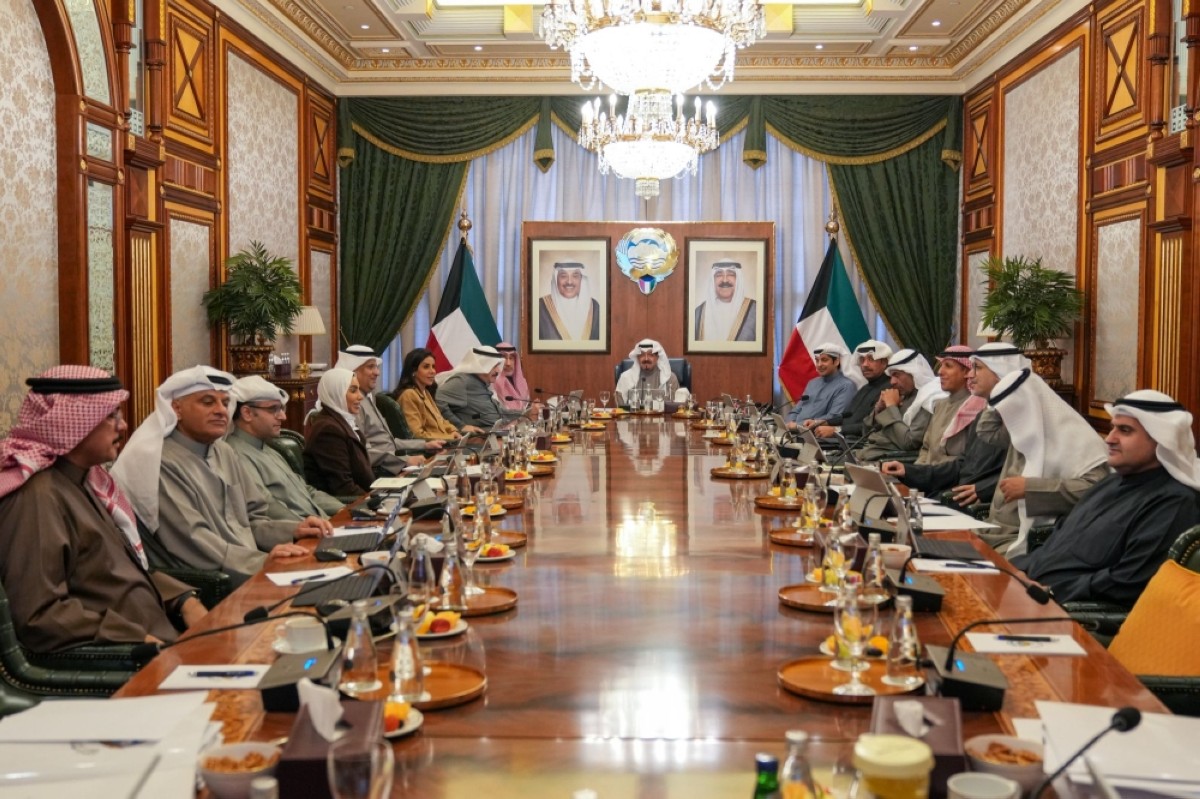
KUWAIT: Cabinet had a busy 2025, approving more than 100 decisions aimed at addressing national issues, launching major reforms and advancing sustainable economic transformation. The government’s legislative agenda was a key focus, with new laws and decrees impacting judicial, economic and social sectors. Reforms included updates to criminal and civil procedures and court fees, alongside amendments to the Public Authority for Anti-Corruption (Nazaha) and digital transactions laws.
Economic measures introduced this year focused on financial stability and growth. These included new regulations for digital trade, updates to bankruptcy laws and decrees on financing and liquidity. According to Kuwait News Agency, the reforms aimed to create a comprehensive framework that balances economic freedom with regulatory oversight.
Social and humanitarian laws were also strengthened. Updates to public assistance programs, child rights legislation, and the introduction of a law protecting missing persons were among the initiatives. On crime prevention, Cabinet approved laws tackling drugs, psychotropic substances, international crimes, and cross-border judicial cooperation.
Structural reforms extended to civil aviation, with new regulations aligning with international standards, and the transfer of railway project responsibilities to the Public Works Ministry. The government also launched a unified registration and admission authority for military and security institutions, with the goal of standardizing recruitment and placement procedures.
Nationality and identity issues featured prominently. The cabinet approved measures to streamline procedures for those affected by nationality revocations, while ensuring rights to trade, financial obligations and existing business incentives remain intact for impacted individuals. Special provisions continued for foreign spouses of Kuwaiti citizens.
Kuwait’s development agenda advanced through major projects, including direct contracting with a Chinese company for Mubarak Al-Kabeer Port. The government also approved the 2025–2026 development plan, covering nine programs, 134 projects, and 36 policies, alongside the draft state budget, which includes 90 new projects.
Administrative and regulatory reforms included the formation of governorate councils and updates to civil service leave policies for employees accompanying patients abroad. Specialized committees were created to monitor government performance and industrial licensing decisions and a dedicated team was tasked with accelerating progress on the Kuwait International Airport (T2) project. Community engagement and sustainable development also received attention. Approved donations funded healthcare facilities, hospital renovations, urban greenery projects, and heritage restorations, including Kuwait Oil Company’s oversight of Ahmad Al-Ahmadi market and cinema renovations in collaboration with NCCAL.
In sports and infrastructure, the government designated February 7 as Kuwait Sports Day and renamed a northern island coast guard base after Late Amir Sheikh Nawaf Al-Ahmad Al-Sabah. Externally, Kuwait strengthened its diplomatic and strategic partnerships, signing dozens of agreements and memoranda of understanding with friendly countries to support national development and reinforce the goals of Kuwait Vision 2035. — KUNA
