

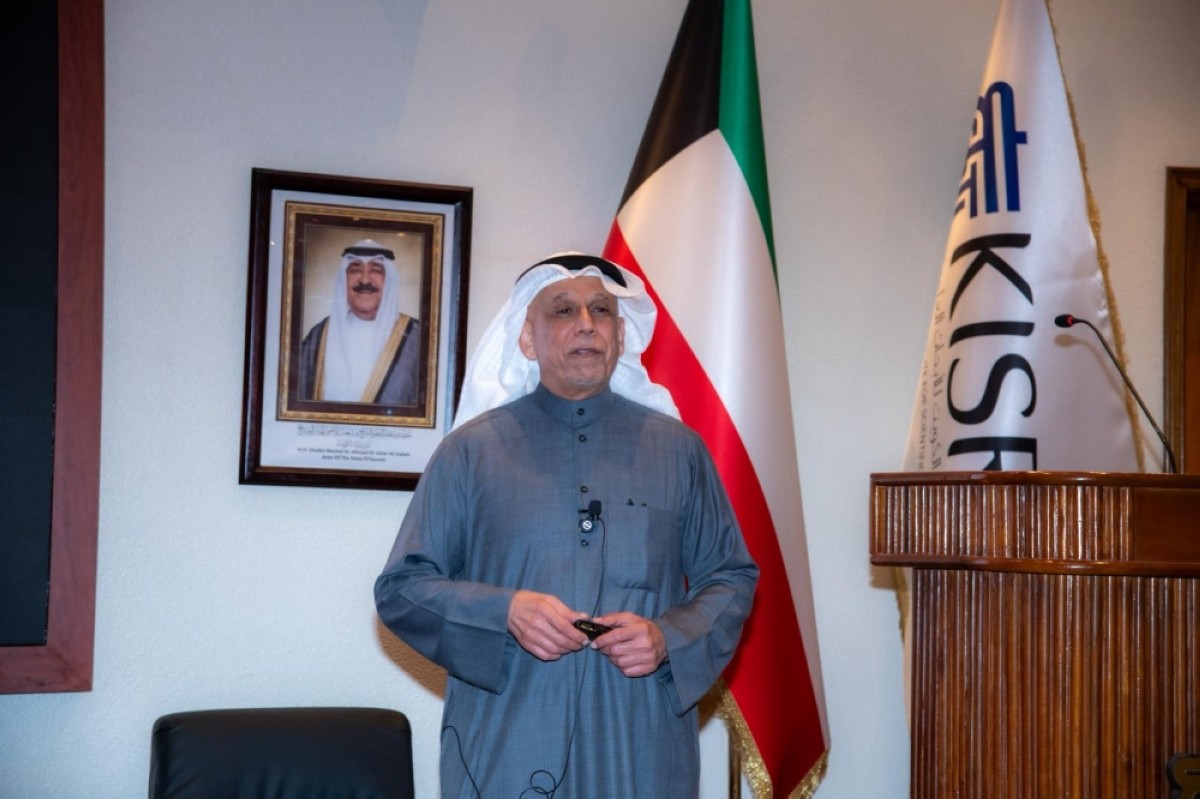
KUWAIT: Kuwait’s largest island, Boubyan, is facing complex soil and geohazard challenges that could affect major infrastructure projects, experts said during the Kuwait Institute for Scientific Research (KISR) lecture series on “Geohazards and Geotechnical Challenges.” The series emphasized the importance of scientific solutions and regional collaboration in supporting sustainable urban and environmental development.
Dr Walid Abdullah, former Kuwait University professor and geotechnical engineering consultant, outlined Boubyan Island’s strategic significance and ongoing development projects, including roads, bridges, a railway and electrical substations. He noted that Mubarak Al-Kabeer Port is still under construction. Abdullah explained that the island’s soft clay soils, combined with its role as a migratory bird habitat, require specialized soil improvement techniques. “The quality of the completed buildings and structures reflects the competence of our local experts,” he said.
Dana Shafaqah Al-Enezi, head of the lecture series, said the events aimed to address practical geotechnical challenges in Kuwait, citing Boubyan Island and the metro project as key examples. “This initiative highlights the importance of applying scientific research to reduce geohazard risks while promoting sustainable development in Kuwait and the wider region,” she said.

Dana Shafaqah Al-Enezi
Al-Enezi also emphasized that the lecture series encourages integrated management of geological risks, preserving natural resources and strengthening environmental resilience. The series drew specialists from Kuwait and abroad in fields ranging from geotechnical engineering to environmental science and sustainability. Dr Ali Al-Dosari, a KISR research scientist, highlighted the need for integrated solutions to address geohazards caused by dust storms and floods. “Ongoing projects, such as dust stabilization and early warning systems, along with accurate flood mapping and improved drainage networks, are essential for mitigating health and economic impacts,” he said.
Regional collaboration featured prominently, with experts from the UAE and Saudi Arabia sharing insights on advanced geotechnical and environmental technologies, including remote sensing and GIS for analyzing soil, groundwater, seismic, and coastal risks. Specialized panels also examined soil contamination and geohazard management in Kuwaiti projects, offering practical lessons from real-world implementations.
