

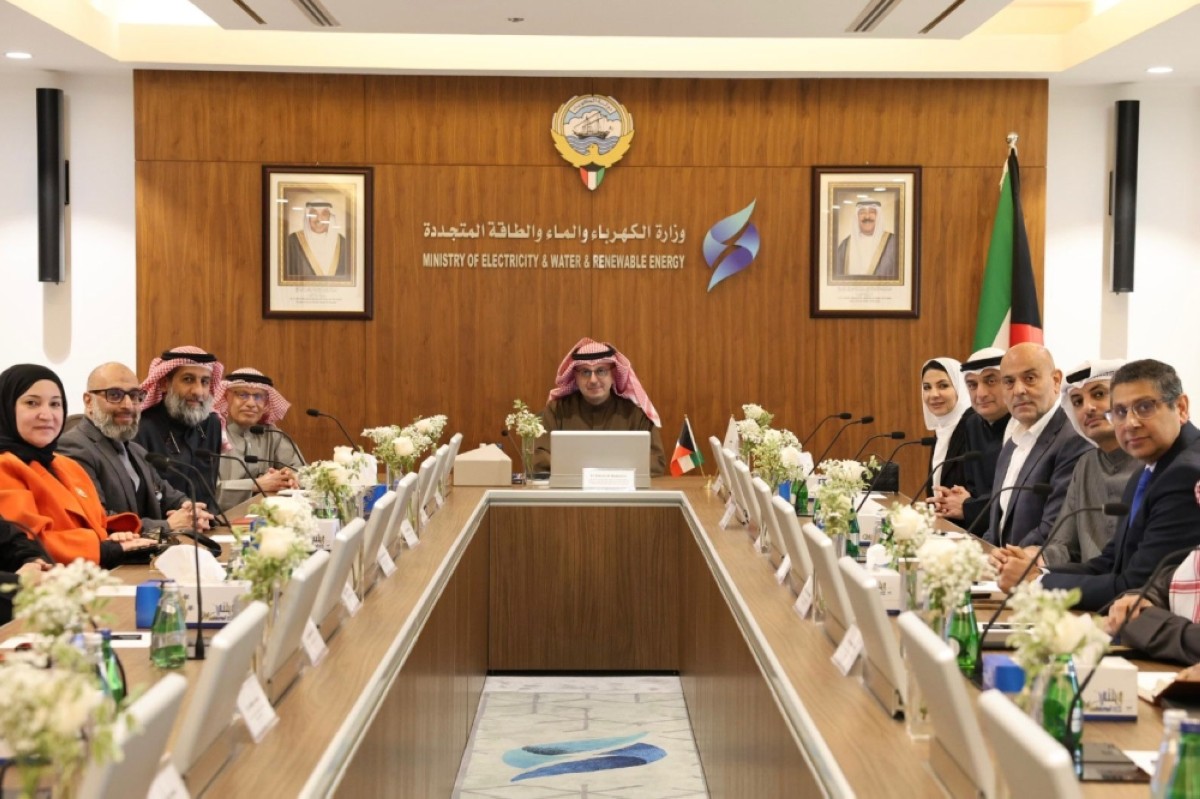
Government, private sector review technical details, timelines for Kuwait’s largest power expansion
KUWAIT: Kuwait is moving ahead with the expansion of the Al-Zour North power and water plant under a build-own-operate (BOT) model. The latest progress was reviewed in a strategic meeting between government officials and the Gulf Energy and Water Alliance Company. The company presented a detailed overview of the project, including its structure, contractual framework, technical specifications and implementation timeline. Representatives confirmed their commitment to executing the project according to global best practices.
The expansion, covering phases two and three, will add 2,700 megawatts of electricity and 120 million imperial gallons of desalinated water per day, making it the largest power plant project in Kuwait’s history. Officials emphasized the project’s role in strengthening the national electricity and water system and enhancing energy security. The project is set to double the plant’s production capacity by 2028, making it the largest power plant project in Kuwait’s history.
The country has been grappling with severe electricity shortages driven by rising temperatures, delays in maintenance and population growth. The strain has forced authorities to impose planned power cuts in some areas since 2024, mainly during the summer months.
Electricity, Water and Renewable Energy Minister Dr Sabeeh Al-Mukhaizeem said the government is keeping a close eye on major projects and working hand-in-hand with the companies building them to make sure public-private partnerships succeed and investment in the country grows.
KD 1 billion project
The project is the first powerplant in Kuwait to be executed under a BOT model. The model allows a private company to finance, build, own and operate a project for a set period under a government contract. Unlike full privatization, ownership and control are defined by the agreement, with the state retaining regulatory oversight while the private sector handles financing and operations.
The project, covering phases two and three of Al-Zour North, will produce 2,700 megawatts of electricity and 120 million imperial gallons of desalinated water on top of the plant’s existing output. Located on the Arabian Gulf coast about 100 kilometers south of Kuwait City, the plant will occupy roughly 500,000 square meters, adjacent to the first phase of Al-Zour North and the northern section of Al-Zour South.
Speaking on Thursday, Al-Mukhaizeem highlighted the expansion’s role in strengthening Kuwait’s electricity and water systems and enhancing national energy security. He stressed the need to adhere to high technical and environmental standards and to accelerate work in line with sustainable development goals, ensuring implementation according to the approved plan and strategic objectives.
A consortium including Saudi ACWA Power and the Gulf Investment Corporation will design, finance, build, operate and maintain the plant. Local and international banks will provide financing exceeding KD 1 billion (around $3.2 billion), and electricity and water produced will be supplied to the national grid under a 40-year Energy Conversion and Water Purchase Agreement. The Gulf Energy and Water Alliance Company, which was formally established on December 8, 2025, by the Kuwait Authority for Partnership Projects (KAPP), will represent both the public sector and Kuwaiti citizens until the project becomes fully operational. Ownership is divided as follows: 10 percent of shares are allocated to the government and public institutions through KAPP, 40 percent go to the private investor Zour Kuwait II Holding Company, and 50 percent are held on behalf of Kuwaiti citizens through KAPP.
The project is part of a broader package to enhance Kuwait’s energy infrastructure, including the Al-Khairan Power Plant, phases three and four of the Al-Shagaya renewable energy project, and modernization plans for older plants in Shuaiba and Doha.
The meeting reviewing progress on Al-Zour North was attended by Gulf Energy and Water Alliance Chairman Jassim Al-Nouri, company executives, Gulf Investment Corporation representative Fahad Al-Nusef, Ministry Undersecretary Dr Adel Al-Zamil, Partnerships Projects Authority Director General Asmaa Al-Mousa and several senior ministry officials. — Agencies
