

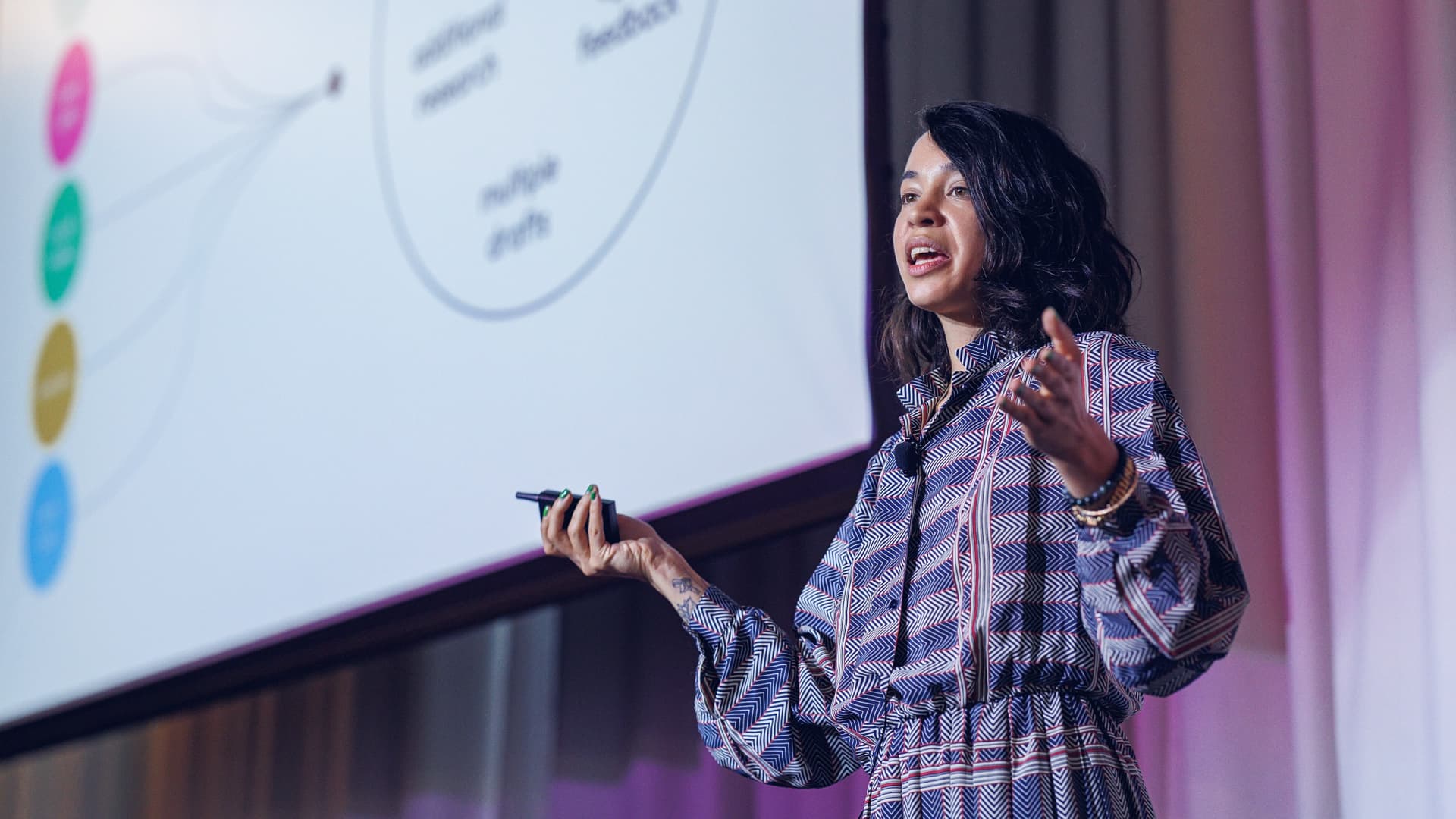
For many of us, procrastination comes with a lot of emotional baggage, says neuroscientist Anne-Laure Le Cunff, PhD.
“We’ve been taught to associate procrastination with laziness and lack of willpower, and so whenever we procrastinate, we start blaming ourselves for not doing the thing that we said we were going to do,” Le Cunff says.
Those negative feelings only make it harder for us to get back on track, according to Le Cunff, the author of “Tiny Experiments: How to Live Freely in a Goal-Obsessed World.”
From her perspective, procrastination shouldn’t be a source of shame — it’s “really just a signal from your brain that something is not working quite right at the moment,” she says.
“Instead of ignoring that signal, instead of trying to push through and blaming yourself in the process, what would it look like to just listen to that signal?” she continues.
A better approach is to “get curious” about the root of your procrastination habits, Le Cunff says. Here’s her strategy for overcoming procrastination.
Identify the problem
Le Cunff created a “triple-check” system that helps her evaluate why she might be avoiding a task — in her words, whether “the problem is coming from the head, from the heart or from the hand,” she says.
If your procrastination stems from the head, it means that “at a rational level, you’re not fully convinced you should be working on that task in the first place,” Le Cunff says.
The heart refers to your feelings: “If the problem is coming from the heart, it means that at an emotional level, you don’t feel like this is going to be fun or exciting.”
Finally, “if the problem is coming from the hand, it means that at a practical level, you don’t believe that you have the right tools, the right skills, or the right support network in order to get the task done,” Le Cunff says.
Once you’ve identified why you’re avoiding a task, “you can systematically find ways to get unstuck,” she says.
How to stop procrastinating
To tackle “head” problems, Le Cunff recommends taking a step back and evaluating what doesn’t feel right about the work.
For example, if you’re dragging your feet on finishing a task because you’re not sure whether it aligns with your project’s strategic goals, “you can go back to the drawing board and kind of redefine the task and see if that’s the right approach,” Le Cunff says.
For tasks you’re avoiding because they don’t feel sufficiently exciting or stimulating, Le Cunff’s best advice is to “make the environment fun,” she says.
“Maybe grab your favorite colleague and do a little co-working session, or go to your favorite coffee shop to do the task,” she says.
If you tend to procrastinate when you feel overwhelmed or unprepared, Le Cunff recommends reaching out to trusted friends or colleagues for advice.
“I always tell people, raise your hand, ask for help,” she says. That support could involve coaching, mentoring or asking your company to sponsor an online course — “whatever it is that you need to feel like you have the resources in order to get the job done.”
The triple-check system helps circumvent the ‘shame’ component of procrastination, Le Cunff says.
“It’s really going from this vague sense of dread and self-blame that you’re not doing the thing that you should be doing, to acting a little bit more like a scientist, like a detective, and seeing it as a puzzle to solve,” she says.
Want to get ahead at work with AI? Sign up for CNBC’s new online course, Beyond the Basics: How to Use AI to Supercharge Your Work. Learn advanced AI skills like building custom GPTs and using AI agents to boost your productivity today.
