

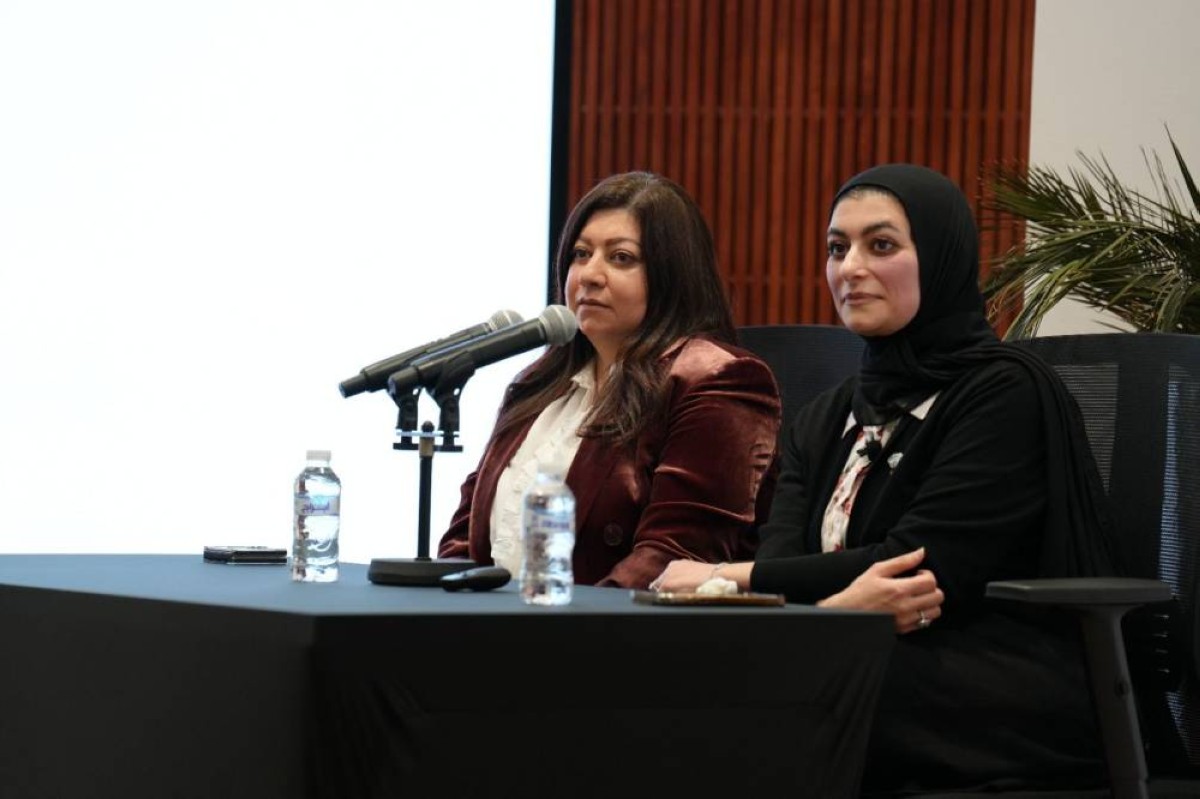
KUWAIT: The committee for reviewing academic certificates stressed the necessity for government entities and private sector institutions to update their employees’ data within the period specified through notifications sent to each employee via the unified government e-services application Sahel.
Assistant Undersecretary for Scholarships and Study Leave at the Civil Service Commission Narges Abdulrasoul told KUNA on Thursday that the committee — which reviews academic certificates of employees in both the public and private sectors, whether citizens or residents — held an orientation forum at the commission’s headquarters. The forum brought together representatives of ministries, government departments, public authorities, institutions and state-owned companies to clarify the committee’s role and the responsibilities of entities in achieving its objectives.
Abdulrasoul explained that the committee’s primary objective is to ensure the accuracy and integrity of data and to verify the authenticity of qualifications obtained by employees in both sectors, thereby safeguarding the continuation of their financial and professional entitlements.
She added that the mechanism for applying for equivalency of academic qualifications obtained outside Kuwait was explained during the forum. Applications can be submitted through the ministry of higher education’s website or via its service on the Sahel application, with detailed steps outlined until obtaining the electronic equivalency certificate.
She commended the efforts of the sub-teams at the Civil Service Commission, the ministry of higher education and the Public Authority of Manpower, stressing the importance of cooperation among liaison officers in all entities to ensure smooth workflow and timely achievement of objectives.
Abdulrasoul noted that certificate forgery constitutes a crime under Kuwait’s penal code no. 61 of 1960. Article 259 stipulates that anyone who forges an academic or professional certificate and knowingly uses it shall be subject to imprisonment for a period not exceeding five years and/or a fine not exceeding KD 5,000. She said combating this crime aims to preserve the integrity of official documents, ensure the authenticity of qualifications and maintain rightful financial and professional benefits within a proper legal framework.
She emphasized that these deterrent penalties represent an effective means of combating certificate forgery, limiting its spread, ensuring justice and equality among members of society and contributing to enhanced trust and transparency. The Cabinet had assigned Deputy Prime Minister and Minister of State for Cabinet Affairs Shereeda Al-Maousherji to form the committee, chaired by the fatwa and legislation department and including five government bodies: The ministries of higher education, interior, health, justice and the Civil Service Commission.
The move falls within ongoing efforts to combat forged certificates in both the public and private sectors, promote fairness and equality among employees and job applicants, implement anti-corruption measures, enhance academic integrity and ensure quality education standards. – KUNA
