

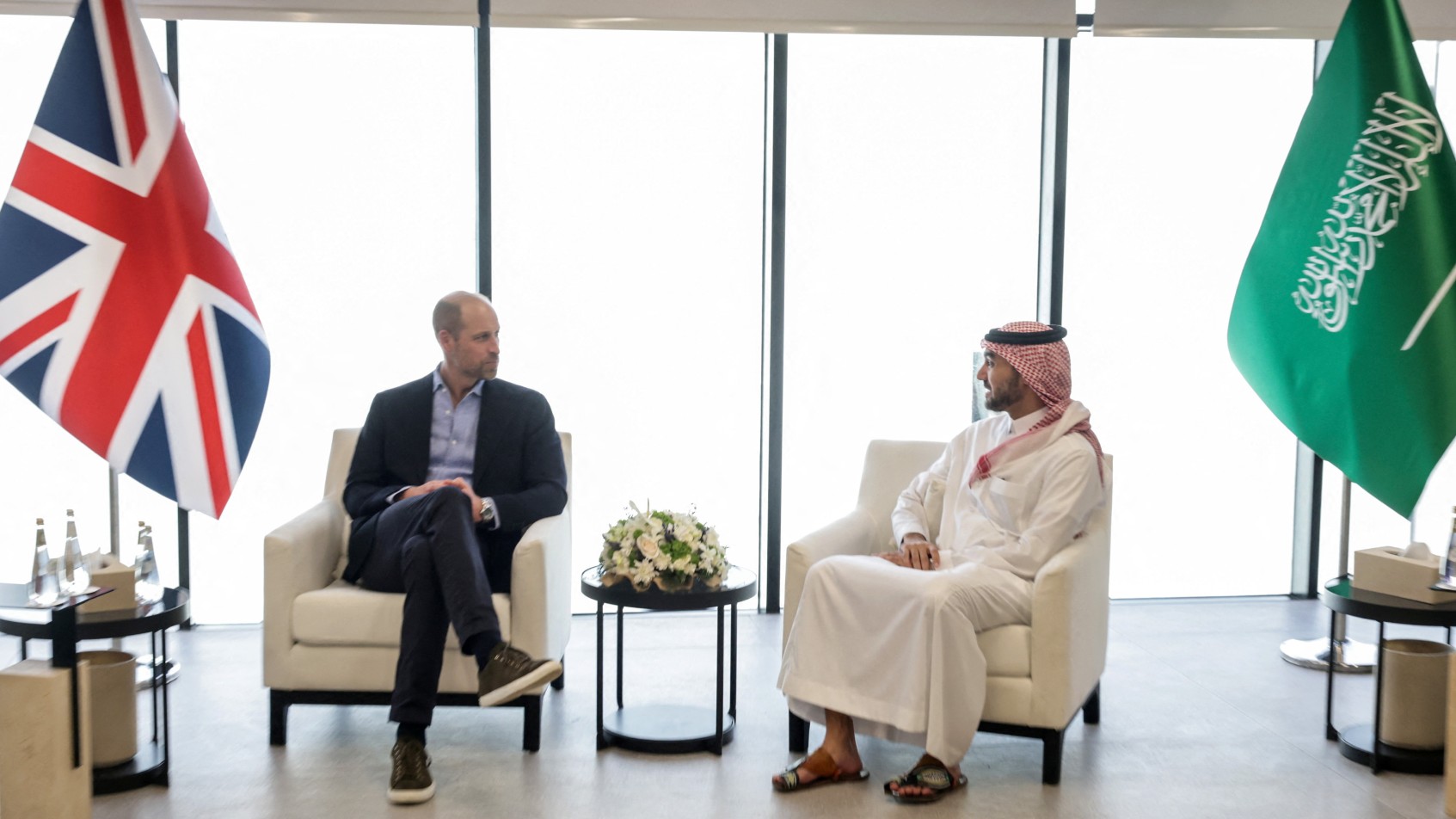
Prince William’s visit to Saudi Arabia this week is being regarded as a diplomatic test for the United Kingdom’s future king, as he seeks to strengthen relations between the two kingdoms.
Some have condemned the trip, citing the country’s poor human rights record and its authoritarian monarchy, led by de facto ruler Crown Prince Mohammed bin Salman.
This is not, however, the first visit by a member of the British royal family to Saudi Arabia. The late Queen Elizabeth II travelled to the kingdom in 1979 and William’s father, Charles, visited around a dozen times before he became king.
Mohammed bin Salman also travelled to London for a three-day visit in 2018, which included lunch with the queen and dinner with William, then Duke of Cambridge.
But what does the heir to the British throne hope to gain from his visit to Saudi Arabia in 2026?
New MEE newsletter: Jerusalem Dispatch
Sign up to get the latest insights and analysis on
Israel-Palestine, alongside Turkey Unpacked and other MEE newsletters
Strategic partners
The decision to make the visit followed a request from the British government, which has been seeking closer ties with Saudi Arabia.
In 2018, the two countries established the Strategic Partnership Council, aimed at developing and strengthening bilateral relations that will lead to “promoting shared economic priorities, advancing strategic initiatives… and accelerating economic growth”.
More recently, the British government has also been negotiating a free trade agreement with the Gulf Cooperation Council (GCC), of which Saudi Arabia is the wealthiest member, alongside the United Arab Emirates, Qatar, Bahrain, Oman and Kuwait.
It has been suggested that a deal with the GCC could be worth multiple billions of pounds in trade with the region. The UK already recorded £16.6bn in trade with Saudi Arabia last year.
British Prime Minister Keir Starmer visited the kingdom in his first months as prime minister as part of his “number one mission”: growing the UK economy.
The soft power of the British monarchy, credited by some with being used to good effect when Prince William met US President Donald Trump in September, may now be deployed again in dealings with the Saudi crown prince.
Rebuilding public profile
For Saudi Arabia and its ruler, the high-profile visitor presents an ideal opportunity to showcase Mohammed bin Salman’s work as the self-styled reformer of his country.

Saudi Arabia in talks with US company for AI-powered drones, sources say
Read More »
The Saudi crown prince is expected to highlight Vision 2030, his ambitious economic diversification plan, including efforts to open up the country, such as hosting the Fifa 2034 World Cup – an initiative likely to interest Prince William, a former president and current patron of the English Football Association.
Mohammed bin Salman may also seek to rehabilitate his tarnished image on human rights. Although he apologised for the killing of Washington Post journalist Jamal Khashoggi in the Saudi consulate in Turkey in 2018, calling it a “huge mistake”, he has never accepted responsibility for the murder, despite strong evidence suggesting his involvement.
Yet despite efforts to break with the past and reshape his public image, human rights remain a central concern in the kingdom.
In 2025, the number of executions in Saudi Arabia reached a new record for the second consecutive year, with some prisoners put to death for offences they were alleged to have committed as children.
Progress on women’s rights has also been slow and continues to provoke international criticism.
In its 2025 Global Gender Index, the World Economic Forum ranked Saudi Arabia 132nd out of 148, with restrictive guardianship and travel laws still in place.
Family matters
Prince William’s trip to Saudi Arabia comes as the royal family grapples with the fallout from newly released Epstein files, which further highlight the extent of his uncle Andrew Mountbatten-Windsor’s involvement with the late paedophile Jeffrey Epstein.
Attention will be focused on the heir to the British throne as he seeks to demonstrate leadership while the royal family navigates the scandal.
His silence on the issue had been notable until he and the Princess of Wales issued their first public statement through a spokesperson, consisting of just two lines.
Despite the controversies surrounding his family at home, the prince is said to remain focused on the diplomatic challenge confronting him.
The BBC quoted a royal source as saying the prince “takes his role as Prince of Wales very seriously, so when the government asks, he goes”.
