

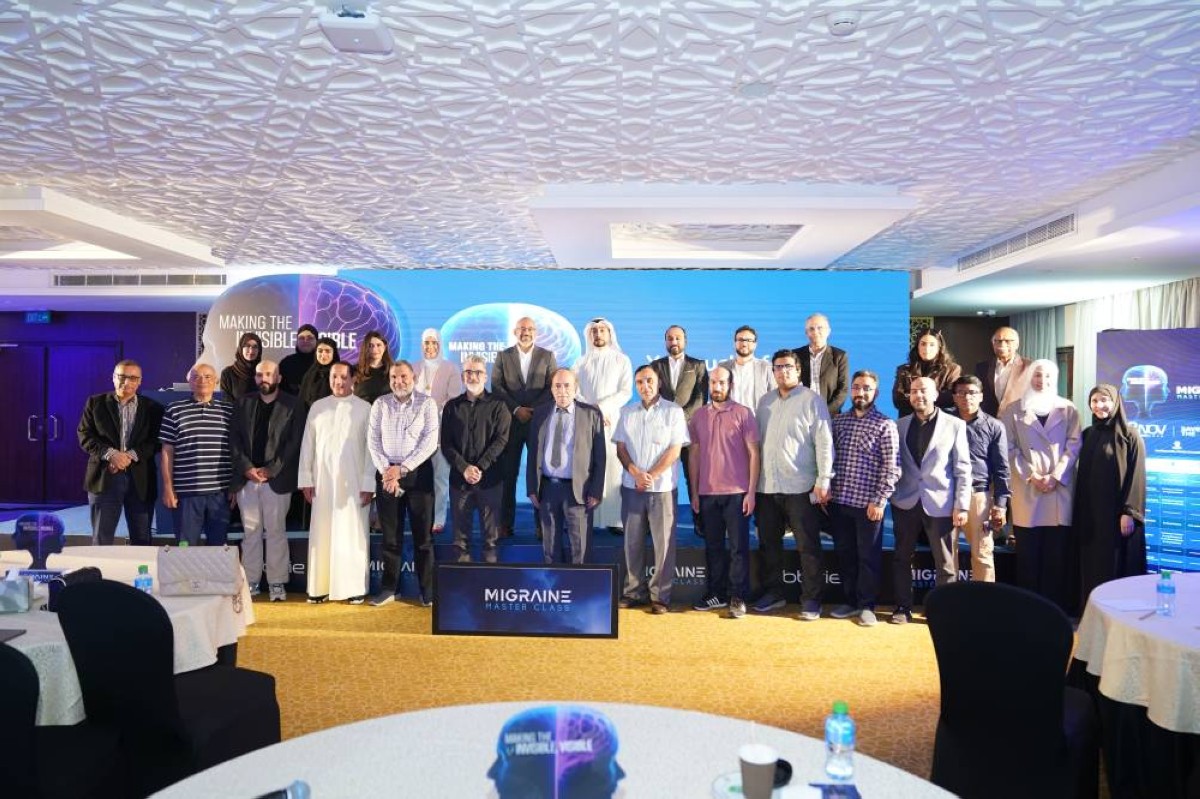
KUWAIT: In a landmark initiative to elevate the standard of care for neurological disorders, the first-ever “Migraine Masterclass” was successfully conducted at the Radisson Blu Hotel, Kuwait City. Under the theme “Making the Invisible, Visible”, the event gathered approximately 60 distinguished healthcare professionals, primarily neurologists and specialists dedicated to treating migraine and its associated complications.
Migraine remains one of the most debilitating conditions globally, often underdiagnosed and undertreated despite its prevalence. In the Gulf region, and specifically in Kuwait, the disease burden is significant, affecting workforce productivity and the quality of life for thousands of patients. This masterclass served as a critical platform to address these local challenges, offering a comprehensive scientific journey that spanned from early diagnosis to advanced management techniques.
The event featured a distinguished lineup of key opinion leaders (KOLs) who steered the scientific agenda. The sessions were led by Prof Jasem Al Hashel, a prominent figure in neurology, alongside Dr Saja Bouelbanat, Dr Khalifah Al Shayeji, and Dr Sarah Al Yatama. Their combined expertise provided a multi-dimensional view of the disease, covering complex cases and the specific impact of migraine on female patients, who are statistically affected three times more than males.
Unlike standard medical conferences, this masterclass was designed as an interactive workshop reviewing the absolute latest in clinical research. The agenda included high-level debates on acute management, comparing traditional treatments like triptans against newer therapies such as gepants.
A major highlight of the event was the forward-looking discussion on the evolution of migraine prevention. Following rigorous debate and review of recent clinical data, the gathering reached a significant consensus regarding the modern treatment landscape: The endorsement of calcitonin gene-related peptide (CGRP) inhibitors as a first-line preventive treatment. This consensus marks a pivotal shift in local medical practice, promising more targeted and effective relief for chronic sufferers compared to conventional therapies.
The event concluded with a panel discussion on the “Future Vision for Migraine Management”, emphasizing that making the “invisible” pain of migraine “visible” requires a unified approach among Kuwait’s medical community. Attendees departed with updated clinical protocols that are expected to immediately improve patient outcomes across the country.
