

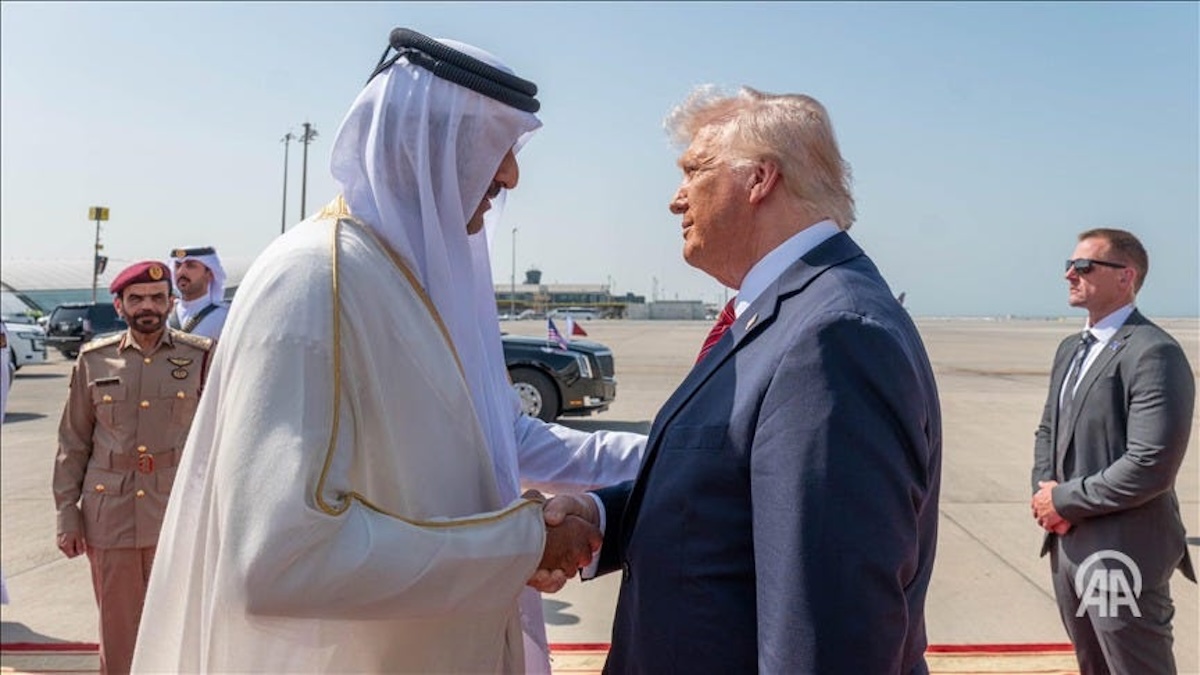
The Trump administration has fundamentally changed direction on Iran. US NATO Ambassador Matt Whitaker says the US will not try and force regime change in Iran. “We don’t want another Libya scenario,” he says.
Whitaker says, “We’re not asking for much, just stop killing your people and eliminate your
These statements are at odds with others who say the US will strike Iran at any moment.
Whitaker’s remarks concern not only Iran but also Russia, North Korea – and possibly even China, where there is an ongoing struggle between President Xi and his top potential opponents in the military that has led to a significant purge at the top of the army, air force and navy and China’s defense ministry.

It is also a cautionary tale about Russia. Whitaker has taken the position that the idea of pushing regime change in Russia, or even hoping Ukraine would win against the Russian army, was an error.
Promoting negotiations
Insofar as Iran is concerned, Whitaker’s statements were timed to promote ongoing negotiations between the Trump administration and Iran.
President Trump, speaking on board Air Force One, said he believed Iran should agree to a deal with “no nuclear weapons” although he did not know if Tehran would sign up to such an accord. “But they are talking to us,” he said. “Seriously talking to us.”
No one knows what kind of bargain could result. But almost certainly, now that regime change has been taken off the table, any deal is likely to be more window dressing than an enforceable, verifiable result. Iranian officials will resist IAEA inspections and will probably claim, as they now say, that they are not killing or hanging protestors. Maybe they will even agree to a moratorium, along the lines of the sort of ceasefire approach Trump favors.
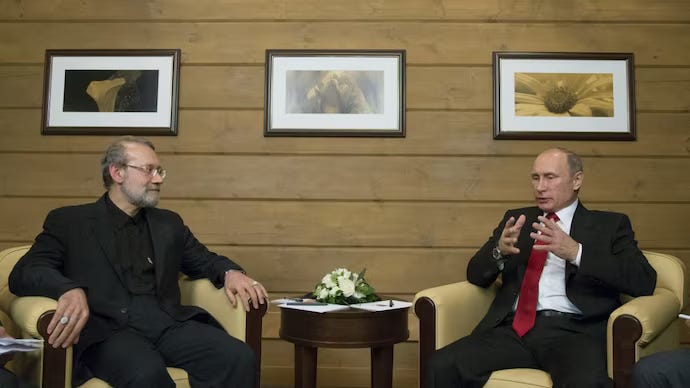
It is also noteworthy that Russian President Putin may be acting as a mediator between Iran and the United States.
It is unlikely Iran will agree to dismantling any known nuclear facilities. This means they will do as they have done in the past, hide their nuclear work from outsiders and take them underground (where much of it is anyway).
Trump surely knows this is the reality, but the administration is looking for a way out of war with Iran, and is likely to take what it can get and declare victory.
The brave words “Help is on the way” turn out to be empty promises.
Missiles and drones
There is no longer any mention in any statements from the Trump administration about Iran’s long range missiles – that is, there is no word on removing or reducing them. Nor is there any word about testing new weapons, including hypersonic ICBMs. And, what is true of missiles also is true of drones.
Similarly there is no demand coming from the administration about missiles and drones and other equipment supplied to the Houthis in Yemen, Hezbollah in Lebanon, Hamas and other terror outfits such as ISIS or Shia militias in Iraq and Syria. The Iranians understand that the US is pulling out of Syria and Iraq, opening those territories to more Iranian penetration and arming of pro-Iran militias. In short, the administration is not only taking a hike on Iran itself, but also on Iranian operations outside of Iranian territory.
This is unsurprising because the negotiations with Iran are under the general purview of Steve Witkoff – who is closely linked to Qatar, where he has long-standing business ties. Qatar has promoted terrorist operations and sheltered Hamas, and worked with Iran. The deal that seems to be emerging from the Witkoff-Iran negotiations fits closely to Qatar’s ambitions and its external policy.

The huge armada that the US has assembled around Iran, expanded recently to supplement Israel’s air defenses with two AEGIS destroyers located between Cypris and Israel, is a bargaining chip at best.
If regime change is off the table for Iran, what would the US military strategy be if the negotiations with Iran fail? The US could still try and eliminate the Iranian missile threat, but it is unlikely to be able to do so enough to prevent Iran from launching missile strikes in large numbers. The US armada would find itself in even a worse spot trying to counter thousands of swarming drones heading for the aircraft carrier USS Abraham Lincoln (CVN-72), or the support squadron sailing with it that includes two AEGIS destroyers.
AEGIS is a good system against missiles (although the jury is out on hypersonic threats) but not proven against drones. Iran’s missiles probably can’t strike US ships on the move, but they can destroy (or try to knock out) US land-based air defenses, including THAAD and Patriot. On the other hand, swarming drones could damage US ships, and Iran has been patrolling the US task force with surveillance drones to pick out locations and targets.
Whitaker’s admonition about Libya is based on the notion that getting rid of Muammar Gaddafi without any plan for succession was a massive failure. Killing Gaddafi led to a power vacuum and to years of civil war, the rise of ISIS in North Africa and a massive migration crisis in Europe.
The result, for Libya, was a failed state that remains a headache for NATO – and an opportunity for Russia, which has lined up with some US allies, particularly the UAE, supplier of Chinese high end drones to the so-called Libyan Arab Armed Forces (LAAF), based in eastern Libya near Benghazi, commanded by Khalifa Haftar.
Recently rehabilitated, General Sergey Surovikin, former commander of Russian forces in Ukraine, played a key role in coordinating Russian military expansion in Libya between late 2023 and early 2024, operating from a base in neighboring Algeria.
Meanwhile NATO countries including the US provide backing to the Tripoli-based Government of National Unity (GNU), often engaging in intense, localized infighting for control.
The Trump administration has not been willing to support Reza Pahlavi to replace the Khamenei-led Iranian regime. Trump was only willing to say that Pahlavi “seems very nice.” Rubio was more willing to support Pahlavi as an alternative to the current Iranian regime and met with Pahlavi a number of times. However, Rubio is clearly not in the driver’s seat on Iran, with negotiations in the hands of the White House and Steve Witkoff.
Thus it seems the Trump administration is walking back on attacking Iran and willing to work out a deal that won’t save the Iranian people, or for that matter crimp Iran’s regional ambitions. Nor, in the end, will it stop Iran’s drive for nuclear weapons.
Stephen Bryen is a former US deputy undersecretary of defense. This article, first published on his Weapons and Strategy Substack, is republished with permission.
