

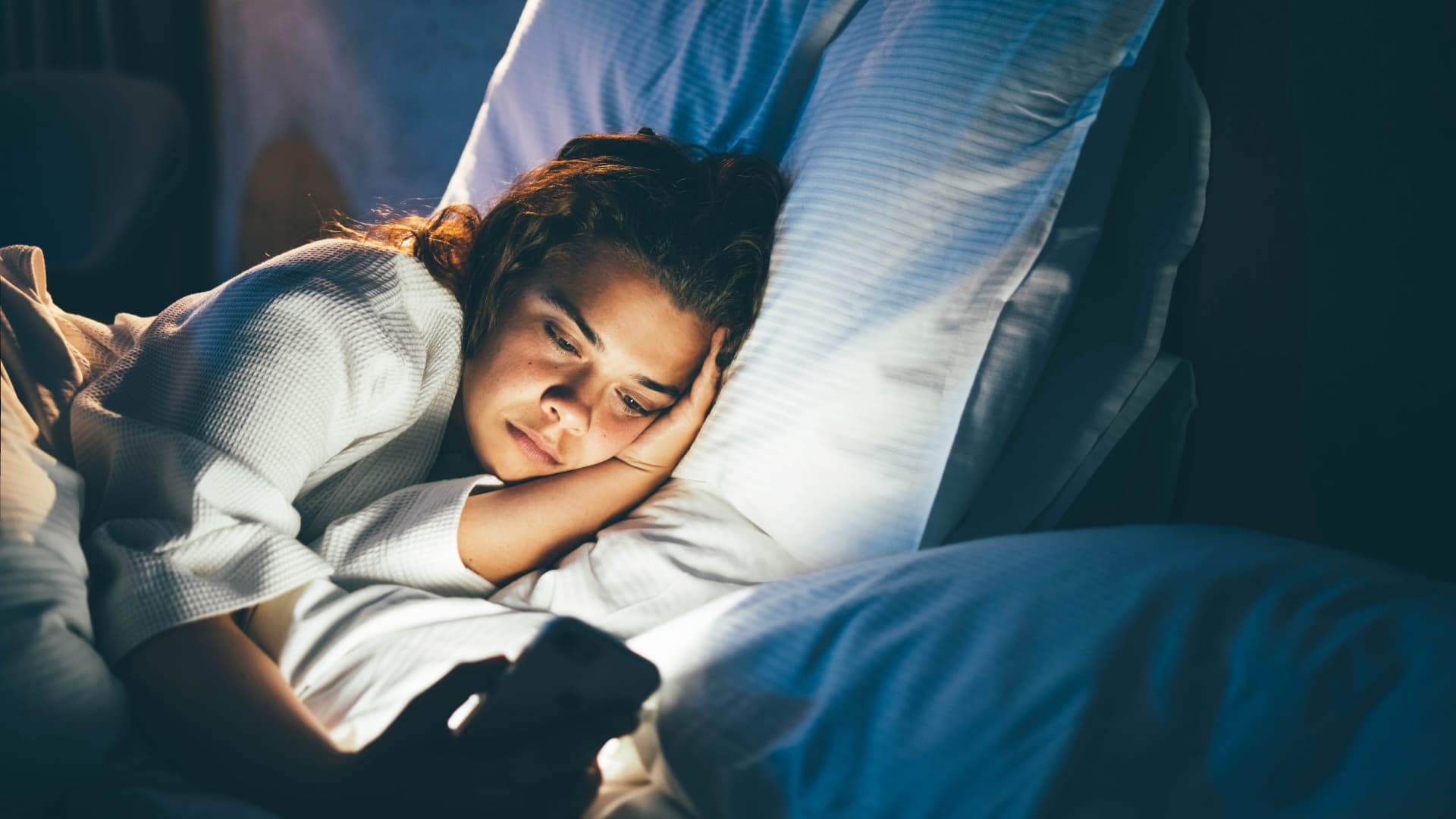
You’re doomscrolling and before you know it, a few hours have passed. It’s an all too familiar story for many people.
“Our phones are like tractor beams,” says Paul Leonardi, who is the author of “Digital Exhaustion: Simple Rules for Reclaiming Your Life” and department chair and professor of technology management at UC Santa Barbara. “They’re designed to pull us in.”
If you’re trying to reduce your screen time at home and have healthier habits with your digital devices, Leonardi shares a few tips you can try.
1. Have an intention in mind
There’s no problem with “picking up your phone if you need to,” Leonardi says. The bigger issue for many people is mindlessly whiling away the hours. Leonardi says it can help to “set a quick intention for yourself” when you reach for your phone.
“Creating that intention is really key in helping us have a stopping point for our interactions with our tools,” Leonardi says. Maybe you may need to check your email for a certain message. Keep that reason top of mind.
“Then when you’re done with that message, you’ve created a choice point,” Leonardi says. “Do I stop because that’s all I said I was going to do, or do I check TikTok or do I browse some playlists on Spotify?
You may well decide to doomscroll a bit. “But at least you’re making the choice to do it,” he says.
2. Distance yourself
It’s a well-known piece of advice on the subject, Leonardi notes, but you might also consider “creating a little bit of a barrier between you and your devices.”
That could mean going through your inbox in the kitchen to keep yourself from bringing your laptop into the bedroom, where you might be tempted to scroll before bed. Or at dinner, rather than putting your phone on the table where it’s all too easy to check, leave it in another room.
“Just that little bit of separation is enough for us to be intentional and say, ‘Do I really want to walk over to the kitchen and grab my phone?’ and then you can answer, ‘No,’ rather than just mindlessly reaching for it,” he says.
3. Pick up a hobby
Another way to spend less time on your phone? Spend the time doing something else, like picking up a hobby or other activity that really engages you and captures your attention.
“When people can get into that state of flow when they’re not on their devices, they actually don’t want to be on their devices,” he says.
They don’t have to be offline hobbies, Leonardi adds, noting that some hobbies and activities that require digital technologies can be just as engaging for reaching a flow state.
“What we really want to be doing is finding those kinds of activities where we can challenge ourselves, where we are invested in them,” he says. “And then we don’t do a lot of the things that lead to our exhaustion.”
Want to get ahead at work with AI? Sign up for CNBC’s new online course, Beyond the Basics: How to Use AI to Supercharge Your Work. Learn advanced AI skills like building custom GPTs and using AI agents to boost your productivity today.
