

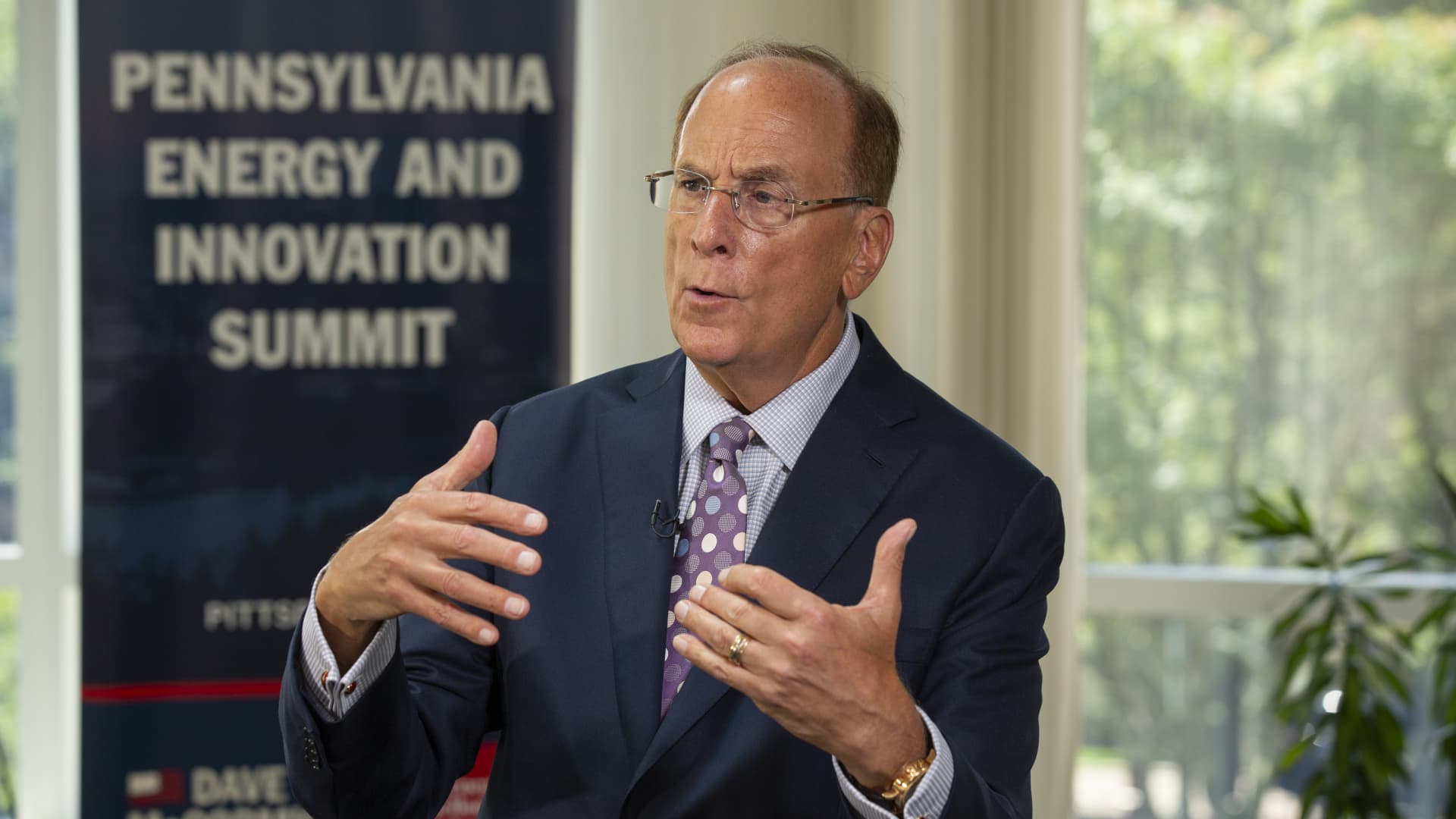
The artificial intelligence revolution could create even greater wealth inequality, according to BlackRock CEO Larry Fink. That’s why Fink recommends global business and political leaders be proactive in figuring out how to ensure workers aren’t left out of the financial growth AI is likely to create.
“If AI does to white-collar work what globalization did to blue-collar [work], we need to confront that directly. Not with abstractions about ‘the jobs of tomorrow,’ but with a credible plan for broad participation in the gains,” Fink said on Jan. 20 in his opening remarks at the World Economic Forum in Davos, Switzerland.
Fink was referring to some experts linking increased international trade and U.S. companies outsourcing labor overseas in the second half of the 20th century to a decrease in blue-collar jobs and lower wages for American workers, even as corporations have benefitted.
Now, the rise of generative AI technologies could have a similar effect on white-collar workers, Fink argued, at a time when several notable CEOs across industries — from Amazon’s Andy Jassy to Ford’s Jim Farley — have touted plans to slow hiring or reduce headcounts while offloading work to AI tools.
The comparison to past technological disruption is an apt one, says economist Lawrence D. W. Schmidt, an associate professor of finance at the Massachusetts Institute of Technology who studies the effects of AI on the labor market. From the digital age to logistics and communications technologies that helped enable globalization, past technological disruptions have typically created “both winners and losers” in the workplace, Schmidt says.
“It devalues existing expertise while simultaneously creating many new opportunities. That’s a sense in which AI may not be so distinct from past technologies,” he says.
The tech could have an outsized effect on knowledge workers by automating the repetitive, data-intensive cognitive tasks that typically define those white-collar roles. Even within the AI industry, Anthropic CEO Dario Amodei warned that “AI could displace half of all entry-level white collar jobs in the next 1–5 years, even as it accelerates economic growth and scientific progress,” he wrote in an essay posted to his personal website on Monday.
AI can be a ‘powerful ally’ for workers
AI hasn’t yet lived up to workers’ worst fears, even as more companies deploy new technologies, Schmidt notes. Since OpenAI publicly released ChatGPT in November 2022, AI has not had a “discernible disruption” on the overall labor market, according to a study from the Budget Lab at Yale University published in October.
Some leaders in the AI industry, including Nvidia CEO Jensen Huang, have been adamant that any eventual disruption caused by increased AI usage in the workplace will be offset by additional jobs created as a result of the subsequent uptick in productivity and overall economic growth.
“You’re not going to lose your job to an AI, but you’re going to lose your job to someone who uses AI,” Huang said at the Milken Institute’s Global Conference in May 2025.
Companies that deploy AI effectively are likely to become more productive, and then grow both revenue and headcount, as a result, Schmidt says. That growth “is a kind of rising tide that lifts all boats-type of phenomenon,” he says, adding that AI essentially “[creates] enormous opportunity for swaths of new work that weren’t there before.”
His advice: Find ways for AI to make you more productive, and reallocate the rest of your time “towards things that AI is not good at.” That could include the sort of soft skills that AI is not as capable of replacing, like communication, creativity and critical thinking.
For Schmidt, that sort of adaptation is the key to avoiding Fink’s warning. And as Fink noted, businesses and government leaders need to help too, says Schmidt. Employers in particular should “make guarantees to existing workers that their job is safe if they cooperate and help to think about how to use AI” to make their businesses more efficient and productive, he says.
“The more that we can devote our energy towards capturing [AI’s] benefits — making sure that those who would be displaced by AI are instead those who learn to work with AI and do their job in a different way — the better the future of work looks,” says Schmidt.
Want to get ahead at work with AI? Sign up for CNBC’s new online course, Beyond the Basics: How to Use AI to Supercharge Your Work. Learn advanced AI skills like building custom GPTs and using AI agents to boost your productivity today.

