

The United States is pressing Israel and Syria to finalise a security agreement by March, with several sources briefed on the matter expecting that the deal could be announced “soon”.
However, a major obstacle remains the presence of Israeli troops on Mount Hermon. Both sides are digging in, sources told Middle East Eye.
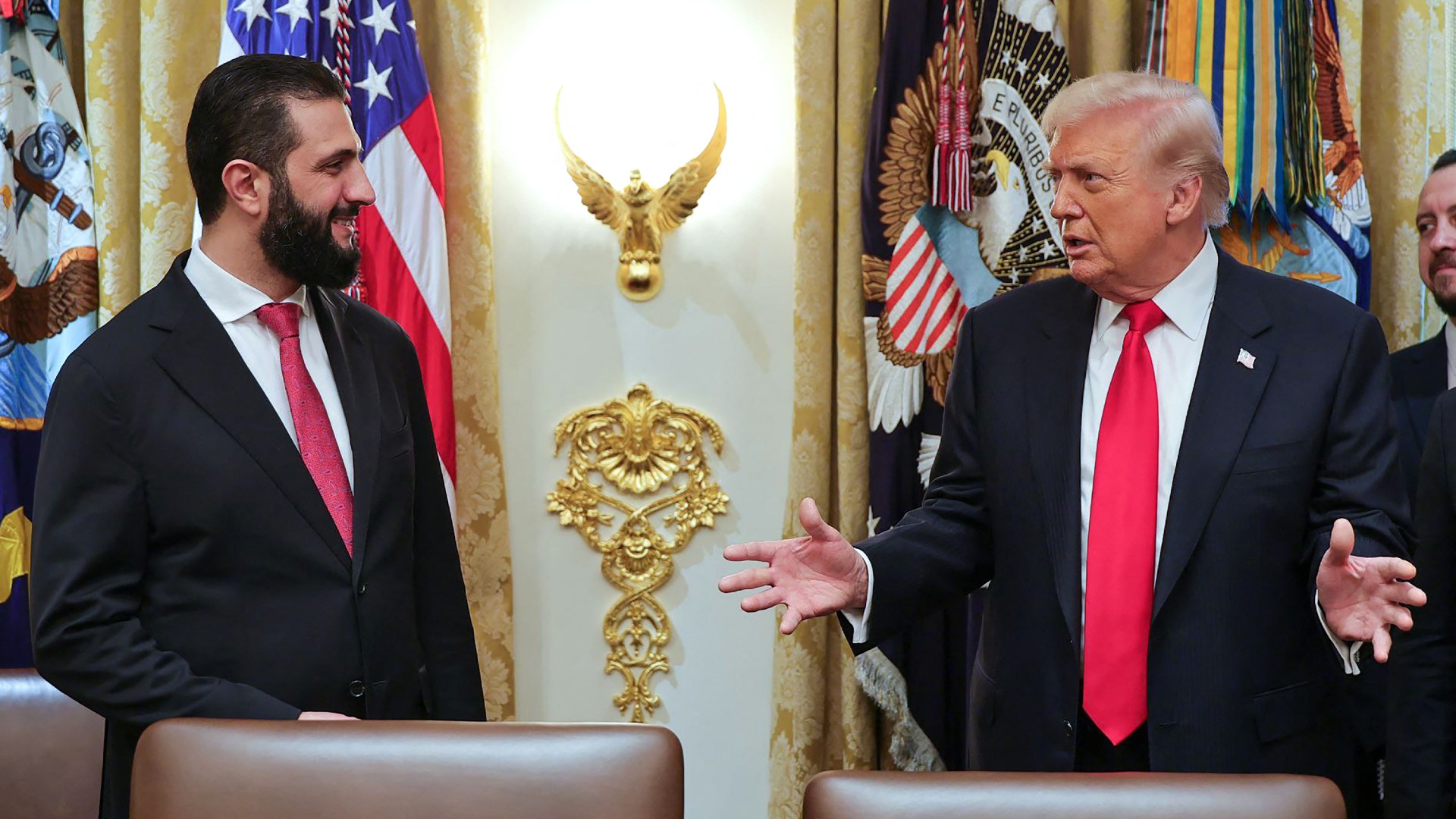
US President Donald Trump called his Syrian counterpart, Ahmed al-Sharaa, on Tuesday. The issue was also discussed during the conversation, according to a source briefed on the call.
“Trump told Sharaa that he had given Israeli Prime Minister Benjamin Netanyahu a month to finalise the security deal with Damascus,” the source said.
“Significant progress has been made in the talks with Israel. The only issue is Jabal al-Sheikh [Mount Hermon]. There is agreement on the rest.”
New MEE newsletter: Jerusalem Dispatch
Sign up to get the latest insights and analysis on
Israel-Palestine, alongside Turkey Unpacked and other MEE newsletters
A Gulf official briefed on the talks confirmed the one-month timeline.
Trump also told Sharaa that he wanted to see a unified Syria, not “multiple Syrias”, according to the first source.
Speaking to journalists on Tuesday, Trump said he had “a great conversation” with “the highly respected president of Syria”, adding that he was very happy about the developments in the country and the region.
The Syrian government declined to comment on the content of the call, saying only that the call with Trump went “very well”.
A Syrian official, however, confirmed to MEE that there was progress in the talks with Israel and that they expect a “breakthrough” soon.
MEE has contacted the White House for comment.
A senior western official told MEE that the Israelis have informed the US that giving up Mount Hermon is a “red line”.
The official added that they do not expect Israel to shift its position on the issue within four weeks.
‘All the pressure Trump is putting on Israel is basically US Special Envoy Thomas Barrack’s talking points’
– western official
Israel occupied Mount Hermon, the highest peak in the region, following the collapse of Bashar al-Assad’s government in late 2024.
The Israelis are also supporting Syrian Druze figure Sheikh Hikmat al-Hijri, who controls the southern province of Sweida and is locked in a dispute with Sharaa’s government over autonomy from Damascus.
The source who was briefed by the Trump-Sharaa phone call said that in accordance with the understanding between Israel and Syria, the Syrian government would not enter Sweida militarily.
Negotiations will begin on its integration, with Israel’s support, the source added.
“All the pressure Trump is putting on Israel is basically US Special Envoy Thomas Barrack’s talking points,” the western official said. “No one else in the administration is pushing for this in the way Barrack is.”
The official added that the deadline sources said was set by Trump during the call is something Barrack has been whispering in Trump’s ear to get the parties together.
Barrack played a key role in facilitating the unravelling of the Syrian Democratic Forces’ control of northeastern Syria in the wake of a military offensive by Sharaa’s troops earlier this month.

Exclusive: US envoy accused SDF chief of trying to drag Israel into internal Syria matters, sources say
Read More »
He said that the US was in favour of a unified Syria without “separatism or federalism”.
Barrack’s diplomacy took the lead on the Kurdish-led Syrian Democratic Forces, but his position was opposed by US Central Command (Centcom) and Republican Senator Lindsey Graham.
The western source, who is in contact with the Israelis, said that Israel knows the US is divided and views Mount Hermon as an issue of national security, unlike northeastern Syria.
“Centcom and Republican lawmakers opposed the Syrian offensive on the Kurds, while Barrack supported it,” the official said.
“But that was not a ‘red line’ issue for Israel. As we saw with the Rafah border crossing, Israel digs in when it says it has red line issues,” they added, in reference to the crossing between Gaza and Egypt that the Israelis have kept shut despite US-brokered agreements.
After US-mediated talks in Paris earlier this month, Syria and Israel have agreed to set up a joint mechanism, establishing a “dedicated communication cell” aimed at sharing intelligence and coordinating military de-escalation.
The two countries have had a US-backed security agreement in place since 1974.
However, when Assad’s government fell in late 2024, Israel began attacking Syrian military infrastructure and occupied large areas of Syria beyond the Golan Heights, which it seized in 1967.
“The mechanism will serve as a platform to address any disputes promptly and work to prevent misunderstandings,” a joint statement said.
