

KUWAIT: The desert was already familiar to Sara Akbar long before she entered the oil industry 47 years ago. As a child, she moved freely among oil fields, walking near towering gas flares that burned day and night, at a time when safety barriers were few and rules were loose. The heat, the fire and the vast open land did not frighten her. They felt like home.
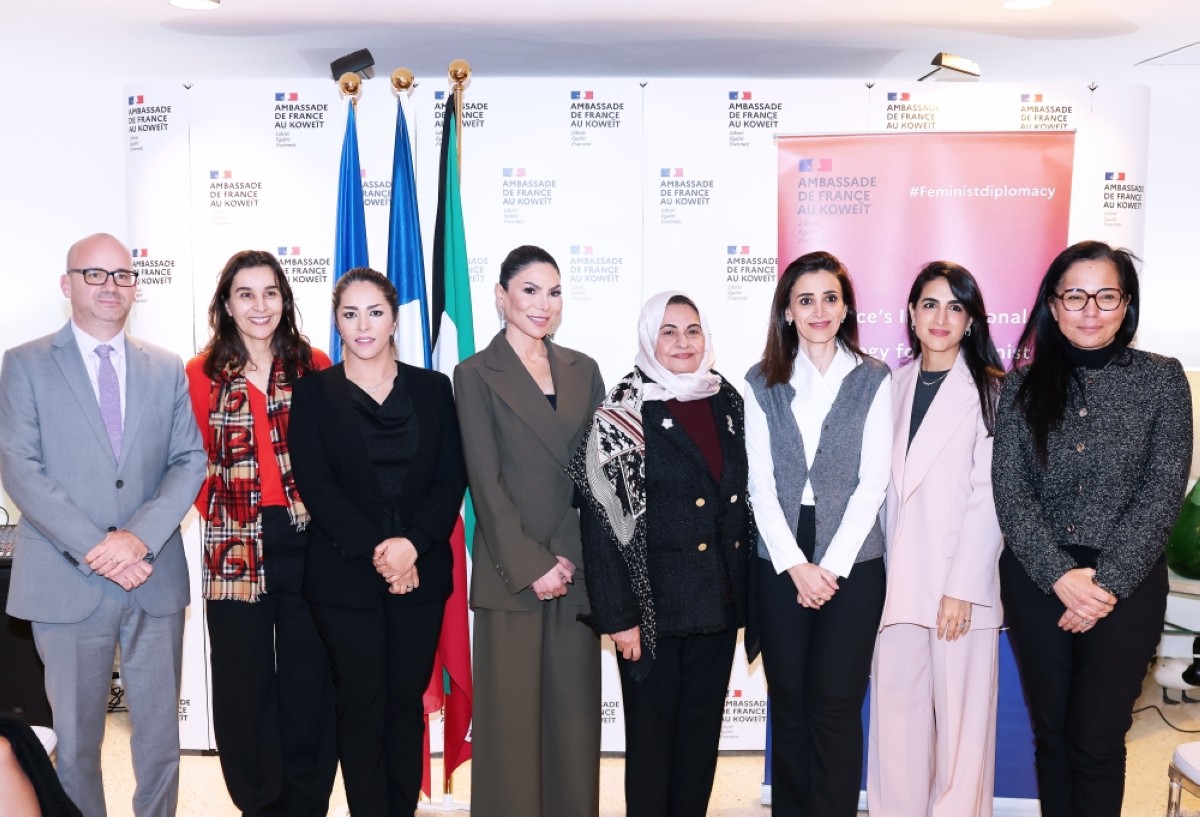
“I was born on an oil field. I lived my whole life there,” Sara Akbar, known as ‘The Firefighting Lady,’ said on Monday, speaking at a dialogue hosted by the French Embassy in Kuwait, bringing together women leaders from the energy and finance sectors to reflect on their professional journeys.
French Ambassador Olivier Gauvin described the evening as a space to recognize women who are “actively transforming” strategic industries traditionally dominated by men, stressing that women’s leadership in such sectors is no longer exceptional, but essential. The event was part of France’s International Strategy for Feminist Diplomacy 2025-2030, which followed an initial meeting held at the French Residence on November 30, 2025 as part of the Orange Campaign and the fight against violence against women.
Fear didn’t stop her
Growing up, Akbar recalled wandering into refineries through gaps beneath fences, sometimes escorted back out by workers who offered biscuits and tea rather than warnings. Kuwait, she said, was flaring billions of cubic feet of gas at ground level then, and she would sit and watch the flames, unaware that those scenes would later define her life’s work.
That early familiarity with the oil fields shaped the path she chose. When she graduated university, Akbar applied directly to the Kuwait Oil Company, determined to work in the field. At the time, female engineers were routinely assigned office roles and discouraged from site work.
“They used to say, ‘Female engineers belong in the office,’” she said. “For me, that was impossible.” After repeatedly insisting, Akbar was eventually allowed to work in the field under strict conditions, including daylight-only hours. The rules, however, quickly proved impractical. Her first assignment took her offshore, where weather conditions prevented her return and forced the company to break its own restrictions.
From there, she spent the next decade working across Kuwait’s oil fields, drilling, maintaining and reviving wells. The moment that mattered most to her, she said, was when field operators began requesting her specifically. “That was it. That was exactly what I was after,” she said. “To learn, to deliver, and to be recognized by my peers.”
When Iraqi forces entered Kuwait, she stayed. For seven months, she continued working, hiding sensitive Kuwait Oil Company data in her home and taking on dangerous tasks under constant threat. “At that time, the cheapest thing I owned was my life,” she said. Fear, she explained, was unavoidable, but surrendering to it was not an option. The invasion, she said, taught her a lesson she carried throughout her career: fear could either paralyze or be controlled. “When fear controls you, you become a coward. When you control fear, you become a hero.”
Inspiring other women
She personally witnessed wells being blown up and recalled narrowly escaping Iraqi forces while visiting the fields with her mother. “I became a firefighter,” she said. “I had no choice.” When the fires began to be extinguished, Akbar pushed for the creation of a Kuwaiti firefighting team. Initial requests were refused, but approval eventually came from senior leadership.
The team went on to extinguish 42 wells, including Burgan 160 – the largest – with the final fire put out on November 6. Working with limited resources, the team improvised equipment, repaired abandoned machinery and developed solutions under pressure. Akbar later moved into management, contributing to the creation of KOC’s first strategic plan before joining Kuwait Foreign Petroleum Exploration Company (KUFPEC). In 2005, she founded her own company, operating across several countries before selling it in 2018.
Her proudest achievement, she said, was mentoring young professionals. “Time and knowledge matter more than money,” she said. “If you share them, you help people create lives and skills.”
Shayma Amin, Team Leader for Project Assurance at KUFPEC and a former officer at the Organization of the Petroleum Exporting Countries (OPEC) in Vienna, reflected on a career spanning more than 26 years in the upstream oil and gas industry.
Amin traced her determination back to the Iraqi invasion of Kuwait, when she was 11 years old and watched oil wells burn across Kuwait’s skies. What stayed with her most, she said, was seeing a woman in protective gear standing before the flames. “That woman was Sara Akbar,” Amin said, referring to the same woman she never expected to later become her boss, or even stand alongside her on the same stage.
The image, she explained, stayed with her throughout her career – especially when she was told petroleum engineering was “not exactly a woman’s job.” Amin went on to complete the petroleum engineering program at the Colorado School of Mines in three and a half years with honors. Her career took her offshore, into harsh environments such as the Norwegian North Sea and Alaska, often as the only woman in the room. Leadership, she said, was built through persistence, not comfort. Amin also spoke openly about personal loss and hardship, including raising a family while navigating demanding leadership roles. “Leadership costs comfort,” she said. “Sometimes it costs being liked. I chose impact.”
Women’s voices needed
In the financial sector, Dalal Al-Rayes, Founder and CEO of fintech company Spare, described a similar experience of working in male-dominated spaces. With a background in finance and economics, Al-Rayes said she was often the only woman in private equity rooms.
After studying and working abroad, she returned to the region and founded Spare in 2018, a fintech platform that connects companies with banks. The company now operates across several Gulf countries and recently raised a $5 million funding round. “Entrepreneurship is not glamorous,” she said. “You need to stay uncomfortable longer than others.”
Shaima Bin Hussain, Founder and CEO of She Invest for Economic and Management Consultancy, spoke about her mission to improve women’s financial literacy and representation on corporate boards. From studying English literature to working in banking and investment, she said her career path was shaped by constant reinvention. “I realized women do not speak about investment,” she said. “Finance empowers us.”
She Invest, founded in 2020, now partners with international institutions to offer board director programs aimed at increasing women’s participation in leadership. Ambassador Gauvin said the women’s stories were inspiring. “They demonstrate that women are fully legitimate, talented, and capable of shaping strategy and transforming societies – in every field.”
