

MEXICO CITY (AP) — A group of lawyers and family members of important cartel figures accused Mexico’s government on Tuesday of breaking the law by sending nearly a hundred Mexican citizens to the United States without an extradition order.
It comes less than a week after the administration of Mexican President Claudia Sheinbaum sent 37 detained cartel members to the U.S. in what observers have described as an offering by Mexican authorities to offset mounting threats by U.S. President Donald Trump to take military action against cartels.
Since last February, Mexico has sent a total of 92 cartel members in three separate transfers to the U.S. requested by the Trump administration. It’s part of a larger strategy by Sheinbaum to crack down on cartels and maintain a positive relationship with the Trump.
The transfers have been at the center of a legal debate that has only gained more traction after last week’s hand over. Mexico’s government has maintained the transfers were legal, carried out in the name of national security. The Trump administration said the capos were wanted for crimes in the U.S. and many of them had outstanding extradition requests by the U.S.
In a press conference on Tuesday, lawyers for the cartel members asserted they were denied due process because they were sent to the U.S. without an extradition order, which requires a lengthy legal process in Mexico.
“Mexico is currently under intense pressure from the United States,” said Yarey Sánchez Lagunas, the lawyer of two people transferred to the U.S. in the last year. “This forces us to seriously question if these decisions are being used to show political results, even if it comes at the expense of due process or the rule of law.”
The arguments echo those made by the lawyers of infamous capo Joaquín “El Chapo” Guzmán, now serving a life sentence in a maximum-security prison in Colorado.
Sánchez Lagunas is the defense lawyer of Itiel Palacios García, a leader of the Jalisco New Generation Cartel sent to the U.S. last February, and Pablo Edwin Huerta Nuño, a leader of the Arellano Félix Cartel in northern Mexico sent in August.
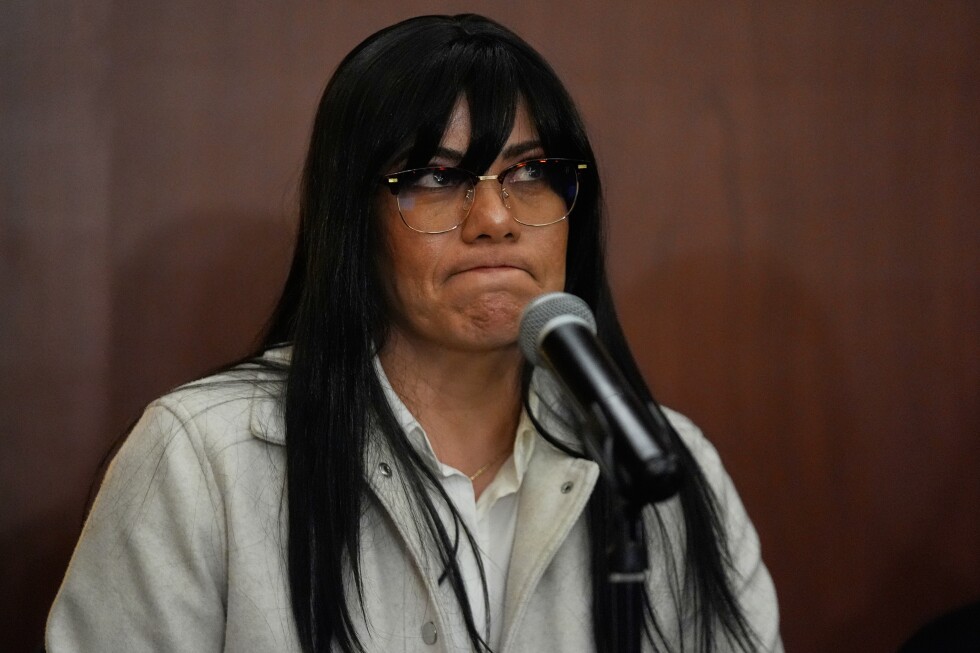
One partner of a regional leader of the Zetas cartel, Vanesa Guzmán, went as far to file a criminal complaint against high-ranking members of Mexico’s government, namely Mexican Security Minister Omar García Harfuch, who has spearheaded much of the government’s cartel crackdown. Her partner, Juan Pedro Saldívar Farías, was sent to the U.S. last week in the latest set of transfers and is accused of arms and drug trafficking.
Guzmán accused Harfuch and other security officials of “treason” in her complaint filed to Mexico’s Attorney General’s Office on Tuesday, though lawyers of the transferred cartel members said they had no legal recourse within Mexico to challenge the transfers now that their clients are outside the country.
“The transfer of my partner is nothing less than exile,” she said. “As of today, we haven’t heard anything from him. He hasn’t even made his legally permitted call.”
Some, like Mike Vigil, former chief of international operations for the DEA, brushed off the complaints on Tuesday, and commended the U.S. authorities for “fast-tracking” a legal process that is often stalled for years by lawyers filing rounds of injunctions in an effort to slow down law enforcement.
Vigil noted that Mexico’s constitution allows the country’s president to make major moves like the one seen last week to protect national security. While Guzmán and lawyers said detainees were no threat because they were already carrying out sentences in Mexico, Vigil was quick to point out that capos often use Mexican prisons as centers for their criminal operations.
“Sheinbaum did it to enhance cooperation with the U.S. government, but at the same time she understands that these individuals, if they remain in prisons there … they usually have access to their criminal organizations, have access through phones,” Vigil said. “These fast tracks are extremely valuable in terms of making sure they face justice.”
