

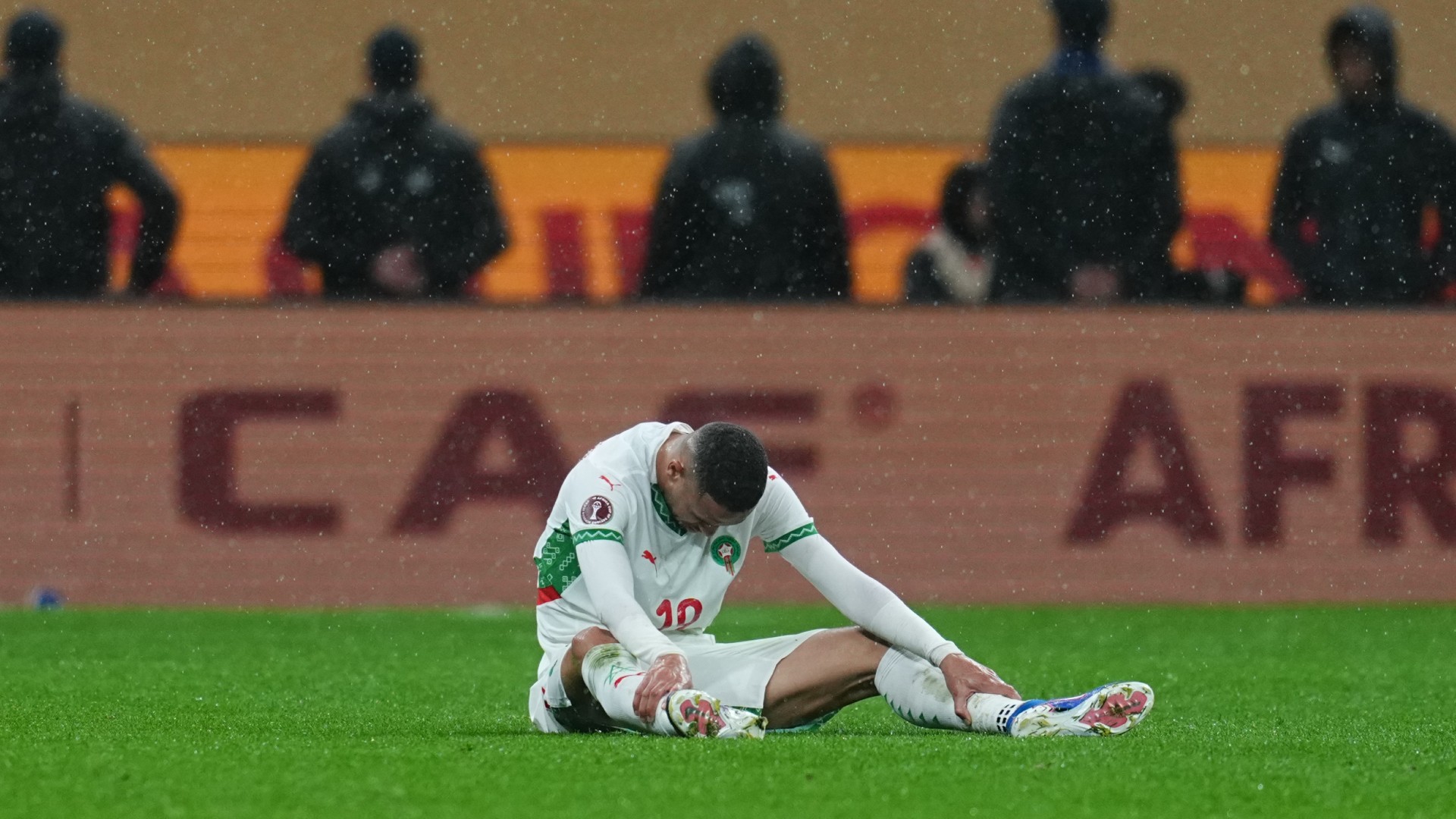
As many Moroccans were gripped by the chaotic scenes of the home team’s stunning defeat by Senegal in last Sunday’s African Cup of Nations (Afcon) final at Rabat’s Prince Moulay Abdellah Stadium, Omar had other things on his mind.
“As a family, we’re deeply worried about my brother’s health and well-being. Inside the prison, conditions are extremely difficult,” said Omar, who spoke to Middle East Eye using a different name for security reasons.
Omar’s brother was one of at least 2,400 people arrested during a wave of protests in Morocco between September and December 2025, with hundreds remaining in custody. Charged with obstructing the highway in Casablanca, he has been in prison since September.
The protests, which began amid public outrage over the deaths of eight women from failed caesarean sections in a public hospital in Agadir in the country’s south, were led by young people and self-styled as “GenZ 212” after the generation and the country’s dialling code.
Their demands centred on tackling Morocco’s underfunded healthcare and education infrastructure, addressing corruption, and improving political rights. Within weeks, they became the most widespread demonstrations the kingdom had seen since the 2011 Arab Spring.
New MEE newsletter: Jerusalem Dispatch
Sign up to get the latest insights and analysis on
Israel-Palestine, alongside Turkey Unpacked and other MEE newsletters
In response, at least three protesters were shot and killed by state security forces, while many of those arrested have reported beatings in custody amid condemnation from human rights monitors.
“The cells are so overcrowded,” Omar said, describing his brother’s conditions in custody. “A room for around 10 people holds around 40. Diseases spread easily.”
With Afcon then just months away and Morocco gearing up to co-host World Cup 2030 with a vast $1.4bn spent on stadiums, including plans to build the world’s largest arena in Casablanca, one chant was especially prominent during the demonstrations: “The stadiums are here, but where are the hospitals?”
After spreading to dozens of towns and cities across the country, the protests eventually fizzled out in mid-October amid the state crackdown and a piecemeal spending package announced by King Mohammed VI and his embattled prime minister, Aziz Akhannouch, before briefly resurfacing on 10 December in smaller numbers.
Devastating flash flooding in the coastal city of Safi on 15 December that killed 37 added to tensions, with GenZ 212 social media posts calling for accountability over the disaster.
Amped-up security
However, for international visitors in the six Moroccan cities hosting the tournament from 21 December, little protest was to be seen.
Hecate, a member of GenZ 212 speaking under a pseudonym, told MEE that police presence during the tournament was “overwhelming, especially in working-class neighbourhoods and urban centres”.
‘The tournament became a tool to redirect public attention away from ongoing repression, arrests and the situation of political prisoners linked to the protest movement’
– GenZ 212 member
“Public spaces felt monitored, gatherings were cast as suspicious by default, and political expression became riskier overnight,” she said.
This amped-up security was in plain sight to tournament attendees, who were prompted to show their tickets up to five times before entering some matches and were required to register their biometric passport details on an app developed by a relative of the king’s closest aide.
“The tournament became a tool to redirect public attention away from ongoing repression, arrests and the situation of political prisoners linked to the protest movement,” Hecate said, speaking on behalf of several protesters based in the Tangier-Tetouan region of northern Morocco.
The Moroccan government has already received plaudits from the international media praising the tournament’s smooth running despite the chaos surrounding its final.
Jonathan Hill, director of the Institute of Middle Eastern Studies at King’s College London, told MEE that hosting the tournament formed part of a strategy aimed at gaining international recognition and respect.
“These events demonstrate the economic strength and technical competence of the host nation,” he said.
“[Hosting] helps showcase Morocco to a broader global audience and helps establish the country on a par with other regional leaders, such as Saudi Arabia and South Africa, who either will or have hosted their own mega-events,” he added.
‘Enforced calm never lasts’
For Hecate, questions remain beneath the image of abundance, control and modernity presented by the tournament.
“‘Sportswashing’ falls short to describe the level of propaganda and misinformation produced by the Moroccan state and press to portray a fake sense of modernisation,” she said.

Morocco’s $15bn promise falls short of GenZ 212 demands for real change
Read More »
“It’s there to cover the total failures we are dealing with as a country from all fronts.”
Inequality in Morocco remains stark, with the top 1 percent earning a similar proportion of the national income to the bottom 50 percent, according to the World Inequality Database.
“I’ve witnessed first-hand the extreme violence of the government beatings, arrests, intimidation and systemic harassment aimed at keeping the population silent and obedient,” she added.
“This is not a society where citizens are empowered; it is a society where power is concentrated, rights are denied and survival is a daily struggle.”
For a few weeks, Afcon served for many as a distraction from those issues, amid expectation and excitement that a team which became the first African side to reach a World Cup semi-final in Qatar in 2022 could claim a continental crown Morocco had won just once 50 years ago.
But that narrative shattered spectacularly when the home side capitulated to an extra-time goal, still reeling from the shock of Brahim Diaz’s missed penalty with the final kick of normal time.
As the visiting fans and international media delegations leave and normal life returns to the country, Omar and his family are continuing their legal fight against the charges faced by his brother.
‘Future protests are inevitable because of the limits on Moroccan democracy. These limits force young Moroccans to protest’
– Jonathan Hill, professor at King’s College London
Meanwhile, other protesters have been given sentences of up to 15 years for offences including “rebellion as part of a group”.
“We can only hope for a fair trial and the truth to come out,” said Omar.
With hundreds still detained, Hill expects more discontent on the horizon.
“Future protests are inevitable because of the limits on Moroccan democracy. These limits force young Moroccans to protest,” he said.
Discussion on GenZ 212 message boards on the online platform Discord continues, with over 180,000 users now signed up to the protest movement’s server.
Hecate told MEE that the current lull in protest activity “is not acceptance but enforced calm through violence”.
“And enforced calm never lasts,” she said.
“You cannot permanently suppress a generation that is educated, connected and fully aware that the system responds to social demands with batons, prisons and fear.”
